

8 Frozen TV Dinners We Ate In The '70s
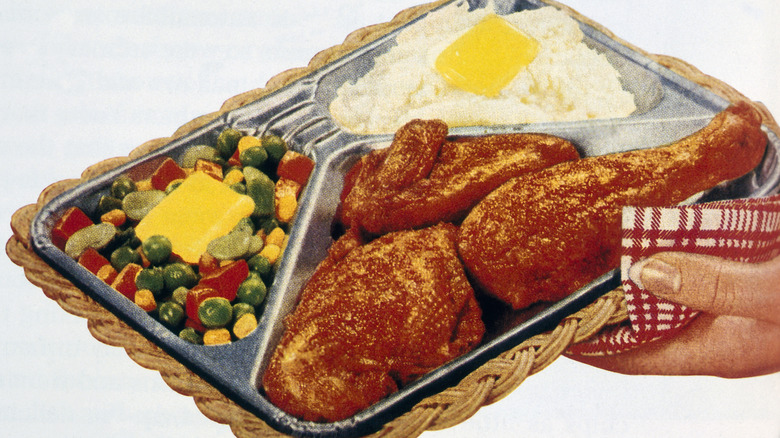
For most Americans, it has been a long time since sitting down to eat in front of a screen was considered a novel experience. These days, it can be a novel experience to sit down and eat without a screen in front of you. Since the invention of the TV dinner in the 1940s, the hum of a television, the scrape of silverware, and the smell of reheating food have gradually become an orchestra in which each part is essential to the whole, and that whole is the ritual of eating. TV dinners helped facilitate the way that these aspects come together.
When you think about frozen TV dinners, there is no decade that was more impactful than the 1970s. By the arrival of the Me Decade, many of the post-War industrializations of our food industry had come of age, and society had begun to internalize and shift into favoring these new conveniences. This was a golden decade of ready-to-cook meals that changed when we ate, what we ate, and the ways we ate, whether together or apart. A look back on the popular frozen TV dinners of the 1970s reveals a time capsule of brands that no longer exist, and others that would go on to hold major market share within the frozen food world. The landscape contains a dazzling array of options today, but once, these TV dinners would have been much more common.
Swanson frozen dinners
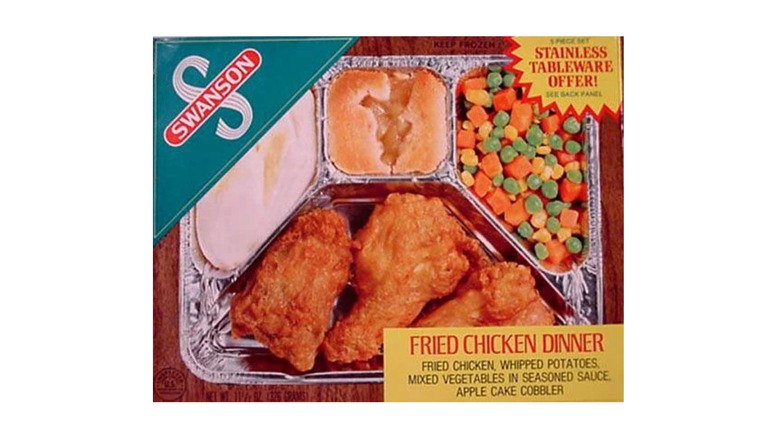
Before the turn of the century, the biggest name in frozen TV dinners was Swanson, which might be on account of the company having basically invented the concept. They did so in the mid-1950s. After nearly being caught holding the bag on two tons of frozen turkey, a salesman for Swanson's came up with the idea of selling a portioned metal tray containing all the pieces of a full meal, ready-to-heat in the oven. That turkey plate became Swanson's first frozen TV dinner, and it remained popular through the 1970s, when the category really hit its stride. The turkey dinner contained a tray of peas and carrots, some dressing and gravy under the meat, whipped potatoes, and a dessert. It was just one of several popular meals that Swanson's sold.
In the 1970s, it would have been common to see a similar dinner plate with (mostly) the same sides, except fried chicken as a swap for turkey. Swanson also sold a Salisbury steak, which came with a brownie for dessert. Then there were its international options: a Chinese meal of chow mein and fried rice; a Mexican dinner featuring enchiladas and tamales, with rice and beans; finally, a German plate with sauerbraten, spaetzle, and red cabbage. Add in the Swanson fish and chips dinner, and a 1970s freezer was a veritable trip around the globe.
Swanson Hungry Man frozen dinners
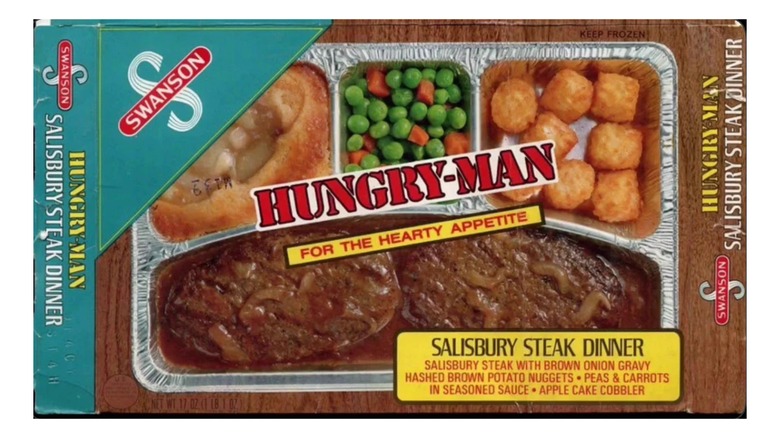
Even among stiff competition from Banquet and Birds Eye, Swanson's regular line of frozen TV dinners was doing just fine on its own by the 1970s. Still, the company had a big appetite for what could come next ... and bigger appetites were what it bet on. Debuting in 1972, Hungry-Man meals were the big-and-tall of Swanson's frozen aisle offerings. Advertisements of the time boasted of larger portion sizes for "the man who eats like there's no tomorrow."
Although they came in one size, large, Hungry-Man meals had many shapes. There was the ultra-sized fish and chips, a 1-lb tray of boneless chicken, veggies, and apple cobbler, pot pies, and a Salisbury steak with the "second helping already put in. Not to mention, a 17-ounce lasagna!
With the idea of fueling hungry men in mind, the minds at Campbell's, then the parent company of Swanson's frozen meals, brought in the "manliest" men they could find to market the new line of dinners: sports guys. Commercials featured LA Dodgers first baseman Steve Garvey, Pittsburgh Steelers "Mean" Joe Greene, Rocky Bleier, and former Canadian ice hockey player Lanny McDonald. In each case, the stars made sure to declare that Hungry-Man was heavy on the meat. Today, Hungry-Man is still hanging around the frozen food aisle, but it no longer boasts the Swanson label.
Morton's
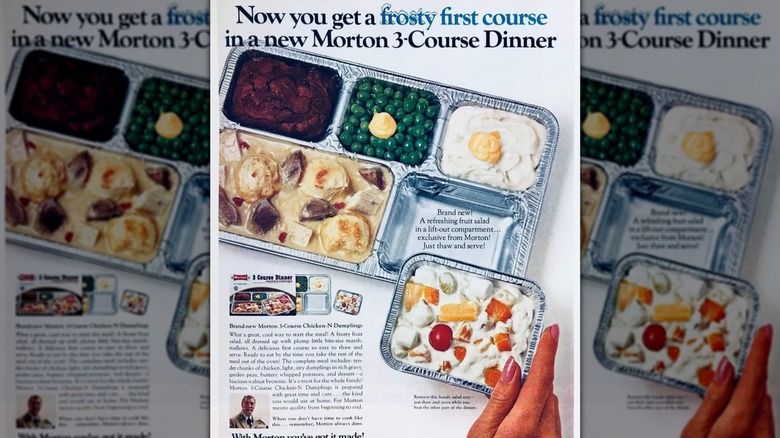
Morton Foods was a prepared-foods company founded in 1940. Just like many innovative brands that were early to the party, Morton's was eventually gobbled up by a conglomerate that discontinued its existence. (Thanks, ConAgra.) Prior to its extinction, there was a peak, and it might have been during the Me Decade, when Morton foods were a common sight in 1970s grocery aisles and home freezers.
Ask your local boomer, and you'll find out, as we did, that Morton was first and foremost known for its frozen pastries, like memorable donuts, a noteworthy honey bun, and frozen pies that encompassed a world of options, from fruit pies to chocolate cream pies and, of course, pot pies. Naturally, the company worked to compete in the frozen dinner section, where it sold offerings that were similar in style to its competitors — a turkey dinner, fried chicken with veggies, beans and beef franks in tomato sauce, and a chicken dumpling plate that included a removable tray for a "first course" of frosty fruit and marshmallow salad. What's not to love about a frozen TV dinner with a hidden treat? Eventually, Morton even tried to compete with Swanson's by offering its own "King Size" portions.
Parent brand, ConAgra, quietly cancelled Morton around 2000. Although its dinners are no longer available, Morton made an indelible impact on the world of corporate branding, one which will live on in the halls of food history. In 1974, one of Morton's frozen TV dinners featured a crossover collab: The special dessert was a Twinkie.
Libbyland Adventure dinners
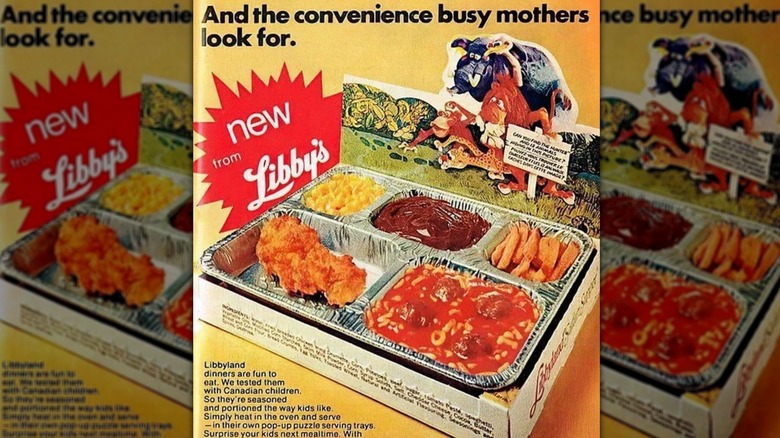
Looking at the shelves of today's prepared food sections, it would be tough to imagine a time before there were so many frozen foods angled towards kids. Yet, in the '70s, the frozen TV dinner landscape was remarkably devoid of them. That's where Libbyland Adventure dinners came in. These frozen TV meals were the answer to a gap in the grocery section of the time, courtesy of canned food brand Libby.
Like adult meals, Libbyland dinners came on aluminum trays portioned with two entrees, two sides, and a dessert. They were also made of similar comfort foods, such as sloppy Joes, fried chicken, or spaghetti. The draw of Libbyland Adventure dinners was that they were the "first frozen meals with fun in 'em," and that showed up in multiple ways. The packages included tableside entertainment, folding out like a diorama with "I Spy"-style images and puzzles. The meals also were known to include a crystalline powder that could change the flavor of your milk.
Each Libbyland dinner was themed like an exciting escapade. Kids could pick between Pirate Picnic (hot dog with beefaroni), Safari Supper (fried chicken, spaghetti with meatballs), Sundown Supper (hamburger with frank & beans), Sea Diver's Dinner (fish sticks with mac 'n cheese), or a Gold Strike Supper. Eat your way to the bottom of the tray, and a special hidden image awaits your adventurous spirit.
Jeno's Pizza Rolls
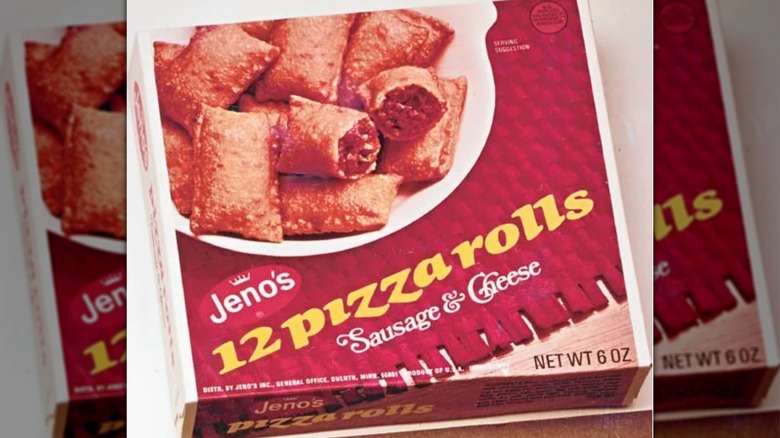
Yes, it's true that the classification of frozen dinners implies a full meal, entree plus sides plus (maybe) dessert. That definition would, by default, exclude the lot of standalone frozen items that exist out there. Things that are closer to "snacks," like well-beloved store-bought pizza rolls. Except any freezer feeder knows that whether or not pizza rolls can be classified as a TV dinner is based on how many pizza rolls we're talking about. Consider that, and the fact that pizza rolls were essentially born of the 1970s, and you can't really exclude them.
Pizza rolls (1968) had barely been invented by the time the Me Decade rolled around. Once they were, the runway to runaway success was short. How could it not be? The 1970s were a boom for American Chinese food and other international cuisine in the States. Another popular frozen food company, Chun King, was eating good off of the expansion of American taste buds. It offered its own line of frozen Chinese foods to people looking for a blend of convenience and newness. It was under these conditions that an intrepid product developer for the company, Beatrice Ojakangas, came up with the idea to make egg rolls filled with pizza toppings.
Jeno's pizza rolls took over the 1970s. The little magma pockets boasted the type of flavors you'd expect — like sausage and cheese — but also, apparently, off-the-wall flavors like shrimp and chiliburger. Jeno's would eventually be sold to Pillsbury before being merged with Totino's in the 1990s, making way for Totino's to become synonymous with this uniquely American food.
Banquet
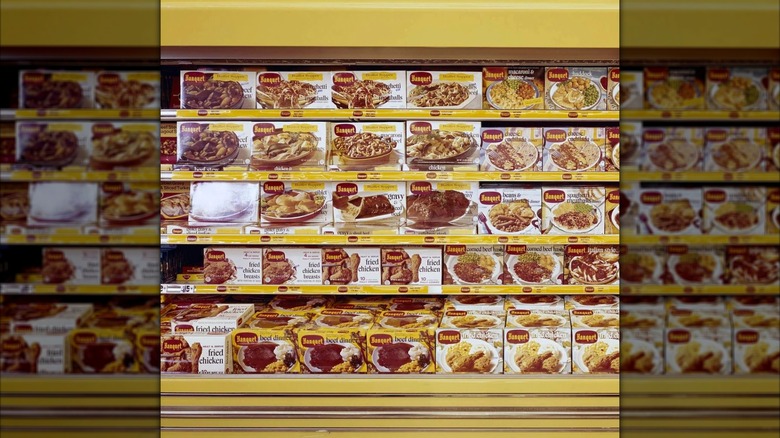
Banquet Foods was founded in 1953, which made it a bit of an upstart compared to Morton and Swanson. The origin had little effect on how Banquet would play the frozen TV market in the 1970s, which is to say that rather than utilizing a younger reputation to push for some unique or exciting flavors, Banquet options adhered closer to traditional expectations of stick-to-your-ribs food. The company that made its success from heating dinner in a boiled bag would skip the forays into international cuisine and instead establish itself as a purveyor of homestyle comfort foods.
By the 1970s, Banquet was nipping into the freezer aisle on Swanson's heels. Of course, Banquet offered fried chicken suppers similar to the rest of the category, as well as haddock plates, chicken and noodles, spaghetti with meatballs, Salisbury steak, and turkey dinners with giblet gravy. In the '70s, you could also find Banquet corned beef and hash TV dinners, as well as veal parmesan with green beans and potatoes. Following in the footsteps of Swanson, Banquet also sold a macho-sized meal, which it called the Man Pleaser. It was the more broadly appealing buffet supper line, however, which cemented Banquet as a budget-friendly, family-sized alternative.
Freezer Queen
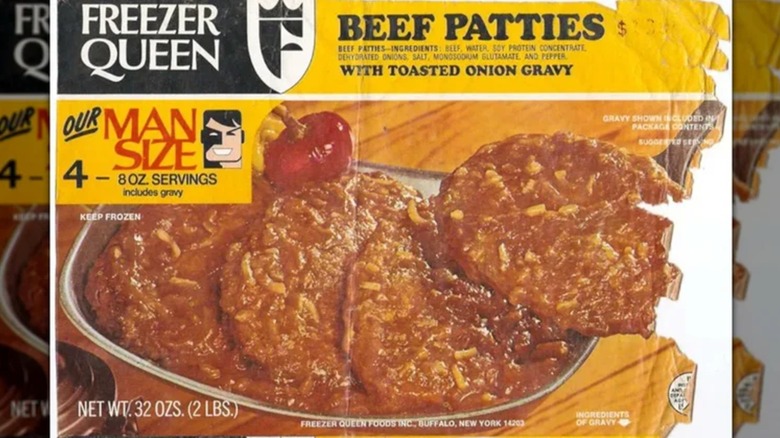
Freezer Queen, a Buffalo-based company, emerged from the post-War decades to become a major player in the frozen dinner biz. Part of its success had to do with the fact that by the 1970s, the brand was owned by Nabisco, which gave it serious institutional power to compete on frozen food aisle shelves with Swanson, Morton, and Banquet. By 1973, the company's products were in such demand that it was considering a $20 million upgrade to its production facility on Lake Erie.
What made Freezer Queen meals so popular? Hard to say, as most of the TV dinners sold by the company were similar to its competition. Options included sliced turkey entrees, meatloaf, Salisbury steak, and a chicken a la king that Reddit users say "wasn't great but it was food." That said, some commenters do recall enjoying the Salisbury steak version of this old-school TV dinner we still miss today. Eventually, Freezer Queen went the way of many once-popular food brands. It leaves behind a lasting legacy that is less remembered for the kids who were fed than for the food safety violations that resulted in the closing of its Buffalo factory.
Chun King
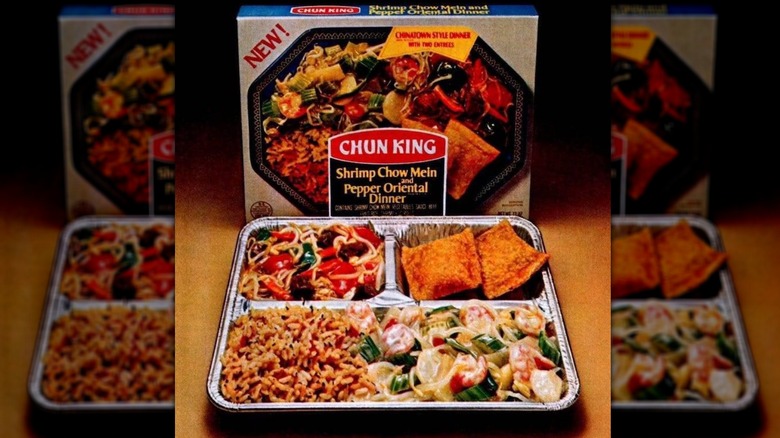
The story of Chun King is as American as it comes. The American Chinese food company was started by none other than Luigino "Jeno" Paulucci, an Italian-American entrepreneur who would later become partly responsible for the invention of pizza rolls. Long before that, Paulucci hit on a different, equally genius business plan: selling chow mein in canned form, seasoned for the Western palate. With an abundance of success to demonstrate an appetite for the Americanized version of the cuisine, Paulucci quickly moved into frozen meals. He had ads appearing in Life magazine as early as 1958. All the while, Chun King occupied a place of its own in the freezer section of local groceries, and continued to do so deep into the 1970s.
Chun King food was heavily Americanized, but for many, it was a low-stakes way to get familiar with flavors and dishes which may have been novel. Early dinners focused on dishes like chicken chow mein, beef chop suey, and mini egg rolls. Once the mid-'70s arrived, split-entree options like shrimp chow mein and pepper steak developed, likely as a way to match the growing portion sizes of the times. Looking back on those meals today, it's easy to see how far we've come in familiarizing ourselves with international cuisines in America. Still, some Redditors aren't ashamed to say that they would "totally eat [Chun King] today as a guilty pleasure," while others admit that they'd probably still like this old-school frozen meal if it were still around. Unfortunately, Chun King was discontinued sometime in the 1990s.