

This Meaty Cut Of Tuna Can Rival Beef With A Technique That's Easy To Master
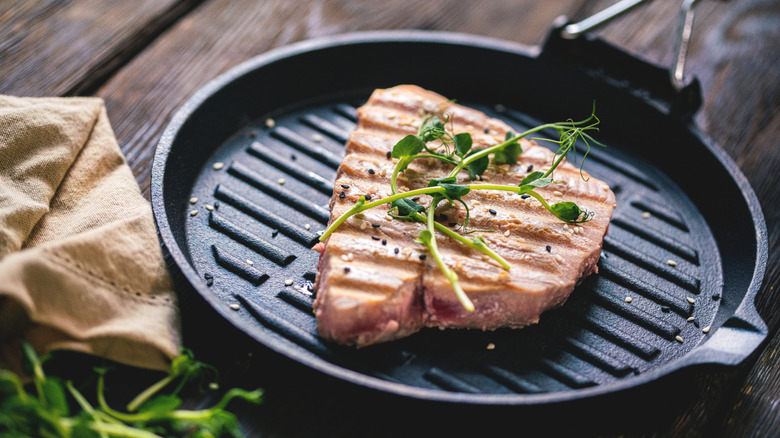
With its reddish coloration and tendency to be sold in steaks, tuna naturally bears a certain resemblance to beef. Generally, the flavor of tuna doesn't quite line up with that of a nice steak, but there is a particular cut — the bloodline — that bridges that gap somewhat, delivering a distinct red-meatiness when properly prepared. To help explain this special cut of tuna and how to best treat it, we spoke with Chef Min Lee at Sushi by SYC, a modern Japanese sushi restaurant in Denver.
"The bloodline, or dark muscle, is the darker strip of muscle found close to the spine of the tuna," Lee explains. These fish are constantly in motion, and this strip of muscle along the spine in particular never gets a break, working nonstop to drive them through the water. "Because it is highly active muscle," Lee says, "it has a very high concentration of myoglobin and is richly supplied with blood vessels."
The bloodline stands out from the surrounding muscle in flavor, texture, and color, and is often cut out and discarded due to these different characteristics. Treated properly, though, it can be a real treat. "That high concentration of myoglobin and heme pigments gives the bloodline its deep color and distinctive, intense flavor," Lee explains. "It has a more pronounced iron-like and savory character than the lighter-colored tuna meat." There is a reason, however, that not everyone values the bloodline. This beefy cut of tuna doesn't necessarily slide perfectly into all of the tuna steak recipes on the internet, asking instead for a slightly personalized preparation.
The best techniques for bringing out the beefiness of tuna bloodline
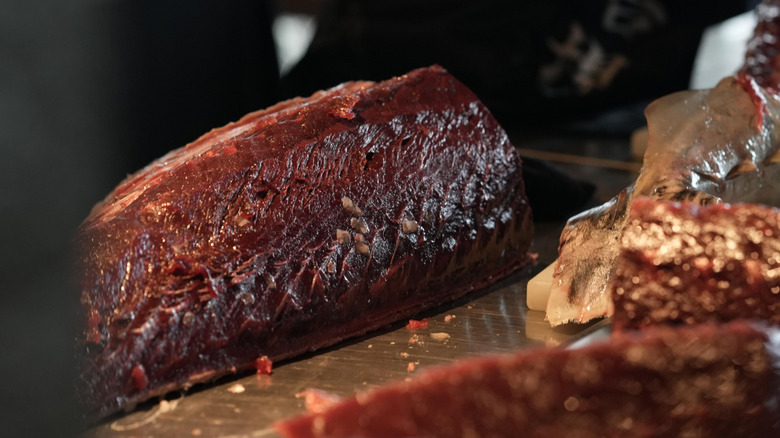
The first thing to note with cooking tuna bloodline is that sourcing is paramount. "I would only recommend preparing tuna bloodline this way with very fresh, properly handled tuna," Min Lee explains. "The bloodline is a highly active muscle and its strong flavor can become unpleasant if the tuna is not exceptionally fresh." When improperly prepared, it can be oily and unpleasant. On the plus side, because it is often considered trash, you might be able to get a good deal on it if you ask the person cutting the tuna to set it aside for you.
Once you've acquired the meat, Lee suggests rinsing it well under cold water to remove any excess blood and cut down on the metallic flavor, and then patting it dry. After that, treat it much like you would any other steak. "I season it simply with salt and pepper and sear it in butter," Lee says. Butter gives the tuna lots of extra flavor, and Lee also suggests using garlic and rosemary — both common steak seasonings — to round out the flavor profile. "The high heat creates a nice sear and brings out deeper savory flavors," he says, "while the butter, garlic, and rosemary add another layer of richness and aroma."
It isn't exactly beef, but when sourced well and treated right, the meaty texture and deep savory flavor of bloodline might just have you questioning what animal that peppercorn-crusted tuna steak was actually cut from.