

What's The Average Lifespan Of Quartzite Countertops?
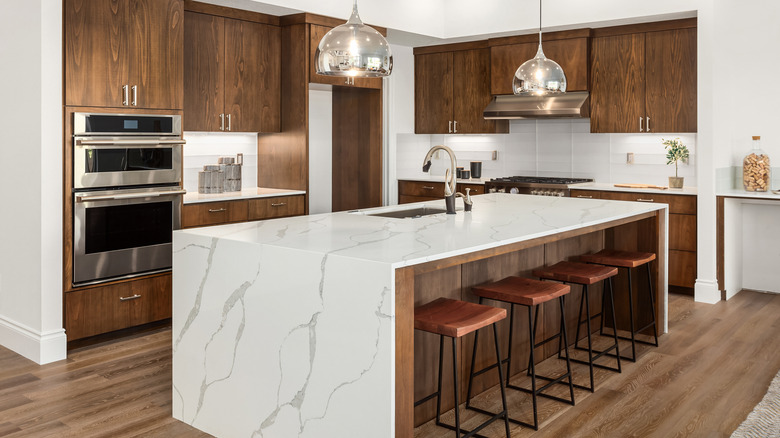
There is so much to consider when you're installing a new kitchen counter, and it's perfectly reasonable that there's a big focus on the aesthetics. After all, it's something that you will be looking at every day. But beyond that, you need to consider more practical aspects, such as day-to-day durability, maintenance, and of course budget. With the time, money, and effort that goes into the process, you'll also want to consider the lifespan of the material.
If your aim is to avoid replacing your countertops any time soon, then quartzite can be an ideal choice. When well maintained, quartzite can be expected to last 30 to 50 years, which is longer than many other elements of the kitchen, and longer than some of us will even live in the same house.
Quartzite is a natural material formed from sandstone under extreme pressure. This process is responsible not only for its hardness, but unique patterns and colors, including white, blue, pink, and black. Quartzite can resemble marble in terms of look due to the rich veining and ripples, and in some instances can be a better value option. Quartzite shouldn't be confused with quartz, which is an engineered material. Quartzite is cut into slabs directly from the source, while what we know as quartz for countertops is made from crushed quartz rock bound together with resin.
The pros and cons of choosing quartzite countertops
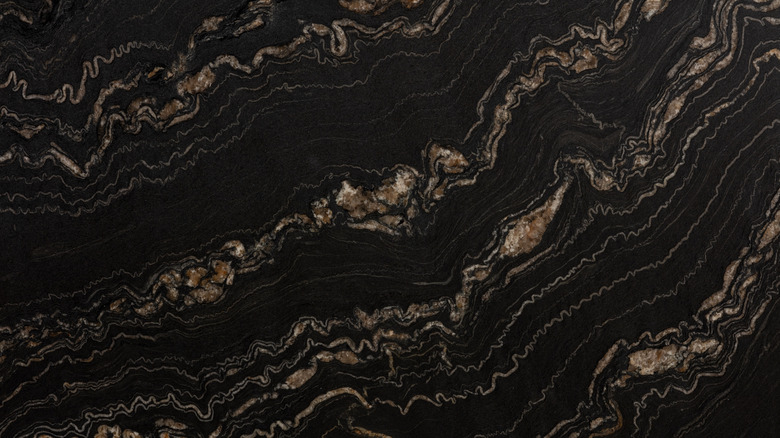
The longevity of quartzite is one of its key attractions, but before you splash out on these countertops, it's best to consider all the pros and cons. Quartzite is one of the hardest natural stones available for countertops, making it durable and more resistant to scratching and chipping. And without this wear and tear, the countertops will look newer for longer.
Unlike many manmade countertop materials, quartzite is also heat resistant. The ability to rest pots and pans on a counter can make all the difference to your workflow if you cook a lot of dishes at once, or if you have limited space in a small kitchen.
The look of quartzite is another appeal for many people, and although you won't have as wide a range of colors as manmade materials, it has a natural beauty that's hard to replicate. Quartzite is also UV resistant, so you can be confident that the colors you have when you install the countertop won't fade over time.
One of the biggest downsides to quartzite is the cost. Although it can sometimes be a cheaper alternative to marble, it's generally one of the most expensive materials you can choose. The weight and hardness of quartzite that makes it so durable often requires specialized installation or tools, so you probably won't be saving money on a countertop by doing a DIY job.
Although quartzite is resistant to scratching, it's not resistant to stains. Like other natural materials, it has a slightly porous surface, and any liquids spilled can easily be absorbed into the stone. To make the surface easier to clean, a quartzite counter will require sealing every one to two years. Although this might not be considered high maintenance, it's an added cost and task to consider when weighing up your options.