

What's The Actual Difference Between Quartz And Quartzite Countertops?
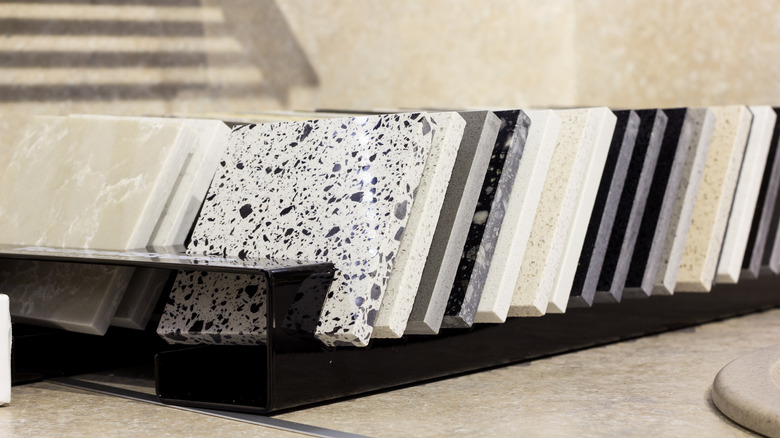
So your contractor just dropped the words "quartz" and "quartzite" into the conversation like you're supposed to know the difference. You don't — and honestly, most people don't either. In fact, you might be reading this believing they're basically the same thing at different grades, when in reality, despite being separated by only three letters, the two are completely different materials that live in separate price brackets, durability tiers, and even origin stories.
Engineered quartz (we'll just call it "quartz" from here on) typically runs $40 to $100 a square foot installed. Quartzite can run from $65 all the way up to $200. Here's the cheat code for remembering which is which: quartzite is 100% natural — it's yanked out of the earth, sliced up, and dropped into your kitchen pretty much as-is. That's exactly why it costs what it costs. Quartz, meanwhile, gets a glow-up: a few extra processing steps to seal it and make it market-ready before it ever sees your countertop.
Quartzite is rock; quartz is rock plus resin
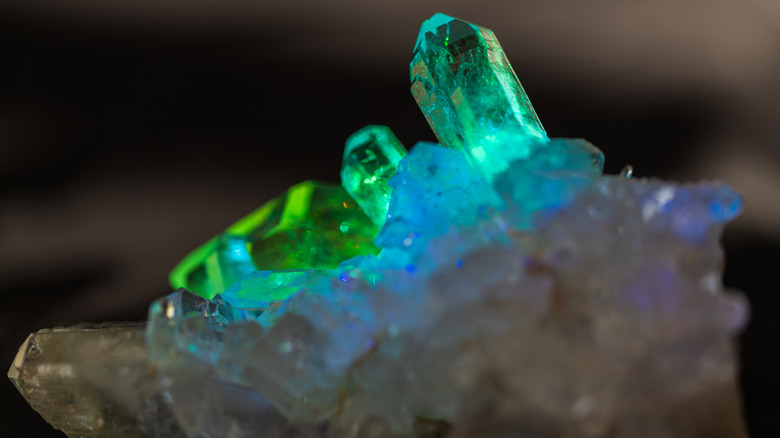
Quartzite starts as either ordinary sandstone or chert, buried deep underground. After spending millions of years being slow-cooked by geothermal heat and pressure, the sand grains fuse into a dense, crystalline stone — mineral quartz (per University of Auckland). Quarried, cut, and installed in your kitchen, that stone earns a new name: quartzite.
Engineered quartz takes a different path. It also starts as raw quartz, but this time it's ground into powder, mixed at 90% to 93% concentration with polymer resin and pigment, poured into a mold, then left to cure. That resin does double duty — binding the powdered quartz together and sealing it: quartz is naturally porous, so the resin's protective top layer shields the stone from stains and etching. That's how, in a test conducted by Consumer Reports that involved setting a pot filled with 400-degree hot oil directly on the surface, the quartz held up well compared to other materials like butcher block wood. That said, some manufacturers explicitly warn that their quartz "may not withstand the direct transfer of heat" from hot cookware, so a trivet is still your friend.
Quartzite skips all of this drama. No resin topcoat means no heat rules to follow — hot pan meets rock, and the rock does what rocks have done for a few million years: absolutely nothing. Its one weakness is porosity, so that celebratory glass of red wine you spill while admiring your new counter? That can leave a permanent souvenir if you're not fast with a towel.
Two tests tell you whether a slab is really quartzite
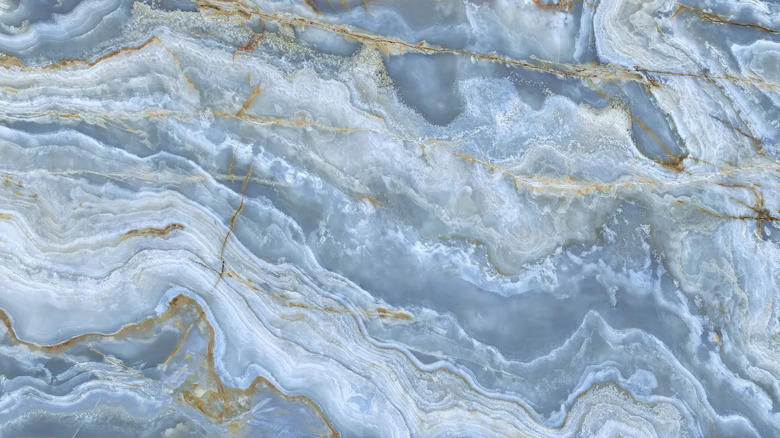
One problem with quartzite is that the slabs with the "quartzite" name sticker sitting in some showrooms aren't always what they claim to be. Dealers passing off marble or dolomitic marble as the real thing has gotten common enough that the Natural Stone Institute put together two tests to sniff out impostors — both take about 15 minutes, and you don't need a geology degree to run either one.
Test one is the glass test. Ask the dealer if you can try it on a sample — any reasonable dealer will let you. Take a rough or broken edge of the slab and press it against a glass tile. Real quartzite bites in, leaving a scratch and a gritty grinding sound. Marble and dolomitic marble just slide across the glass, sometimes leaving behind a powdery smear that wipes away with ease. Test two involves a drop of lemon juice or vinegar on a clean patch of the slab. Let the droplet sit for 15 minutes, then wipe clean. Quartzite shrugs it off completely, but marble — due to its softness — will tell on itself with a dull, etched spot.
Do note that there's currently no way to tell what is genuine quartzite and what's fake from the appearance of the slab. Two stones can look completely alike, but behave differently when the acid or the scratch tests are involved. So if a dealer hesitates to let you run either test on a small piece, take that as your answer before you sign anything.