

The Cheesecake Factory Culinary Title That Only A Select Few Cooks Ever Earn
Growing up in Ohio, I was quite familiar with the lure of The Cheesecake Factory and its almost endless array of options on a dictionary-length menu, with everything from omelets to, well, around 30 varieties of cheesecake (which our taster ranked some of). I thought that I knew all there was to know about the restaurant (the famous brown bread is superior to other complimentary breads, for example). However, I recently learned the term "Master Culinarian," which opened up a whole new line of inquiry.
According to Alethea Rowe, senior director of public relations and global branding for The Cheesecake Factory, there are 229 Master Culinarians across the company, representing less than 4% of the total line cooks employed, so it's certainly not an easy title to come by. I spoke with The Cheesecake Factory's senior vice president of restaurant kitchen operations, Jay Hinson, and Master Culinarian (now also executive kitchen manager) Rocio Solis, to learn more about what this distinction means, and why, if you see one at your local Cheesecake Factory, you know you're in good hands.
The definition of a Master Culinarian

The Master Culinarian designation at The Cheesecake Factory is the most prestigious title a kitchen staff employee can attain. It identifies staff members who demonstrate not just precise technical skill, but exemplary personal and leadership qualities. It's an award that requires the most comprehensive knowledge of the entire kitchen, as well as character qualities — making it one of the most difficult titles to earn in The Cheesecake Factory's kitchen.
According to Jay Hinson, The Cheesecake Factory's senior vice president of restaurant kitchen operations, a person is eligible to take the Master Culinarian "test" after learning all five to seven stations and usually working at the chain for several years. During the test, the employees are evaluated based on 10 "observable behaviors": support your team, depth of knowledge, attention to detail, care and finesse, sense of urgency, respect, work clean, have fun, practice, and taste your food (this is a good one for the home chefs, too!). But beyond these category areas, it comes back to excellence — and it all started with one exemplary employee that Hinson notes the company wanted to model all other chefs after. "She had the ability to make people around her better, hold everyone accountable to The Cheesecake Factory standards, while maintaining her station," he says.
A nomination-only program
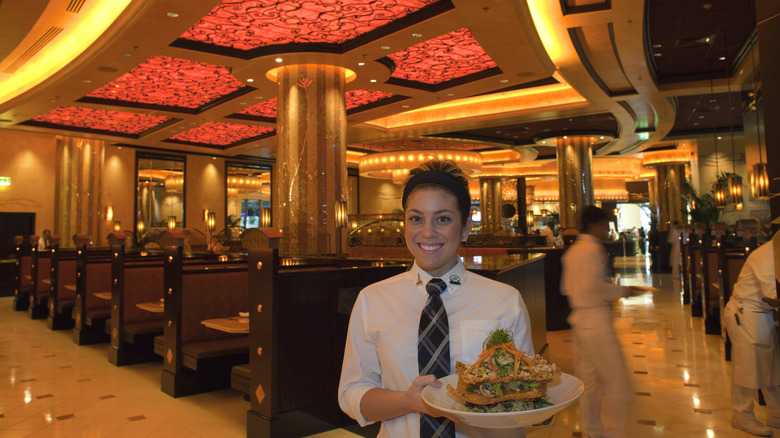
As much as a Cheesecake Factory kitchen worker might desire the Master Culinarian title, they cannot apply or ask for it themselves; they must be nominated by someone else. When staff are first hired, according to Jay Hinson, they see posters in the kitchen and can read literature on the program, so that if they are approached to apply, it does not come as a complete shock.
However, as Hinson explains, "You can raise your hand and say, 'I want to be better at this. Can you let me know what I need to be nominated for this position?' and the general manager and executive kitchen manager will sit that person down, read through the code of the Master Culinarian, and explain it to them." At that point, if the general manager and executive kitchen manager think the employee is ready to be evaluated, they still don't go straight to the test. Rather, the area director, kitchen operations manager, and area field training manager are also brought in to observe the employee to decide if they are ready. As Master Culinarian Rocio Solis says, "For me, it's just ... an honor, really. You know, it's an honor to be even nominated."
10-day rigorous testing process
If you're lucky enough to make it through all of those levels of observation, you go to the testing phase: a 10-day practical test. According to Jay Hinson, each day is tied to one of the aforementioned observable behaviors, which the executive kitchen manager will look for. The test is applied over 10 consecutive shifts. There is no written component; just on-your-feet execution.
Unfortunately, if you make it to day/shift nine and don't pass that day's markers, you fail completely, and you have to start over from the beginning. At that point, the general manager and executive kitchen manager will, according to Hinson, "sit you down and let you know that they're going to stop the training process, give you a chance to revamp, come back at a later date and ... try again," says Hinson. This is part of what makes the process so rigorous — only a very small percentage of chefs (around 5%, per Hinson) make it through all 10 days on their first try. Most have to wait several months to try again and can potentially repeat the test multiple times to earn the title of Master Culinarian.
It's based as much on character as technical ability

What makes this Master Culinarian designation particularly special is that it's not just about who is the "best" chef or who makes the most technically proficient food; it's about being a leader. Rocio Solis says, "Not only do you get to ... have the title, but you need to show it ... you need to be a role model." Jay Hinson says that "Most people can cook. Most people know how to sear. Most people know how to boil, right? ... What we try to teach them when you're with Cheesecake Factory is the care and finesse." Care and finesse are one of the observable behaviors noted during the testing process.
Hinson says that care and finesse is actually his favorite observable behavior, as well as an ingredient in the kitchen — "Salt and pepper comes second to care and finesse," he says. And that diligence happens with every step in the process of bringing the food to the plate, from how its vendors grow, package, and ship ingredients like Romaine lettuce to how its chefs elevate ingredients in the kitchen. "That's where that care and finesse comes from, right? The attention to detail," says Hinson.
Physical rewards await at the completion of the program

With this intense of a testing process, it only makes sense that there are rewards at the end beyond the personal satisfaction and congratulations from colleagues. "It's like going into the Super Bowl," says Jay Hinson. And just like receiving a Super Bowl ring, a Master Culinarian is given a personalized certificate, a toque pin, a special hat (chef hats have long connotated other meanings), and an embroidered coat, all of which are designed specifically to showcase the Master Culinarian title.
The items they can wear, like the hat and the coat, help distinguish them from other kitchen staff. It calls attention to their special status (Hinson calls it their "Super Bowl championship jersey."). Hinson says the pin is a nice trophy-esque element that the Master Culinarian can also hand off to their parents or other loved ones as a symbol of accomplishment so that other people in their lives can show off their pride, as well. Rocio Solis says she even gifted one of the hats she earned to someone at a restaurant opening, as a special gift of remembrance.
It's not a permanent title
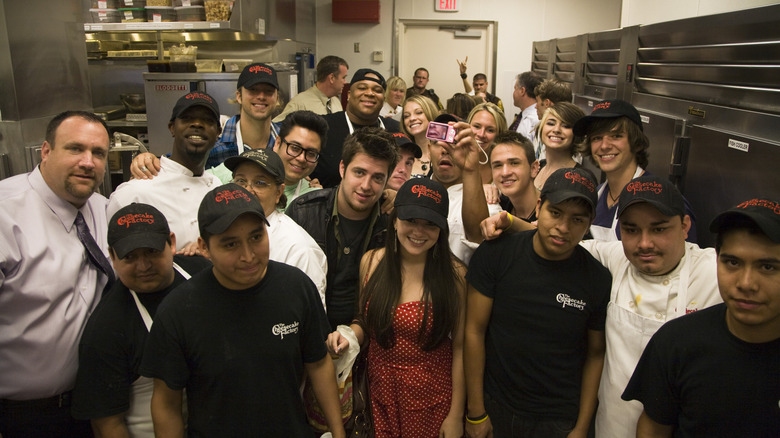
As challenging as the program is to complete, it's not a forever designation; everyone has to re-certify every two years, according to Jay Hinson. You really have to want the title to keep it. But don't worry: Hinson says he can't think of anyone who has completed the program who has ever failed the next time around. "It's fun for those people that really deserve it. They enjoy it. ... They're wired that way ... They love the accountability," Hinson says.
Rocio Solis imparts advice for anyone aiming to go for the title, or even for those who have achieved it and are thinking about their next steps. "Keep working hard ... asking questions, learn the recipes, support your team," she says. "One of the things that I always forget when I'm working, especially me, is to have fun ... Because if you love what you do, you have to have fun."