

Ditch Cleaning Vinegar: A Better Way To Keep Countertops Nice And Neat Only Needs 2 Ingredients
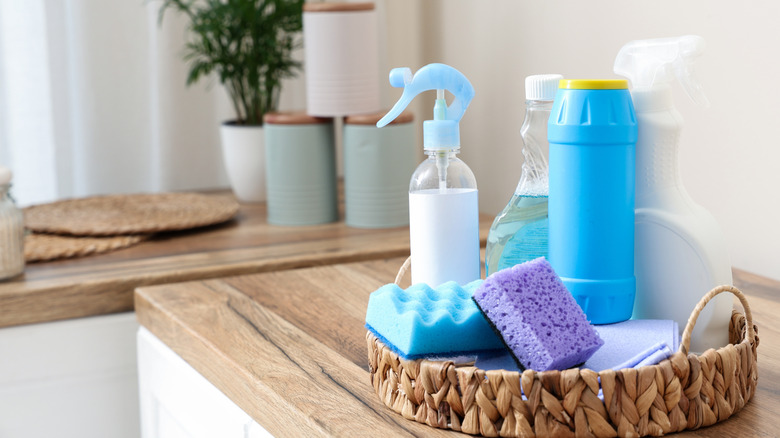
Cleaning a countertop should be one of the simpler household tasks, but the number of all-purpose kitchen sprays, concentrates, powders, and DIY solutions can make it feel like you need a different product for every task. But for simple, routine cleaning you do every day, you can skip the vinegar and much of the specialized arsenal: Good old soap and water will handle most countertop messes. The USDA even recommends cleaning counters with hot, soapy water first, reserving sanitizers and disinfectants for extra protection against contaminants from raw meat and poultry.
The reason dish soap works so well comes down to surfactants, molecules that attract water on one end and repel it on the other while attracting oil. Surfactants surround the grime and help suspend it in water so it can be wiped away. It's the same chemistry that gets dinner off your dishes — and it works just as well on your counter.
The acetic acid in vinegar can help dissolve mineral buildup, like limescale, on surfaces that tolerate acid, but can also damage certain countertop materials. Marble, limestone, and other calcite-rich stones can react with the acid, damaging the stone and leaving behind dull etching instead of a sparkling clean surface. The tool should fit the grime. Knowing what you're trying to remove, the material of your countertop, and what your homemade all-purpose cleaner actually does makes it easier to decide which one to use, and when.
Clean smarter, not stronger
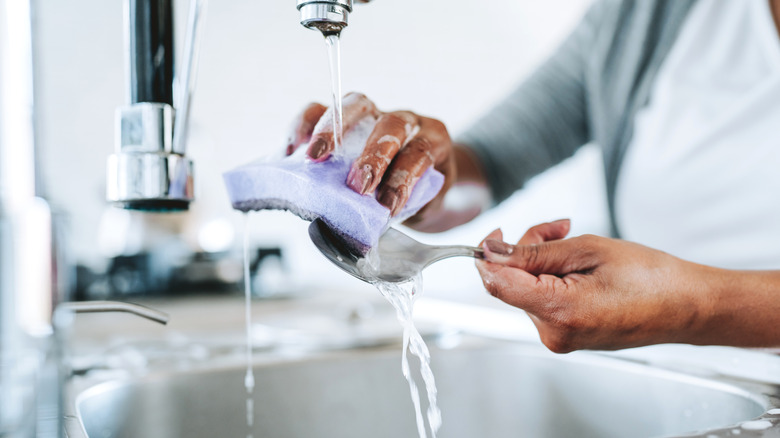
Using soap and water is as simple as the ingredients. Wet a paper towel or microfiber cloth with a small amount of dish soap and warm water and wipe down your counters. You can dilute the soap in a bowl of water or even keep it in a spray bottle for easier use. You don't need to produce a mountain of suds, and if there's a noticeable film left behind, follow with a clean damp cloth. Drying the surface afterward can help prevent streaky water spots and get your counter ready for its next encounter with food prep.
It's important to note the difference between cleaning a countertop and sanitizing or disinfecting one. Diluted soap is well suited for removing the inevitable and ordinary grease, crumbs, spills, and grime of cooking, and it's surprisingly destructive to many microorganisms, too. The surfactants rupture the lipid membranes of many bacteria and viruses, while also loosening and trapping microbes so they can be wiped away. But something like raw chicken juice might call for something a little stronger, like a simple, properly diluted bleach solution or household disinfectant. Just be sure to check the disinfectant manufacturer's care instructions before choosing which product you use, since the appropriate treatment depends on the surface.
Min-maxing the cleaning solutions in your cluttered area under the sink doesn't mean every specialized cleaner has to go, and vinegar can keep the jobs where acidity is called for. For the minor messes that can and will appear on an average day, the bottle of dish soap already sitting by the sink is remarkably capable.