

5 Disadvantages Of Using A Charcoal Grill In Cold Weather
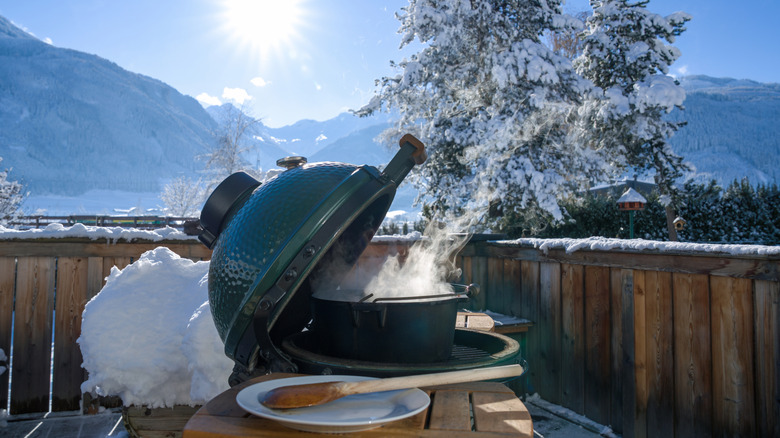
Though some people love grilling outdoors year round, doing so in areas that regularly see freezing temperatures and snow may prove to be more trouble than it's worth. Grilling during the winter requires a lot of prep work and care. This means it may not be the best cooking method for certain cuts of meat or recipes.
You have to start by removing all loose snow and ice from the outside of the grill and grill grate, and make sure the charcoal and chimney are dry. You'll also have to commit to using more fuel, as the cold outdoor air increases preheating time and slows cooking. It also causes charcoal to burn faster and less efficiently, so you'll use much more of it than you would in the spring or summer. Cold wind can create uneven grill temps, as the coals will cool quickly, which may pose food safety issues with meat and poultry. Plus, every time you open the lid, you're transferring any built up heat into the freezing atmosphere, further prolonging cook times.
And while you should pick the perfect spot for grilling to protect the flames from wind and snow, you also need to follow safety precautions and be very diligent about keeping your grill in perfect condition through the winter. You can't grill with charcoal in an enclosed space, as there is a risk of carbon monoxide poisoning. You'll also have to keep it far enough from your home to avoid causing a fire hazard. If you're still committed to firing up your charcoal grill in cold temps, take the time to familiarize yourself with these disadvantages of grilling in cold weather.
Wind can affect the flame quality
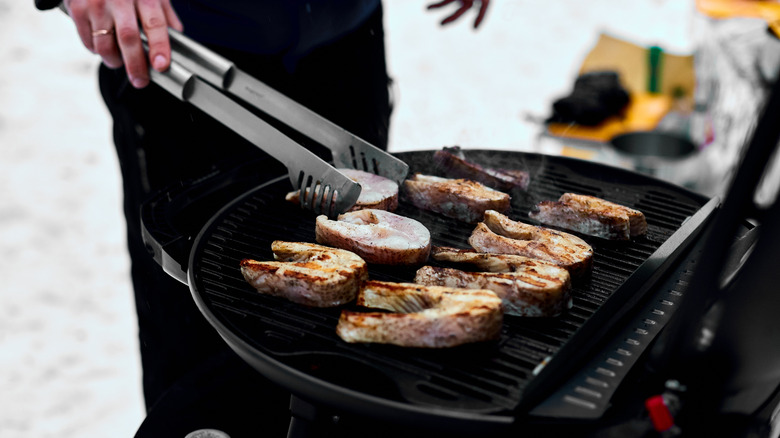
Cold air, wind, rain, and snow can all affect how easy it is to light your charcoal, how hot it will get, and how long it will stay lit. One icy blast of wind can snuff out your flames or cause them to flicker, creating cold spots on the grill. If you're lighting your grill without lighter fluid, wind combined with wet charcoal can cause further complications. If you don't want to risk even longer cooking times, you'll need to put your grill in a sheltered area to protect it as much as possible, while still being mindful of safety concerns.
Make sure it's at least 10 feet from any flammable materials, and put it in a well-ventilated area away from doors and windows. You don't want to light charcoal in a garage or carport, on a patio, or in a hallway or breezeway, as you could be at risk of carbon monoxide poisoning. Even grilling in a garage with the door open can be dangerous, especially if there is a risk of smoke or toxic fumes entering your home.
Once you find a sheltered spot, you'll need to prep the grill to prevent safety hazards or problems lighting your charcoal. Clear off any snow and ice before you begin, and make sure you're not going to have to walk through piles of snow or across patches of ice while holding plates of food. If you can't find the perfect spot, you're better off cooking inside on your stove and waiting until the snow and ice melt to use a charcoal grill.
You'll need added fuel or specialized charcoal
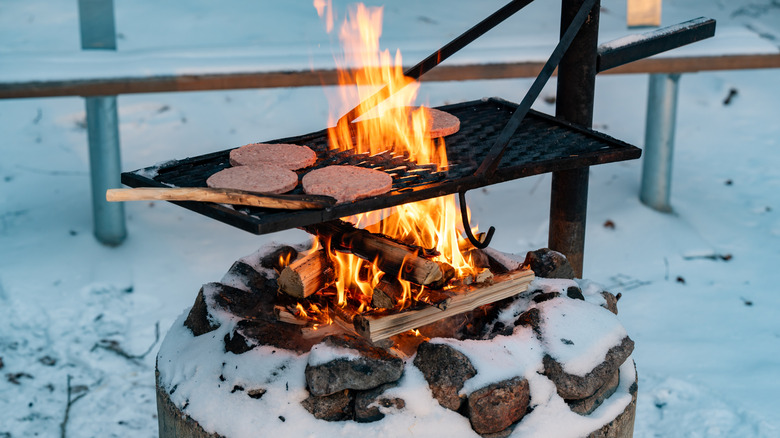
Charcoal grilling requires that you get the coals red hot before you begin cooking. That's tricky to do in cold or freezing temperatures, especially if you're also dealing with wind or rain. It will take longer for your grill to preheat, so you'll need to use much more fuel than you usually would. Cooking time increases in cold weather as well, so you may even need to add more fuel as you cook to keep temperatures consistent enough to ensure meat reaches the recommended internal temperature. You'll also have to choose your charcoal wisely. Cheap bricks may not be good enough for winter grilling, and while you can reuse charcoal, old or wet charcoal won't work well when grilling in cold weather.
Because lighting the charcoal may be more difficult in the wind, you will also need to plan on more prep work and use tools you may not normally choose. For instance, consider buying expensive charcoal that burns hotter and longer. Using a chimney starter is the secret to lighting charcoal in the winter, as it provides protection from the wind and makes it easier to get the coals to the right temperature. You should also invest in a meat thermometer to make sure your meat and seafood are safe to consume, especially if the grill temperature fluctuates due to charcoal issues. A cast iron pan can hold in heat more effectively and make it easier to get all sides of the meat seared faster.
Preheating times will be longer
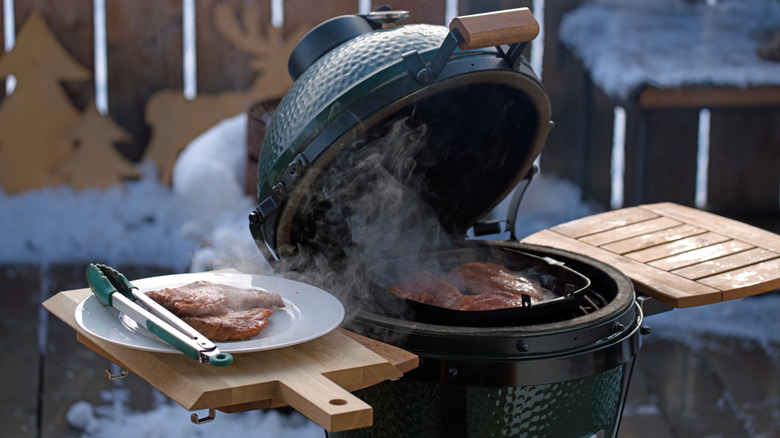
Because your grill will take much longer to preheat, spontaneous cookouts may not be in the cards during the winter. You should plan on at least 10 to 15 minutes of extra preheating time, though it could take longer, depending on outdoor temperatures, weather, the quality of your charcoal, and the condition of your grill. Putting food on a cold grill or not cooking it for long enough will not only affect the taste and quality, but it could also carry a risk of foodborne illness if you're consuming undercooked beef, poultry, or seafood. In addition to potential issues lighting your charcoal and keeping it lit, the grill itself could pose a complication. If the metal is freezing cold or covered in snow or ice, it will take longer to reach optimal cooking temperatures. A cold grill grate also won't retain heat very well, even with the lid closed.
Another thing you need to consider before grilling steak in cold weather is that you will need to babysit your food much more than you normally would. Regularly assess the temperature of the grill as it preheats, and check often to make sure the charcoal is still smoldering and hasn't burned through or been extinguished by wind or rain. Be mindful of cold spots on the grill that could cause food to cook unevenly. Before removing food, use an instant-read thermometer to make sure it's actually done.
The lid will need to stay closed as much as possible
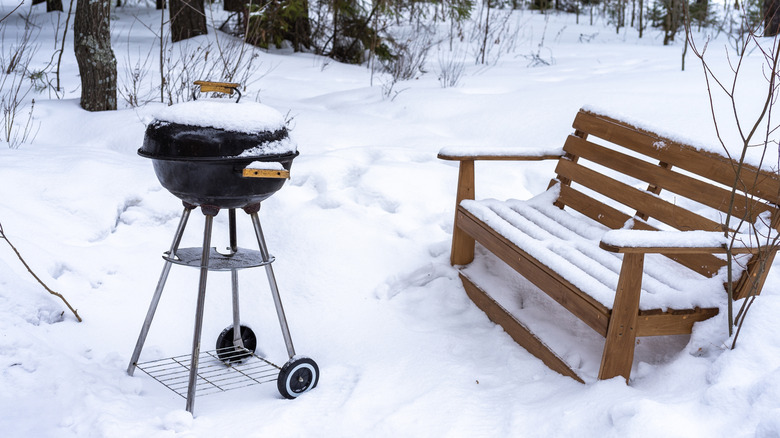
One cooking tip to keep in mind when grilling in the winter is that inexpensive charcoal grills aren't built to withstand freezing temperatures. The thin, metal body is vulnerable to cold air, absorbing it and making it harder to reach the optimal internal temperature you need for searing and grilling. Every time you open the lid of your charcoal grill, the heat that has finally built up will escape.
The only way to handle this is to try to keep the lid closed for as long as possible. You can keep the vents open if absolutely necessary, but if it's windy or raining that will slow the cooking process as well. The reason you should keep the lid closed on your charcoal grill is that it will offer a barrier against the cold air, improve cooking efficiency by preventing heat loss, and reduce fuel consumption. Yet, you may still experience uneven cooking, extended cook times, or even totally failed recipes.
And, unfortunately, because charcoal burns faster in cold temperatures, you will need to check the grill occasionally to see if you need to add more fuel. When you open the lid do so, the grill then has to reheat to continue cooking your food. When this frequent transfer of heat is combined with the pitfalls of the cold metal body of the grill and flickering flames due to wind, it's going to take even longer for your food to cook.
Some cuts of meat may not cook properly
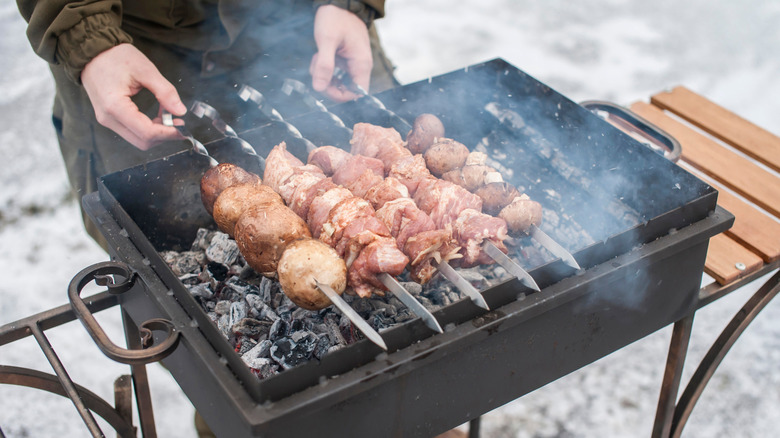
It may seem obvious, but lower temperatures, inconsistent heat, and longer cook times will affect the quality and flavor of your meat. Because you should never cook meat on a cold grill, you really have to be patient enough to wait the extra time needed for it to preheat properly. Also, certain cuts of meat just don't respond well to low, slow cooking methods. Thick cuts may not reach the recommended internal temperature quickly enough, which can pose food safety risks. You may also end up overcooking some food, making it tough, chewy, and hard.
It's best to choose smaller cuts of meat that don't require a prolonged cooking time, which means you'll have to watch the grill closely to ensure you don't overcook them. You can also opt for grilling recipes that rely on convection heating rather than dry searing. Convection grilling requires that you use a two-zone grilling method, placing the hot coals only on one side of the grill. You'll then keep the lid closed for the entire cooking process to trap heat inside. This makes it easier to control the heat when grilling outdoors in the cold, but still allows indirect heat and airflow to roast food from all sides. Low-and-slow grilling recipes also work better when cooking in cold temperatures, as you won't need to worry as much about maintaining high heat throughout the cooking time. Instead of thick steaks, use your grill to smoke ribs or brisket. Overall, grilling in the cold weather requires patience, so if you want a quick meal, this method isn't the right choice.