

5 Disadvantages Of Using Single-Cup Coffee Makers
We may receive a commission on purchases made from links.
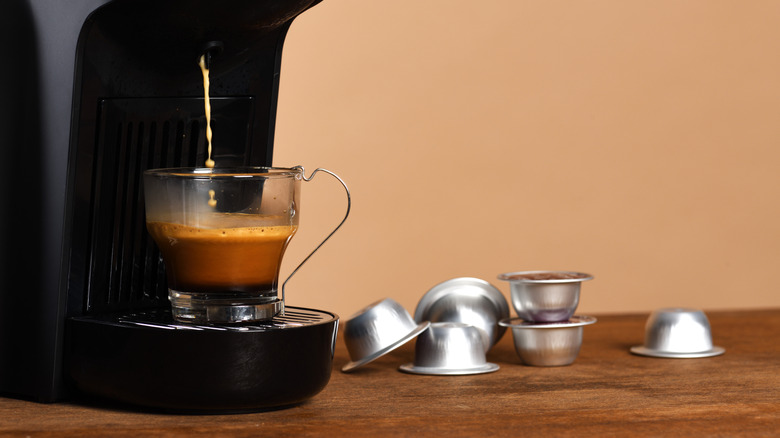
Regardless of how complex your coffee shop order might be, when it comes to making a cup at home, many of us opt for convenience. According to the National Coffee Association, 42% of American homes feature a single-serve coffee maker, a figure that's predicted to rise in the coming decade. The majority of the market share belongs to Keurig, whose machines brew coffee in the style of traditional drip coffee makers, but espresso-style pod machines such as Nespresso and Illy are rising in popularity.
The type of coffee might be different, but the benefits are the same. These single-cup machines are possibly the most convenient methods for brewing coffee at home — you insert a pod and press a button. There's no need to grind or measure coffee, almost no wait, and cleanup just means occasionally emptying your used capsule bin. Beyond saving time and effort, these machines mean that anyone can get a consistent brew, day after day, with no skill required.
Despite all of these advantages, there are some disadvantages to these machines, as well. Whether it's your first time buying a coffee machine, or you're considering upgrading your existing coffee maker, here are a few things to think about before you invest in a single-cup coffee maker.
The capsules are expensive
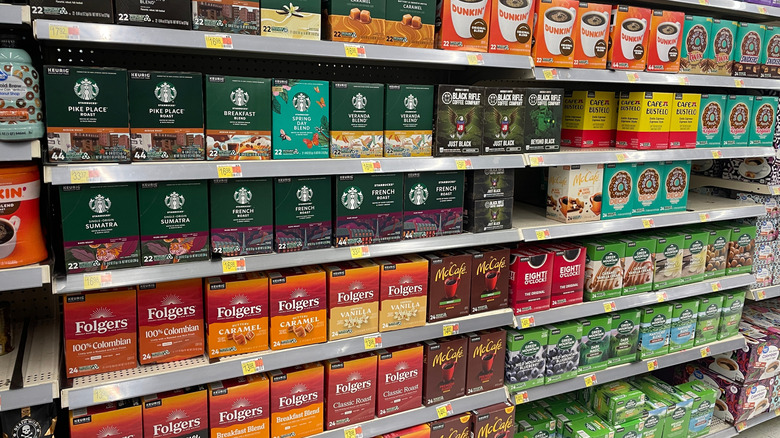
If you're in the market for a new coffee machine, your focus is probably on the features and the price. It's certainly worth comparing what you'll get from a top-of-the-line machine versus a basic, single-serve model, but the real cost to consider is the ongoing price of your daily coffee capsules.
Depending on the type of machine and the brand of coffee, single-serve pods can range from around $0.30 to $1.40 each. This is going to sound like a bargain compared to what you might pay in a coffee shop, but it's still a lot more than what you would pay for ground coffee. Comparing prices for the same brand of coffee can make it easier to see the difference. At the time of writing, Peet's Major Dickason's K-Cups are $19.59 for a pack of 32, whereas an 18-ounce bag of Peet's Major Dickason's Ground Coffee is $15.97, which can make up to 50 cups of coffee.
The price also depends on how you drink your coffee. If you're trying to recreate your favorite Starbucks drinks at home, many of them start with a base of two espresso shots — any calculations you make on the cost per drink will need to be doubled.
You're creating waste
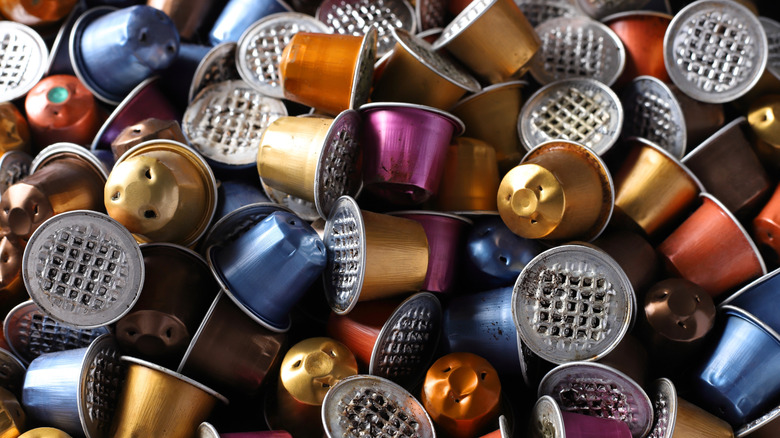
Even if you're willing to absorb the cost of capsules, the environmental cost of single-serve coffee machines can be a little harder to reconcile. American consumers go through around 18 billion K-Cups each year, with a majority of them ending up in the trash. Although the brand claimed to make all K-Cups recyclable by 2020, the reality is that the plastic used (although technically recyclable) often can't be separated and sorted due to the pods' size, preventing them from being accepted by many recycling programs.
It's not just the issue of whether the pods are made of plastic or not, it's also down to how likely people are to recycle. While there are programs in place for aluminum capsules, such as those sold by Nespresso, it's estimated that only around a third of pods are sent for recycling, with the rest going to the landfill.
If you're the owner of a single-serve machine and you want to cut down on the waste, you have a couple of options. The first is to consider brands that have compostable coffee pods, though these are limited to certain machines. Alternatively, you can buy refillable metal capsules like Noalto Resuable K-Cups that you can fill with ground coffee. You're missing out on the convenience of pods, which is arguably one of the biggest drawcards of these machines, but it's a lower-waste and lower-cost solution.
The coffee isn't fresh
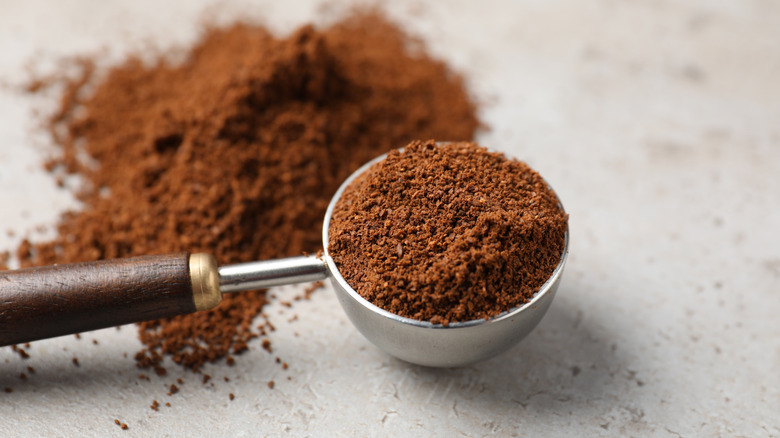
When single-serve coffee capsules are manufactured, they go through a process known as nitrogen flushing. The idea is to remove all oxygen from the capsule, as exposure to air is one of the key factors in coffee going stale. With this process, pods are given a shelf life of months or even up to a year. And while it's true that capsules won't expire in this time, the coffee won't have the same taste as anything freshly ground.
Even when the pods have an airtight seal, the oils that give the coffee flavor and body will break down over time. It also doesn't account for how the coffee is processed before it is added to the pod. Coffee begins to lose freshness immediately after grinding, but in a large-scale production, coffee is ground and then packaged in batches. This means that freshly ground coffee can be exposed to plenty of oxygen before it's sealed in a pod. The problem is exacerbated if you've opted for compostable coffee pods, as the composition of the capsule might make them better for the environment, but they'll be more permeable and expose the coffee to oxygen.
Coffee pods will never be as fresh as beans you grind yourself, but you can get a better and fresher tasting drink by choosing brands that display the roast date (rather than the best before date) on the packaging. This will let you know exactly how long they've been sitting on shelves.
You have limited coffee options
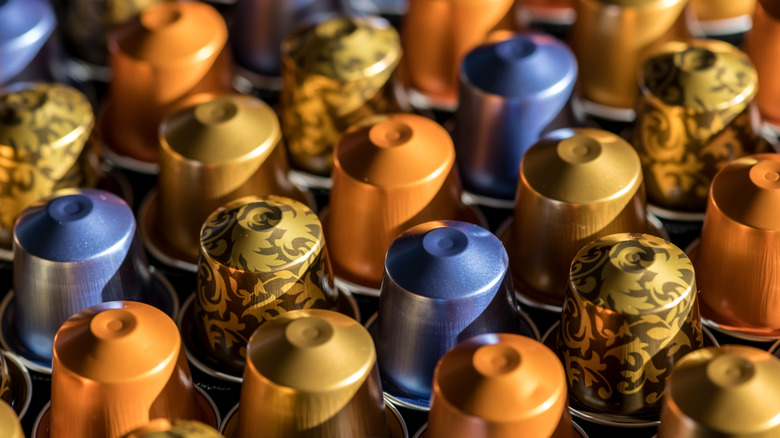
When faced with the wide array of coffee capsules or K-cups on supermarket shelves, this probably doesn't seem like it might be an issue. You'll find dark roast, decaf, flavored coffee, and even non-coffee pod options like tea or hot chocolate. But if you compare this to the ground coffee you'd use for other brewing methods, it's a drop in the ocean.
Another issue is that you're limited to capsules that work with your coffee maker. There might be plenty of third-party pods available for Keurig models or Nespresso's original line, but if you're looking at a machines like the Nespresso Vertuo or Lavazza A Modo Mio, the selection is much smaller. The number of capsule options really only tells half the story, though.
What you're missing out on with any pods or capsules is the opportunity to experience how coffee can change with seasonality, roasting, and blending. The contrast is perhaps biggest when comparing capsules to small-batch coffee roasters, but can also apply to supermarket whole beans or ground coffee. Coffee capsules are designed to be consistent all year round — if you always pick the same flavor, you're getting the same roast level, the same grind size, the same taste. Beans will be sourced from different regions, depending on the time of year; this is not for variety, but to ensure that the same taste is achieved through blending, regardless of the season.
There's less control over brewing
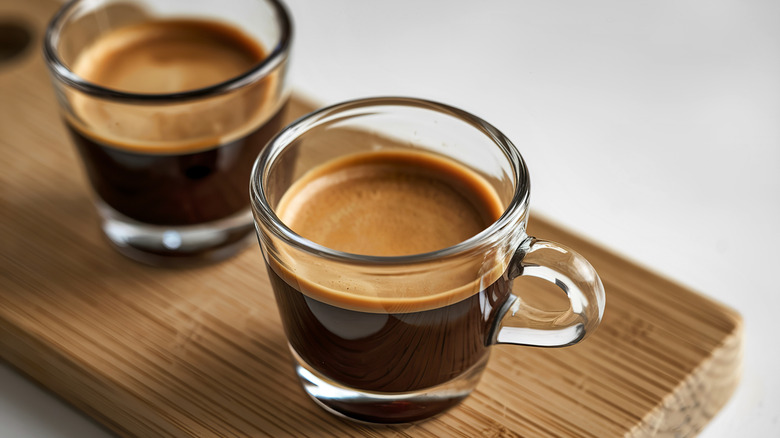
Here we have another aspect of single-cup brewing that can be both an advantage and a drawback. One of the key selling points of a Keurig or Nespresso coffee machine is that without having any experience, you can get a consistent cup of coffee, day after day, at the touch of a button. This is a blessing if you're a creature of habit or happen to alone, but becomes problematic if you want to mix things up.
The degree to which you can adjust the way your coffee is brewed will depend significantly on your machine. Basic Nespresso or Keurig models will allow you to adjust the size of your drink, but as you're brewing with the same amount of ground coffee, these modifications just change the amount of water that ends up in the cup — this gives you a bigger, but weaker, cup of coffee.
To really get the most out of coffee beans, having an extra level of control over brewing variables makes all the difference. Extraction time (the amount of time that water is in contact with the coffee) can be just as important as the coffee-to-water ratio. The ideal brewing temperature is different for light and dark roast beans, and even adjusting the grind size can dramatically change the taste of the resulting coffee.
High-end models might have buttons to brew stronger coffee, options to brew at hotter temperatures, or even create concentrated coffee designed to be served over ice. Some systems offer capsules for larger drink sizes. While these options can go some way to changing the taste of your coffee, you're still working within the limits of the single-cup machine.