

10 Expensive Red Wines That Are Actually Worth The Money
When considering life's little luxuries, a bottle of premium red wine tops the list of many collectors and connoisseurs. Oenophiles will spend hundreds of dollars on a single bottle because of its pedigree, rarity, or ratings. Where the wine is from, the vintage year, who the winemaker is, and aging techniques are a few of the many reasons that contribute to a wine's quality, and as such, its price. As a wine is constantly evolving and changing in the bottle, a wine tasted upon release may become something completely different years later, which can also contribute to its expense.
Of course, if you can acquire an award winning red wine, such as a First Growth Bordeaux with names like Château Margaux and Château Latour, Grande Cru Bourgogne such as DRC, and Napa Valley cabernet sauvignon with a cult following, such as Screaming Eagle, it will cost a pretty penny due to their limited availability and high demand. However, refined excellence doesn't stop there, as exhibited with each of the pricey options featured here.
As a Certified Sommelier and long-time wine reviewer, I put together this list of recommendations based on the history, provenance, and character of each wine that, while expensive, is worth the price. I found that each displays the essence of its terroir, the heart of its producers, and a distinctive style that is completely delicious. While these wines won't cost you thousands, they are a splurge. However, the quality and character of each exceed expectations.
Gaja Sperss Barolo
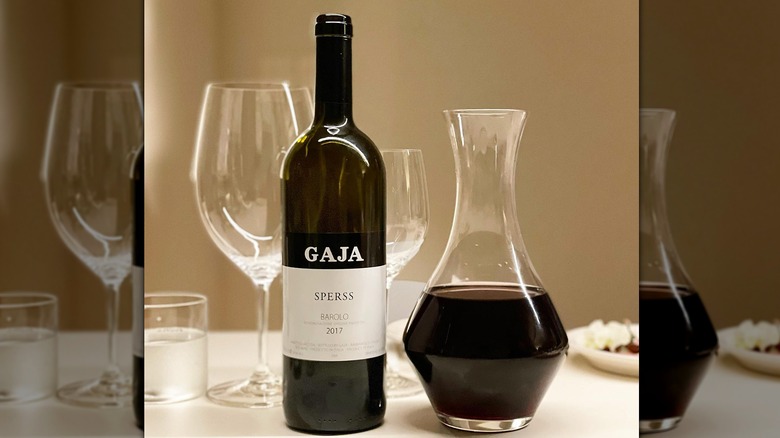
Since 1859, Gaja has led the production of premium Barolo from Northwestern Italy's Piedmont region. This is thanks to Barolo's unique terroir, which is ideally suited for growing the red nebbiolo grape variety. Translating to nostalgia in the Piedmontese dialect, Sperss Barolo hails from a small vineyard within the Serralunga area of Barolo. The nebbiolo variety thrives there thanks to the area's mineral-rich limestone soils, delivering wines with a tannic backbone, incredible power, and fresh, juicy acidity.
Every wine lover has an "ah ha" moment with wine. The wine that stops you in your tracks and makes you take notice. Drinking a glass of Barolo was that wine moment for me. It happened when my palate was untrained, yet immensely curious. Tasting my first Barolo was transformational, leading me to become a sommelier. I recall the savory tastes of the meaty, earthy truffle, wild herbs, ripe cherry, tar, black licorice, and dark chocolate flavors like it was yesterday.
These are the qualities found in every bottle of Gaja Sperss. Available for the average price of $481 for a 750-milliliter bottle, the wine reveals power, concentration, and structure, combined with infinite grace. Together, they create what is known as the King of Italian wines, Barolo. It is easy to fall under Barolo's trance, as there is nothing else quite like it in the world. Experiencing the region through Gaja's premium Sperss Barolo is not only a pleasure but a privilege.
Inglenook Rubicon
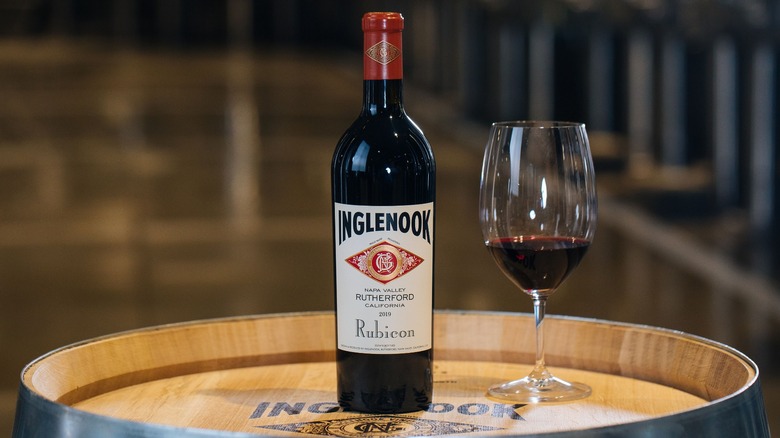
There is an area that sits at almost the heart of Napa Valley known as the Rutherford Bench. Sitting off the valley floor just north of Oakville, the area is known for its gravely, well-draining, alluvial soils which are ideal for growing exceptional cabernet sauvignon with a full-body, ripe roundness, and a certain mineral-rich, age-worthy character thanks to the area's Rutherford dust.
Founder Gustave Niebaum saw the potential here, purchasing 1,100 acres of Rutherford land in 1879 and began producing wine which won gold at the 1889 Paris World's Fair. His grandnephew, John Daniel, Jr., followed that legacy when he took over the property in 1939. Daneil's wines won more awards than any other California property at San Francisco's Golden Gate International Exposition.
Today, under the ownership of the Francis Ford Coppola family, Inglenook's property spans1,700 contiguous acres of land with 235 acres of sustainable, Napa Green certified vineyards. In 1978 the winery, under Coppola's ownership, debuted its flagship wine, Rubicon. A Bordeaux-style red blend, the wine displays the soul of Inglenook. Melding tradition with innovation, Inglenook's Director of Winemaking Philippe Bascaules showcases the provenance of the historic estate through each vintage of Inglenook Rubicon. Rubicon is a wine that is equally delicious upon release as it is with decades of bottle aging, revealing smooth, silky, elegance with every sip. It's a wine that easily pairs with gourmet burgers as it does a tenderloin with truffle sauce. Costing $265 for a 750-milliliter bottle, drinking Rubicon is like drinking history.
Château Angélus
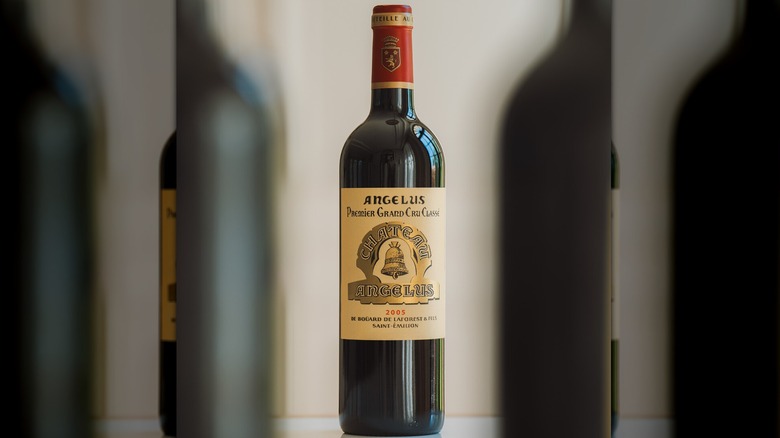
East of the Dordogne River within France lies the Right Bank of Bordeaux, home to some of the world's most refined wines crafted from a merlot and cabernet franc blend. Here, Château Angélus stands with timeless prestige within Saint-Émilion. Since 1782, the Bouard de Laforest family has owned the prestigious estate and 100-acre vineyard. The wines were classified as Saint-Émilion Premier Grand Cru Classé "A" in 2012, one of only four regional estates to receive the classification. This was until the Château withdrew its candidacy for the classification in 2022 due to disagreements with the governing system.
Although Angélus no longer carries the classification, the wine remains remarkable thanks to the terroir-driven approach. Organically farmed soils of clay, limestone, gravel, and sand sit on a south-facing slope, an ideal location for growing merlot and cabernet franc. The premier wine of the estate brings the plush elegance of merlot toether with cabernet franc's floral and spice notes. A touch of other Bordeaux varieties round out the character. While the wine's soft silkiness and pure expression of the fruit shines throughout, there is structure, complexity, and sophistication.
At an average price of $445 for a 750-milliliter bottle, Château Angélus is beautiful upon release, and an age-worthy selection that will evolve well with proper storage. If the top-tier wine's price is too steep, Angelus crafts its more affordable, entry-level Bordeaux appellation wine, Tempo d'Angelus, an earthy, fruit-forward blend available for around $30.
Spottswoode Estate Cabernet Sauvignon
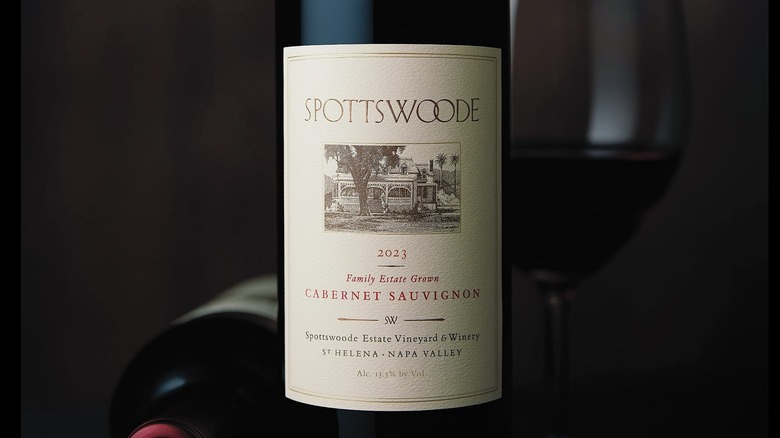
As stewards of the land, the Novack family has promoted green farming practices for their B Corp-Certified Spottswoode Estate Napa Valley vineyards for decades. They've been the vintners of its St. Helena estate since 1972 and today employ organic, regenerative, and biodynamic management for their 46 vineyard acres. It's been farmed organically since 1985 and was one of the first organic vineyards within Napa. The winery received California Certified Organic Farmers (CCOF) certification in 1992 before earning Demeter Biodynamic Certification in 2020.
A focus on biodynamics was led by vineyard manager and winemaker Aron Weinkauf. Weinkauf understands that the decisions made in the vineyard years ago impact the quality of the wines today. In turn, the work he does with the Novaks in the vineyard and winery today will ensure quality and longevity in the future. He has been entrusted to leave the vines better than how he found them, a philosophy carried throughout Spottswoode.
The vineyards, which are nestled on the gently sloping benchland of the Mayacamas mountain range, have been planted there since 1882. Cabernet sauvignon grapes for Spottswoode's signature Estate Cabernet Sauvignon wine thrive in the cool, maritime climate of the St. Helena benchland, creating a long, even growing season and producing well-ripened fruit with energy and freshness. Well-draining, nutrient-rich, alluvial, clay loam soils develop fruit with complexity and concentration. French oak aging rounds out the texture, ensuring a polished, precise palate. A 750-milliliter bottle is available for $285 and has an elevated sophistication and lengthy ageability.
Prats & Symington Chryseia
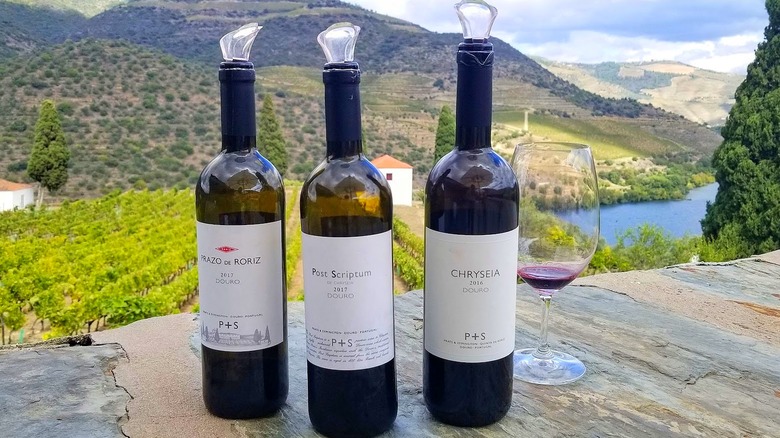
When you think of wines from the Douro region of Portugal, your mind likely takes you to one of the delicious fortified port wines from historic producers such as Warre's, Graham's, or Dow's. However, producers in the region also craft remarkable dry red wines from the same grapes used to make port wine. In 1999, a partnership was developed between Bruno Prats, an agricultural engineer from Bordeaux, and Charles Symington of the Symington Family Estates, which includes the aforementioned port houses. The goal was to create a new style of premium wine showcasing the Douro region. The resulting blend of touriga nacional and touriga franca is Chryseia, one of Portugal's finest dry red wines.
Available for around $100 for a 750-milliliter bottle, the wine isn't the most expensive featured on this list. However, in comparison to many dry Douro Valley reds from Portugal, Chryseia is on the high end — and worth every penny. The wine displays the sun-baked intensity of the hearty, high-tannin varieties. Yet it has texture and balance, with a velvety-smooth, elegant palate that reveals earthy, smoky, fruity concentration in every sip. The tannin structure makes it a delicious pairing for rich soups or stews, such as a simple rabbit stew or a hearty Portuguese kale soup packed with spicy chorizo sausage.
Cliff Lede Poetry Cabernet Sauvignon
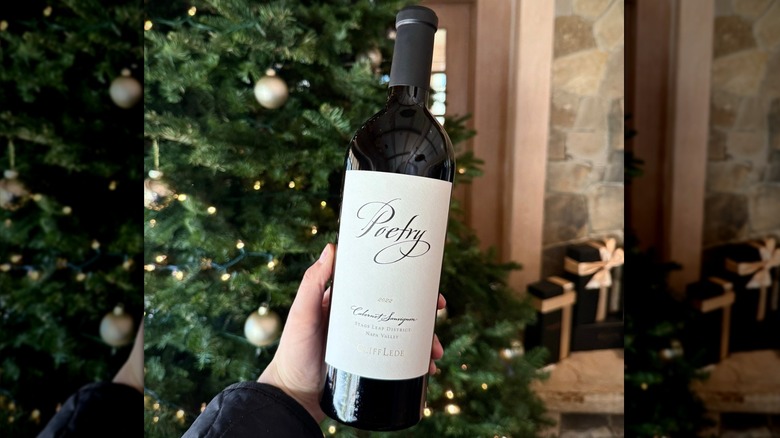
The Stags Leap District within Napa Valley produces fruit with structure, texture, and density thanks to the natural microclimate of the region, as displayed in Cliff Lede Poetry Cabernet Sauvignon. The area enjoys exceedingly warm days that shift to rather cool nights, with 30-degree day-to-night temperature swings being common. This diurnal shift produces cabernet sauvignon with balance, optimal fleshy ripeness, freshness, and bold intensity.
The steep, hillside Poetry Vineyard lies from the valley floor along the Silverado Trail upwards to the highest elevations of the region. Volcanic soils over fractured shale produce low-yielding vines with highly concentrated fruit from heritage cabernet sauvignon selections, which were planted by legendary Napa vintner David Abreu. Director of winemaking Christopher Tynan uses the latest technology in the Napa Green-certified winery to ensure the full-bodied, terroir-driven wine has precision.
It has mineral-rich graphite, cedar, and woody herb notes with a core of cassis, ripe cherry, and blackberry, showing an undeniable sense of place. Available for $375 for a 750-milliliter bottle, the wine has length, texture, and harmonious balance. While the tannin is present and persistent, it does not dominate the taste. Still, the tannin's presence makes this a wine that will age for years. If you're enjoying it shortly after the release date, pair the wine with a fatty grilled ribeye or braised short ribs. The tannin will cut through the richness of the meat, creating a balanced pairing. And while I always advocate cooking with the wine that you are drinking, save this beauty to enjoy on its own instead of in the braising liquid.
ZD Abacus
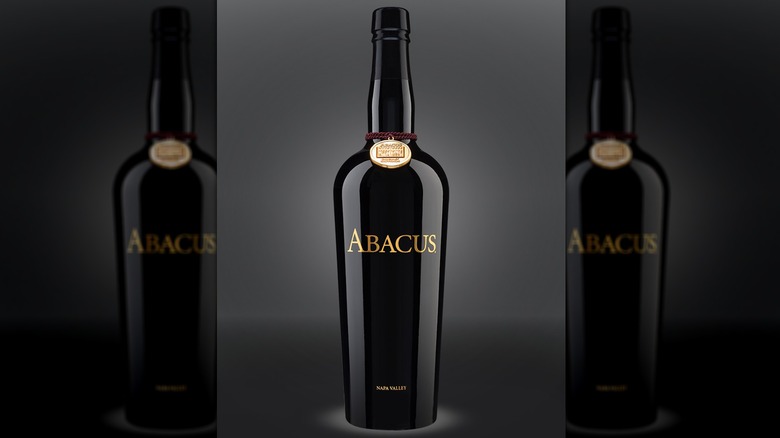
There is history in every bottle of ZD Abacus that goes beyond the age of the vines. While the wine's organically farmed Napa Valley fruit is well established, the wine itself is a solera-style blend of current and previous vintages. ZD Abacus XXVVII blend represents 33 previous vintages of ZD's Reserve Cabernet Sauvignon (1992 to 2024) and is available for $2,400 for three 750-milliliter bottles, or roughly $800 each.
Its roots date back to 1969, when the deLeuze family established ZD Winery in Napa's Rutherford district. The wine came about when brothers Robert and Brett deLeuze were enjoying older vintages of the reserve wine. They knew that by blending various lots of fruit, they could create a wine with more depth and density than a single lot offered. Or, taking a quote from Aristotle, "The whole is more than the sum of its parts." They also found the older wine's age-worthy character remarkable.
From that, they conceived a wine of blended vintages. They would add the finest lots of cabernet sauvignon from the new vintage to older ones, and in doing so, produce a wine of superior complexity that evolved from year to year. With an annual influx of youthful fruit from a new harvest, the wine shows fruit-forward freshness that marries with the tertiary notes of leather, earth, and tobacco that come with age, creating an intensely aromatic, flavorful wine that engages all the senses. It's sustainably produced, and ZD bottles only 15% of the limited-release wine in the solera each year.
Penfolds Grange
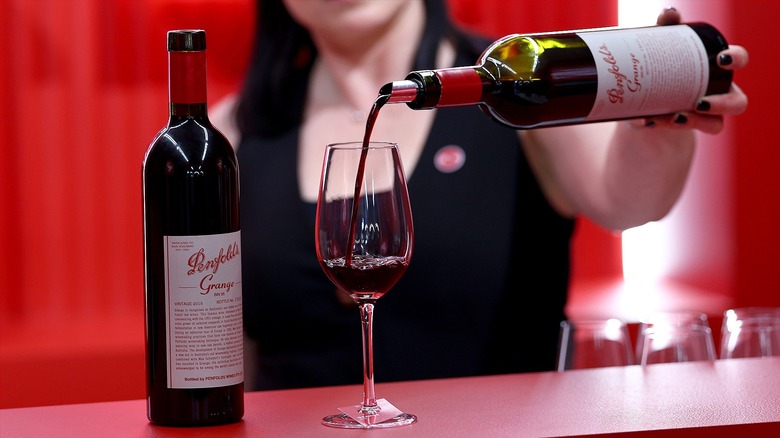
Penfolds Grange, which celebrated its 75th anniversary in 2026, is arguably Australia's most revered and respected wine and one of the finest red wines produced globally. But it wasn't always that way. Winemaker Max Schubert was inspired by French winemaking techniques he encountered while studying in Bordeaux and was determined to craft a wine with great aging potential featuring shiraz, the grape that has become one of Australia's signature varieties.
After rounds of experiments, Penfolds released its first experimental bottling of Grange in 1951, named after the historic family home. Sadly, management disapproved, ending the project in 1957. They did not understand Schubert's passionate pursuit of a wine that would taste alive after 20 years of bottle aging. Still, Schubert persisted, creating the wine in secret in Penfolds' cellars for three years. In 1960, senior management retasted some of the early Grange releases, now with several years of bottle age, realized its richness and refinement, and reinstated the program.
Penfolds Grange showcases the powerful intensity of shiraz and is believed to have 20 to 50 years of aging potential. In 1995, Wine Spectator named the 1990 vintage its Red Wine of the Year, securing its place in history. Although Schubert has long since retired, the style and production method of Grange remain exactly as the visionary winemaker intended. The wine's first commercial release in 1952 sold for $1.50. Today, Penfolds Grange is officially listed as a Heritage Icon of South Australia and is available for an average price of $739 for a 750-milliliter bottle.
Arcanum
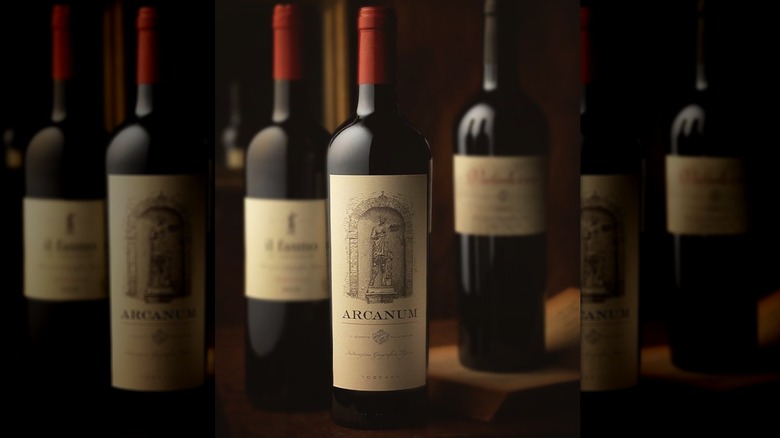
Arcanum was born from a love for cabernet franc by visionary vigneron and master blender Pierre Seillan. Seillan developed an adoration for the variety while working in France's Loire Valley. This wine is the pinnacle of the Tenuta di Arceno portfolio, from Italy's Chianti Classico region in Tuscany. It blends 12 different blocks of cabernet franc from the estate, each hand-selected by Seillan and resident winemaker Lawrence Cronin.
Under Seillan's guidance, the winemaking team employs a micro-cru philosophy, dividing each vineyard block into smaller parcels based on the soils, climate, and other elements of the terroir. Each micro-cru is planted with the ideal variety, delivering intensely site-specific character. The estate's nutrient-rich, sandy-clay soils hold water, ensuring that the vines receive proper hydration throughout the warm growing season.
The wine, priced at $100, displays richness, clarity, and charm, showing black fruits, wildflowers, soft herbs, and earthy truffles. I blind-tasted this wine alongside a selection of other pricier, highly marketed Super Tuscan blends, including prestigious Sassicaia. I found Arcanum's opulence, varietal authenticity, and velvety character to be superior.
Lokoya Howell Mountain Cabernet Sauvignon
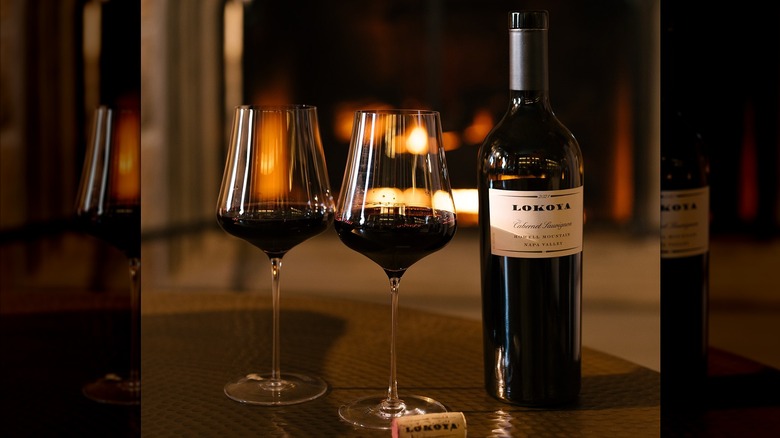
Lokoya crafts its inky, earthy, silky cabernet sauvignon from the iron-rich clay and volcanic soils high atop Napa Valley's Howell Mountain. The vineyards on Howell Mountain lie above the fog line, at elevations ranging from 1,400 feet to 2,200 feet above sea level. Because of its location above the fog, the day-to-night temperature range is less dramatic than in other parts of the valley. Afternoon temperatures are milder than on the valley floor, with moderately cool evenings that extend the long growing season and produce fruit with fresh acidity. Nutrient-poor soils require vines to dig into the earth to find nutrients, creating concentrated, highly structured wines with a tannic backbone that are ideal for aging.
Lokoya shows these characteristics with refinement, thanks to longtime winemaker Christopher Carpenter's expertise. Carpenter crafts four Napa Valley mountain appellation wines for Lokoya, with each being terroir-driven and distinctly expressive of place. While all are delicious, the small-production, single-vineyard Howell Mountain expression is a favorite because it wraps finesse and elegance around the region's intense, powerful, masculine fruit with a mineral-intense, earthy core.
Lokoya's Howell Mountain fruit has been sourced from the historic W.S. Keyes Vineyard, sitting at 1,825 feet in elevation, since the first vintage was bottled in 1995. Lokoya ferments with native yeasts and is bottled unfined and unfiltered, revealing an authentic, expressive representation of the land. With an average price of $444, Lokoya's bold palate and earthy undertones pair well with grilled meats, such as a grilled porterhouse steak with fresh chimichurri sauce.
Methodology
Each of the wines in this recommendation tells the story of the land. As a certified sommelier, Certified Specialist of Wine, and wine writer with 20 years of industry experience, I have tasted some of the finest wines ever made, often in the place where they come from. I have enjoyed each of the recommended wines. For most of them, I walked the vineyards, tasting fruit directly from the vine while speaking with their producers. Each age-worthy option tells the story of place, with hands-off winemaking practices showcasing the terroir.
I intentionally did not choose the most expensive wines in the world. You can find plenty of articles and information about those, including in this piece about the rare ones you can find at Costco. Instead, I chose to recommend options that, while pricey and what some may consider aspirational, are still attainable.