

Why Steakhouse Salad Bars Disappeared
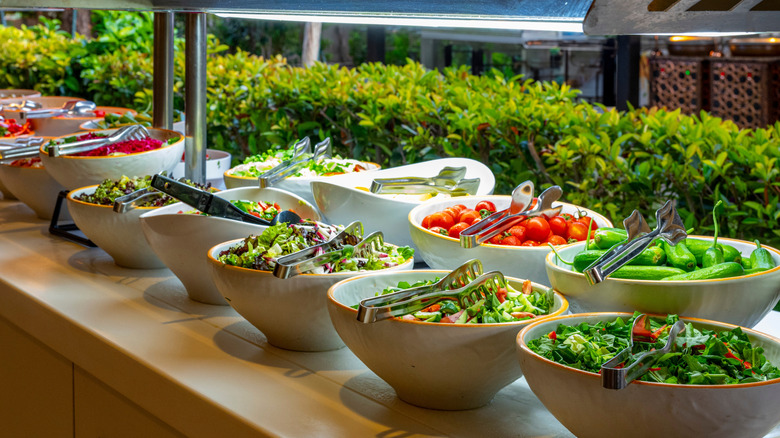
Though there might have been a time when diners headed to steakhouses specifically for the salad bar, the all-you-can-eat format has gradually disappeared. Norman Brinker is largely credited with the idea, where at Steak and Ale, reasonably-priced steaks were offered alongside a self-serve salad bar and unlimited honey wheat bread. The concept caught on, and as Steak and Ale ballooned into nearly 300 locations, other restaurants took notice.
Though Steak and Ale eventually filed for bankruptcy in 2008, its legacy inspired similar steakhouse chains like Ponderosa, Bonanza, and Sizzler to offer salad bars of their own. The rise and fall of the restaurant salad bar wasn't an experience unique to Steak and Ale, however, and many restaurants also saw shrinking numbers when it came to these self-service stations. The pandemic is largely responsible for the disappearance of the ability to heap vegetables onto your plate. "RIP to those delicious salad bars," quipped one fan of the experience on Facebook.
A food display approached with trepidation
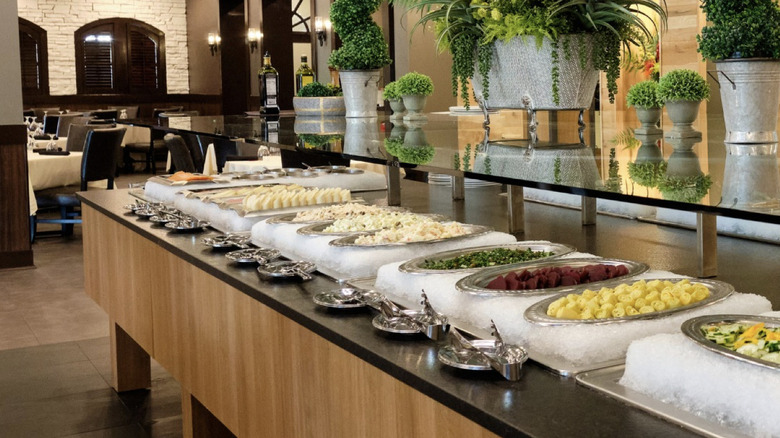
The FDA suggested that restaurants eliminate self-service options in 2020, and since salad bars and buffets involved shared contact points and are a hotspot for germs, cutting them was a decision many business owners had to face. Some restaurants clearly pinpointed these government guidelines when they ceased to offer salad bar options, while others noted that even if a salad bar remained available, customers seemed wary of sharing serving utensils and digging out of salad bowls set out on display. In addition to COVID-19, foodborne illnesses like E. coli outbreaks linked to lettuce also gave diners pause.
Public health wasn't the only consideration. The cost of restaurants offering salad bars didn't always work in an establishment's favor. Between managing, restocking, and properly storing ingredients and hiring staff to maintain these self-service stations, the overall costs of these setups could mount quickly. Factoring in food waste from unsold items and rising protein prices, the decision to cut all-you-can-eat options and replace it with a more contained side salad or a smaller food station could help restaurants keep expenses manageable, even if some customers still reminisce about the experience.