

The Simple Cooking Technique That Can Take Your Ribeye To The Next Level
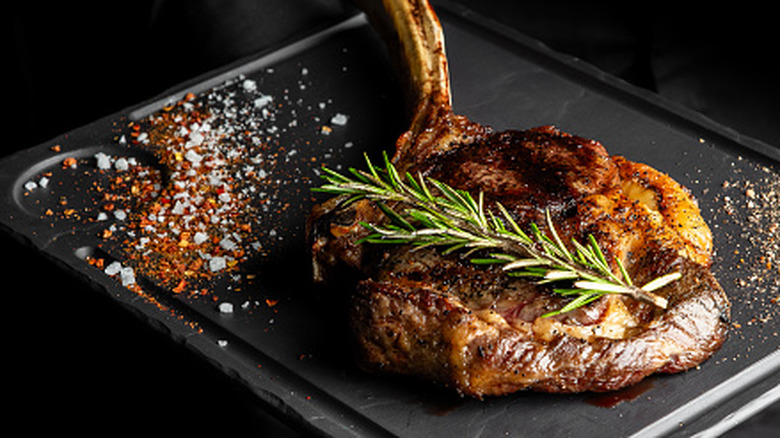
As far as home cooking goes, there may be nothing that delivers greater reward with less effort than a nice steak. A good piece of beef, treated well, doesn't require exceptional skill or all that much work to become the centerpiece of a wonderful meal. This is especially true for the most popular cuts of steak, a list topped by a good old ribeye. Marbled and flavorful, there are many ways to prepare a ribeye, but a simple butter baste can take it to restaurant quality.
There are not many foods in this world that aren't improved by a touch of rich, salty butter, and this is true even for a fatty steak like a ribeye. The reason that butter-basting improves steak is not simply down to the added richness. In addition to the extra fat, this method also imparts a unique nutty flavor from the heated butter, helps to ensure an even cook across the steak, and promotes the formation of a delicious browned crust through the Maillard reaction.
The technique for butter-basting is a relatively simple one, and as far as tips for cooking ribeye go, it's tough to beat. First, the steak should be seasoned and seared over high heat, flipping often and accomplishing the majority of the cook. Then, once the steak is mostly finished, the butter is added to the pan with the steak, the pan tilted, and the melted butter spooned across the steak, finishing the cook and coating it in that liquid gold. Once the steak reaches the preferred internal temperature, it should be removed from the pan and allowed to rest before serving.
Tips and tricks to butter-basting a ribeye
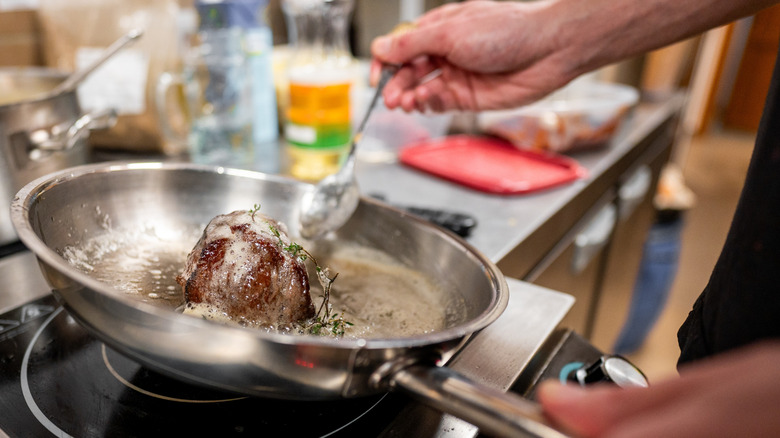
As you can see, it's a simple technique, and as you can taste, it's impossibly delicious — but there are a few tips and tricks that can help make your butter-basted ribeye even better. The first is that, while butter is important to the process, you don't want to introduce it too soon. When it comes to the initial searing of the meat, you want to start with a high-heat oil. Butter belongs at the end of the steak-cooking process because of its low smoke point — the heat used for a good sear will burn the butter in seconds.
It is also good practice to add some aromatics to the pan when you add the butter. On its own, butter is delicious, but it is even better seasoned. You can add flavor to the butter by tossing a clove or two of garlic into the pan as well as a few sprigs of fresh herbs like thyme or rosemary. As these simmer in the butter, the fats take on their aromatic qualities, spreading that delightful seasoning to every bite of beef.
Finally, once the steak is done cooking, don't throw away that butter. Not only will it be infused with those aromatics, but it will also be enhanced by the beef fat from the pan. Tossing that in the garbage would be worse than wasteful. Instead, pour some over the sliced steak before serving, or over a side of roasted potatoes. This butter can also be used to add a huge amount of flavor to a side of sauteed asparagus or steamed broccoli. Or, if none of those options work, let it resolidify in the fridge and spread it on your toast the next morning.