

Why Butter Belongs At The End Of Cooking Steak — Not The Beginning
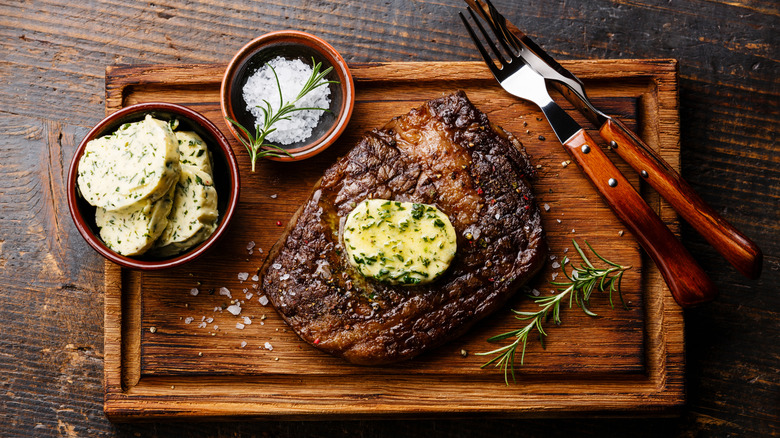
Butter and steak are an incredible combination — especially when it comes to those leaner cuts of beef that need a boost of fat. For instance, perfectly cooked ribeye or New York strip doesn't need anything other than a bit of butter and copious amounts of salt. But there are various ways to add butter to any steak, some of which are better than others — and you should only be using butter towards the very end of cooking a steak.
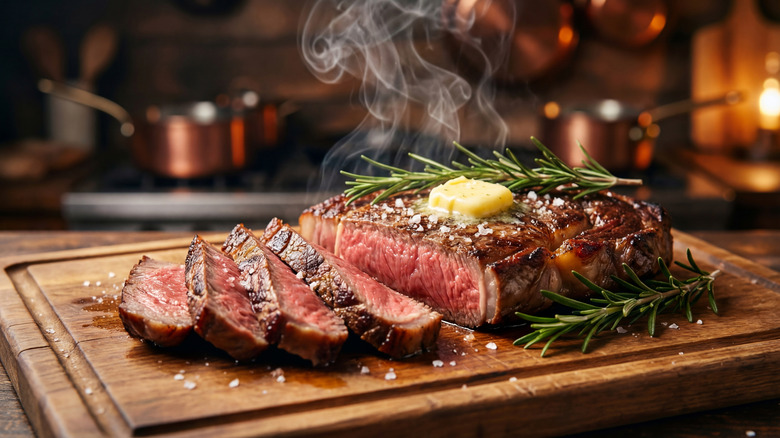
As you likely know by now, letting your steak rest after it's finished cooking is a non-negotiable. Not only does it give the steak time to finish cooking, but it also gives it time to relax and retain its valuable juices. Once the steak is removed from the heat, set it on a wire rack to help maintain the crispy crust, and add a couple of tablespoons of salted butter on top to finish. The butter will melt from the heat of the steak.
While some argue that the butter will affect the crust, in my experience, it only very slightly affects the outer texture and is still worth doing. Once the steak has rested for five to ten minutes, you can slice it, and the melted butter will begin to run onto the exposed meat, leaving you with steak slices glistening with trails of butter. Even better, try one of the 15 mouthwatering compound butters on your next steak.
Beware of butter's low smoke point
To get further perspective on why butter should be reserved for the end of cooking steak, Tasting Table spoke with Scott Thomas, the owner of Grillin' Fools and Cookin' Fools. "Butter at the beginning is terrible," said Thomas. "In order to get a great sear on steaks, the temp of the grill or pan need to be around 500 [degrees Fahrenheit] or higher. Butter has a smoke point much, much lower than that," Thomas warned. Due to butter's low smoke point, you mustn't cook your steak using butter as extra fat in the pan, as it will burn quickly and lead to an unpleasant taste on the exterior of your steak.
If you're hesitant to add the butter on top of your steak as it rests, another common technique that will impart more flavor is to baste the steak in butter as the steak finishes cooking — although there are mistakes commonly made when butter-basting, too. When you have about a minute or so of cooking left, be sure to turn down the heat to medium-low before you add the butter — as well as any aromatics such as garlic, rosemary, thyme, or sage — to the pan. From there, use a large spoon to baste the steak in butter, flipping it once, and then remove it from the heat and allow it to rest.
No matter how you use butter when cooking steak, always remember to pull the steak off the heat early. Due to carryover cooking, a steak's temperature will increase at least 5 to 10 degrees Fahrenheit after it leaves the heat source, and you'll risk overcooking it.