

13 Hands-Down Best Tips For Cooking Ribeye
We may receive a commission on purchases made from links.
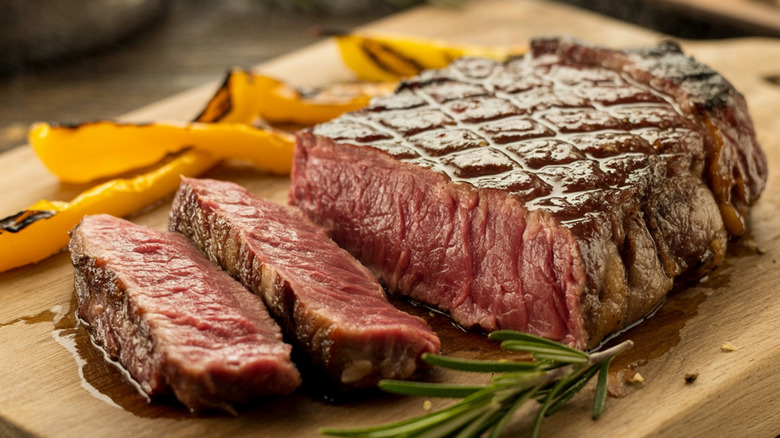
If you're a meat lover, it's likely that a piece of thick-cut ribeye steak is your idea of a perfect dinner. It's such a flavorful cut of meat, yet is still accessible for the average home cook. Ribeye is one of the most popular cuts of meat for a reason. It's oozing with a fatty, meaty flavor, and when cooked well, can be really tender. It's not cheap, but it's more affordable than other prized cuts, making it a great choice for a special home-cooked meal.
As someone with culinary training and lots of experience cooking different cuts of meat in professional kitchens, I've learned my way around a ribeye and know what it takes to cook it to perfection. Plus, in my catering business, I often choose ribeye when making steaks for clients because it's a huge crowd pleaser.
A quality piece of ribeye will have a beautiful amount of marbling, so it's almost guaranteed that it will taste amazing no matter what. Still, you need to know how to bring out its best in the kitchen to truly make yourself a scrumptious steak. With a few tips, you can whip up an amazing steak in your own kitchen that rivals the steak at your favorite steakhouse. Here are some of the hands-down best tips for cooking ribeye steak.
1. Use the right cooking equipment
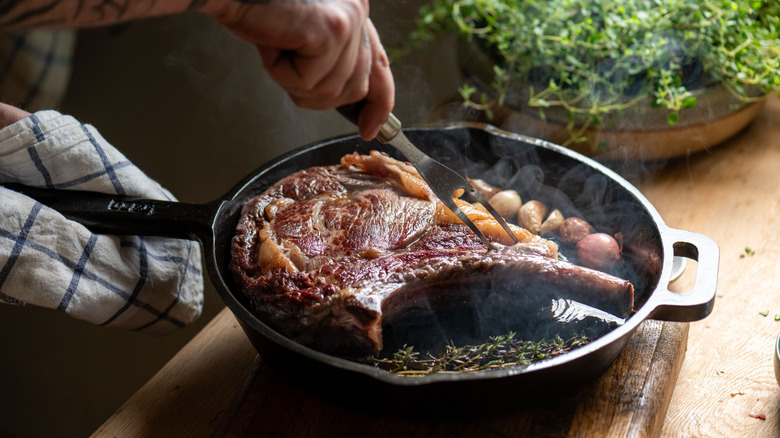
First things first: You want to make sure you have the right cooking equipment to cook a ribeye so that it develops a great crust and an evenly pink center. While some may love to grill or use a broiler, it can be difficult to control the heat, and it might get tricky with a fatty cut like ribeye dripping combustible grease everywhere.
The best thing to use, in my opinion, is a cast-iron skillet, but a heavy-duty steel pan works great too. This is because you want to get your pan really hot to create that delectable caramelization and browning on the outside of your steak, but you also want to be able to control the heat so that you can cook it evenly (and not overcook it, which is one of the biggest mistakes to avoid making with ribeye).
For people who want to finish their steaks in the oven after searing them, it's best to use a pan that is oven-safe. That's another point for a cast-iron pan, which can safely go from stove to oven. Additionally, you should have a good pair of kitchen tongs to safely flip your steaks with. They will not only make your life easier but will also make you feel quite cheffy. The best part is that you can get some good ones, like this stainless steel set, for less than $10.
2. Salt the steaks in the fridge overnight
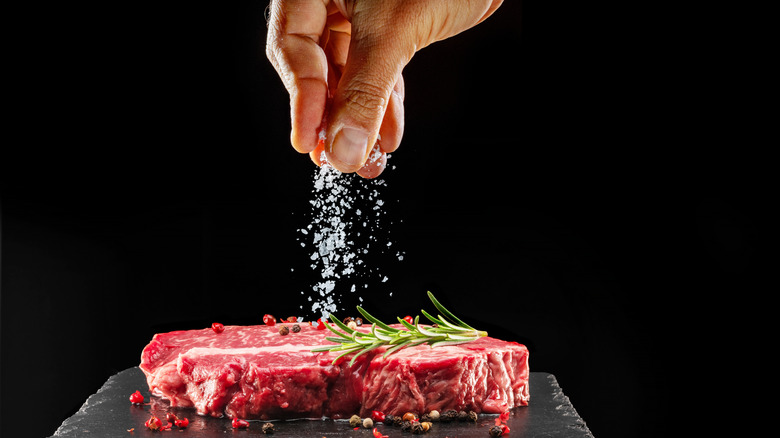
Many recipes will tell you to salt your steaks before cooking, but it actually takes time for the salt to permeate the meat. For a thick cut like ribeye, you'll want to give it a few hours, or better yet, overnight, to give the salt enough time to permeate the flesh. This is called a slow salt brine, and it will upgrade any steak dinner going forward. When you salt a piece of meat, some moisture will initially be drawn out of it through osmosis, but when given enough time, much of this moisture (which is now mixed with the salt) will get reabsorbed into the flesh. This not only breaks down the fibers in the meat, allowing it to become more deeply seasoned on the inside, it also helps a better crust form when you sear the meat.
So if you want to have a juicy ribeye for lunch or dinner, take the steaks out the night before. Season the steaks all over, top and bottom. From experience I can tell you that you will need more than you think, especially if the steak is really thick. Make sure you've salted all over the meat and then leave it uncovered in the fridge overnight.
3. Pat dry before cooking for the perfect crust
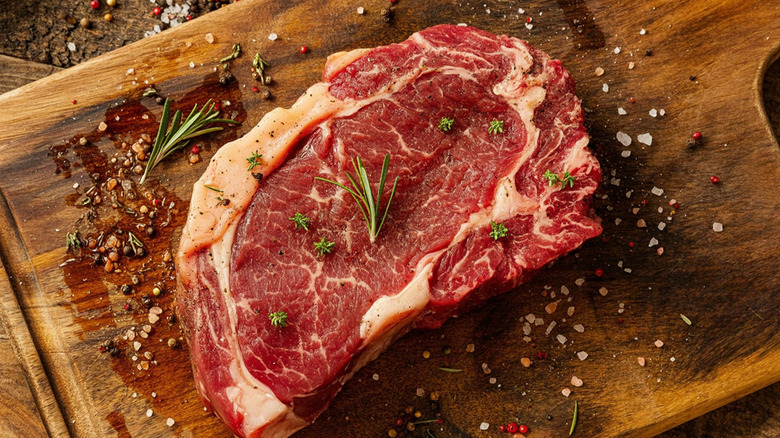
In order to get that signature, almost-crispy, caramelized crust on the outside of your ribeye, you want the exterior to be totally dry. Any moisture on the surface will get in between your steak and the pan and hinder the browning process. To prevent this, you need to pat down your steaks dry with a paper towel, making sure the surface is completely dry.
This is another reason why salting steaks overnight is the right move, as the moisture that is drawn out by the salt will be back inside the meat, as opposed to on the surface of the steak (which is what can happen if you don't let the salt sit long enough). A bonus tip to help dry your steaks, if you're salting them overnight, is to keep the steaks on a wire rack. This will improve airflow, helping to dry the exterior even more.
Now, if you've not salted the steaks beforehand, and the steaks are still in the package, it's not the end of the world. Still, it's important to take them out and pat them dry. This will at least help you build a good crust, even if your seasoning may be lacking.
4. Let the steaks come to room temperature before cooking
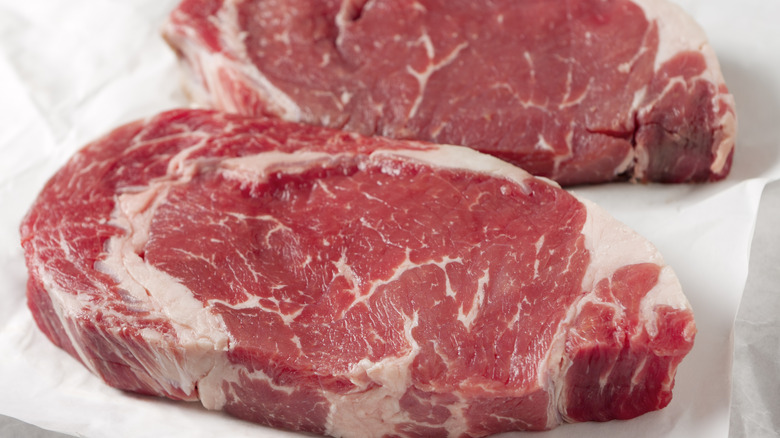
The worst thing you can do to your ribeye steaks is to cook them straight out of the fridge. As you place the steaks on the heated pan, they will cook faster on the outside than on the inside. This will result in uneven cooking. While this advice applies to all cuts of meat, it's even more pertinent for a thick cut like ribeye. Tempering them on the counter for a short while before cooking will help you get a medium or medium-rare center, without a thick overcooked band on the outside.
This doesn't take ages either; I've found that 30 minutes is the maximum amount of time you need for a very thick ribeye steak. If they're on the thinner side, 15 to 20 minutes should be enough. So, practice a little patience and "rest" the ribeyes at room temperature before you cook them. It will be worth it!
5. Season liberally, but simply
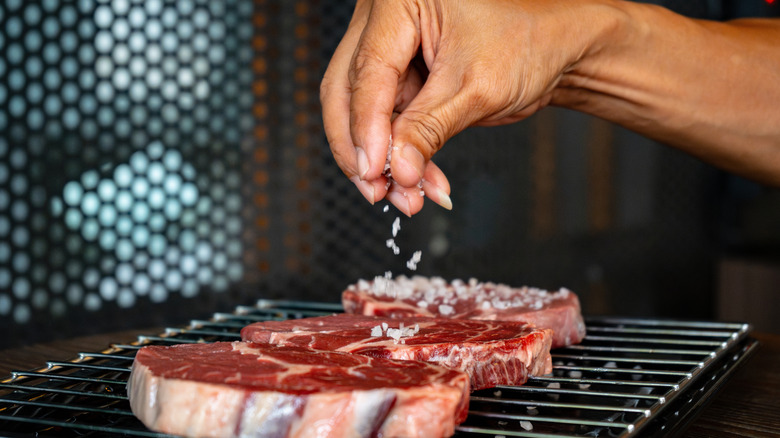
I've seen lots of advice telling people to season ribeye liberally, and I wholeheartedly agree. You do need to use a lot of salt, especially on thicker steaks. However, this doesn't mean you should season with all sorts of flavors. As someone who loves to cook with a lot of seasonings and spices, I practice restraint when cooking a nice cut of meat like ribeye. That's because all that marbling is going to melt into the meat and give it amazing flavor. Other than salt and pepper, and perhaps a sprig of rosemary, which all help to complement and enhance the meat, you really don't need any other flavors competing with it.
I know it's difficult, but skip the garlic and onion powder, paprika, cayenne pepper, Cajun seasoning, steak rub, or whatever spice and herb mix you like to use on steaks. This can be extremely subjective, as everybody has different tastes and preferences. However, I do believe that you can go wrong with using too much seasoning on ribeye. Trust in the quality of your meat and in how you cook it, and don't add flavors that might mask its natural umami goodness. Keep it simple and let your steak sing.
6. Get your pan or grill really hot before searing
Browning your ribeye will make it mouthwateringly flavorful, so once you're ready to cook it, you want to prioritize getting a good sear. To do this, you want to make sure your pan is hot enough before you place the steak in. It doesn't have to be smoking, but it does have to be hot enough that your hand can feel the heat from at least 3 inches above it.
The reason you don't want your pan to be low or medium heat is because it will take longer to brown your steak, which increases the risk of overcooking. Get some oil in the pan and turn the heat up. When you finally get your steak in the pan, you should hear a really satisfying sizzle. If you don't, your pan wasn't hot enough.
7. Build your sear on both sides by flipping often
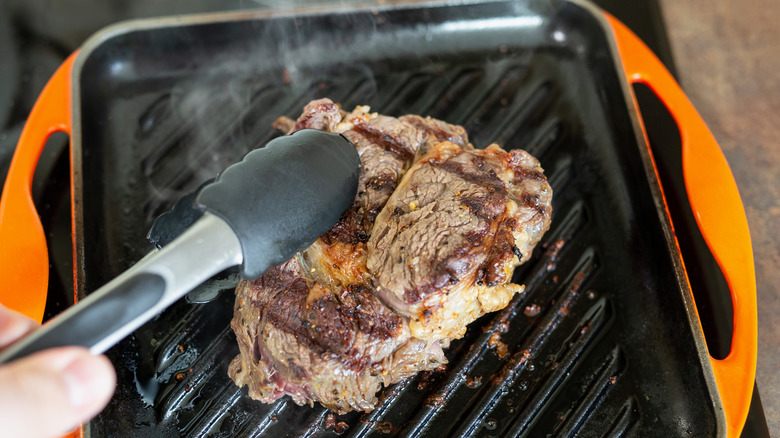
There has long been a debate about how often to flip your steak, and for a long time there was a general belief that you shouldn't touch your steak besides the single flip. That tune has changed over the years — and for good reason. Now, one of the things that several chefs have taught me is that you want to keep flipping the steak throughout the cooking process to get the perfect crust. Instead of completely browning one side and then the other, you slowly build the browning on both sides.
If you cook the steak on one side for too long and then flip it, you'll end up with an unevenly cooked ribeye. When you flip it regularly, you're giving each side relatively the same amount of heat in a shorter period of time. This helps to ensure your steak cooks evenly. A good rule of thumb is to flip your steak every 15 to 30 seconds. This might seem too short to get a good sear, but you'll see that it builds up a nice crust.
8. Baste with butter while cooking
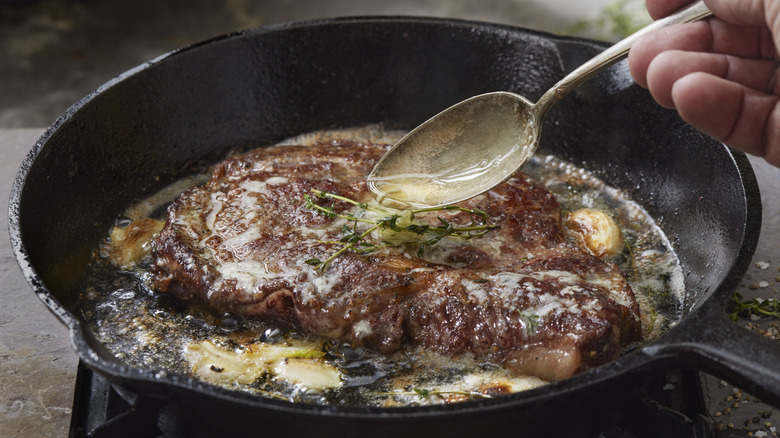
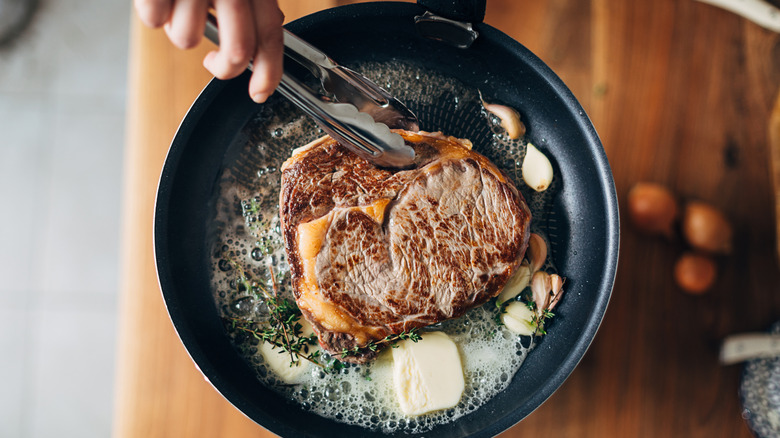
Butter can add a beautiful richness to your ribeye and make it even more tantalizing. It's not a bad idea to add butter while cooking, but starting your pan with butter is certainly something you'll want to avoid. Since you're cooking on high heat for a few minutes, this can cause the milk solids in your butter to burn. Instead, throw some butter in when you've only got a minute or two left. This way you get all the rich, fatty flavor of butter without any bitter or burnt notes.
When you add butter to the pan, you don't want to just drop it in and assume that your steak will just absorb it. You want to make sure it coats your steak and reaches every part of it. Keep a spoon handy so you can baste your steak with it as it finishes cooking. The butter will melt almost immediately, so tilt your pan to scoop up the melted butter with a spoon and pour it over the top of your steak. Do this repeatedly until the steak is well coated in butter. You'll taste it in every bite.
9. Render the fat on the side
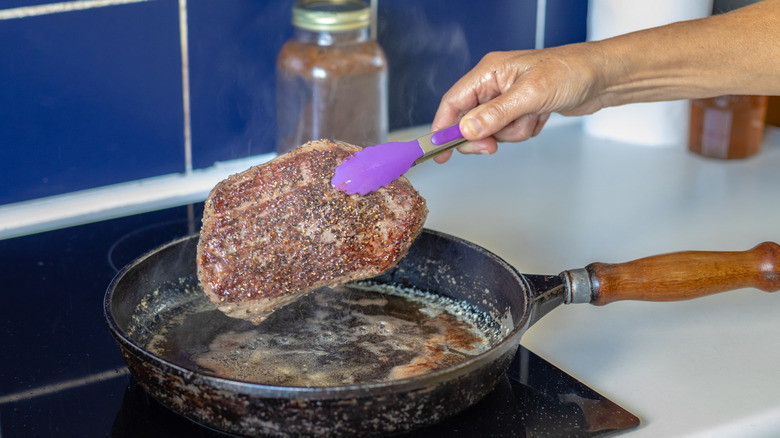
While you may be focused on flipping the steak from top to bottom to sear it, you might be forgetting to sear the sides. You often find a thick piece of fat on the side of the ribeye, and this part should also be given some attention. It's usually the most delicious part of the steak. You also want to sear this fat, not only so that it's easier to eat but also to improve the ribeye's flavor.
This is where your tongs will become even more important, as you'll use them to hold your steak upright to render the thick piece of fat. Keep the heat on high when you do this because as the fat renders it will also brown, which is where that delicious flavor will come from. There's no hard rule for how long to do this; just keep it on its side until you see that the fat has browned nicely. Depending on the shape of the ribeye, you may need to adjust the angle in order to reach the fat.
10. Use a digital thermometer to get the right level of doneness
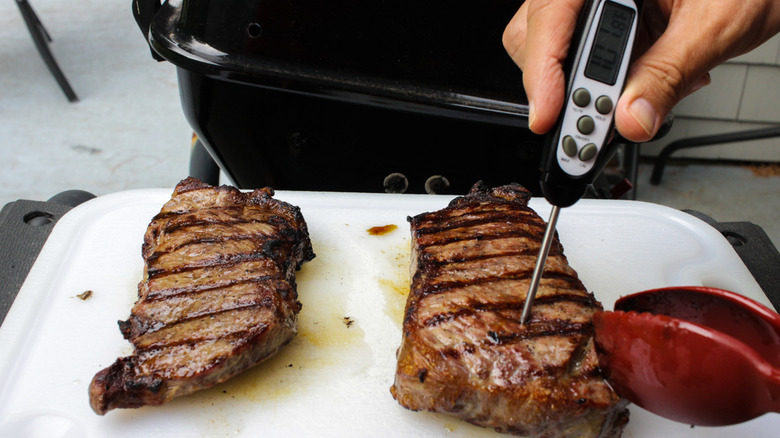
The level of doneness of your steak depends on your preference. The best way to ensure you've reached the right level by checking its internal temperature. Chefs might try to tell you how to feel for doneness by poking your steak with your fingers or by using other methods, but truly, the only way to perfect the level of doneness is by checking with a digital kitchen thermometer. If you don't have one, it's a purchase that you won't regret, as you can use it for many other foods and because it takes the guesswork out of things like cooking steak.
If you like your steak medium-rare, the temperature should fall between 130 and 140 degrees Fahrenheit. For medium, it's 140 to 150 degrees Fahrenheit, and for medium-well, it's 150 to 155 degrees Fahrenheit. Stick the thermometer in the thickest part of the steak to get the most accurate reading.
11. Don't rush the resting time
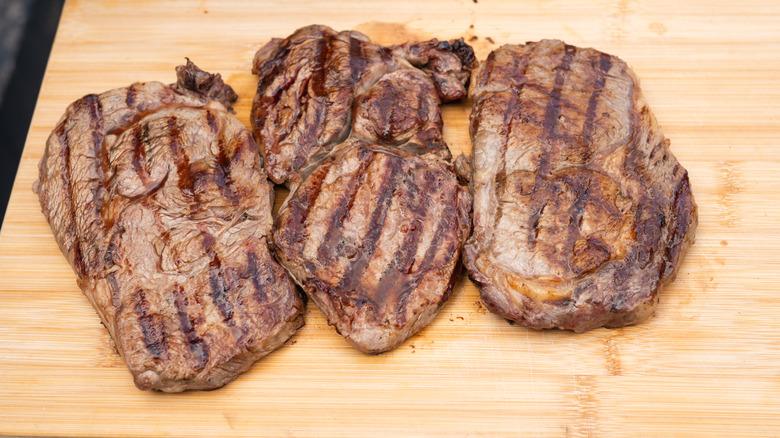
You may already know this one, but it begs repeating because resting your steak is an important step that you shouldn't forego, no matter how lazy or hungry you may be. You may wonder whether resting the ribeyes after cooking them is actually doing anything, and if it's worth the waiting time (these questions may arise more the hungrier you are). Unfortunately for the impatient, resting the steak does make the result better. If you cut into your steak too soon, juices will run out of it, and your steak will be drier.
Resting a steak allows the juices that were flowing to the center of the steak a chance to return back toward the steak's edges. When you've gone through all the effort of cooking some perfect ribeyes, the last thing you want to do is ruin it all at the end. Don't worry; you only need to let your steaks rest for about 10 minutes. Then you can cut into some juicy and flavorful ribeyes and understand why it was worth the wait.
12. Slice the steak against the grain for tenderness
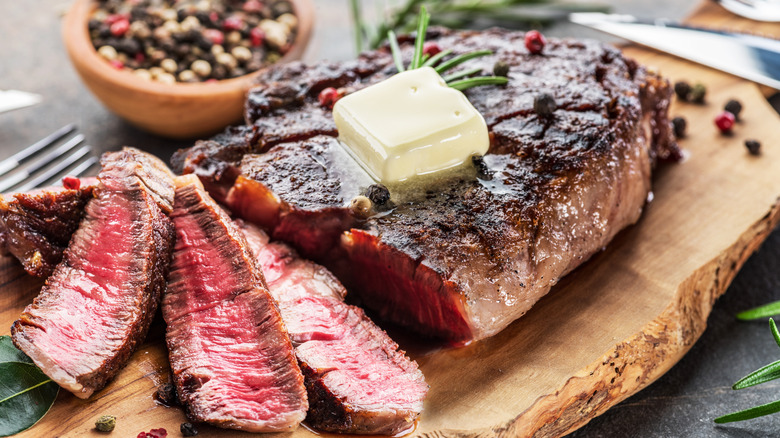
Now that you've cooked your ribeye to perfection and you're getting ready to eat, make sure that you slice it in the right way to optimize the steak's natural tenderness. This means you need to cut the steaks against the grain. If you don't know what that means, the grain of the steak is the direction of the muscle fibers. If you look closely at your steak, you'll see the lines of the muscle fibers running across the length. Therefore, to cut against the grain means slice into the steak perpendicular to these lines.
Cutting the steak this way will minimize the effort your teeth need to break down the muscle fibers. If you were to cut along the grain, it would be a lot of work to chew enough to break down the steak's fibers. However, when you cut against the grain, you have smaller fibers to break down, making the steak feel more tender as you chew. If you don't overthink it, it will feel natural to slice in this direction, but it's still important to take note of. Whether you're slicing for yourself as you eat or slicing the whole steak to serve, make sure you're cutting against the grain for the most tender result.
13. Use the fond in your pan to build an accompanying sauce
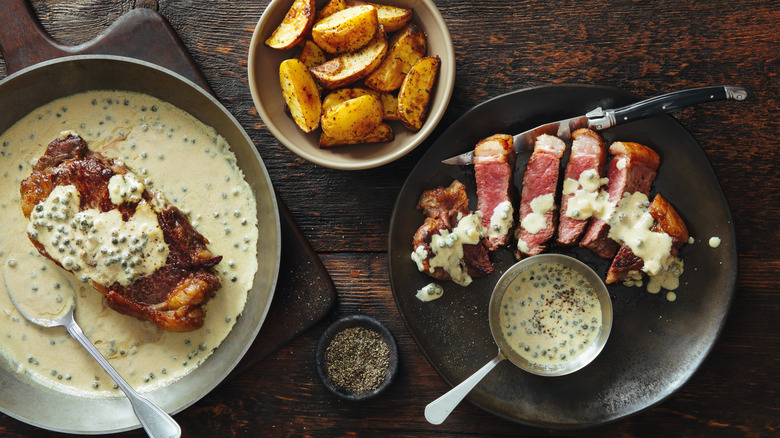
Even though you may enjoy your ribeye as is, you can also make a really delicious pan sauce using the leftover fond from cooking the steaks. Making a pan sauce can be the best use of your steak drippings, as all the fat and bits of charred meat left over in your pan are full of amazing flavor. There are different ways you can make a quick pan sauce, whether you want to make a creamy mushroom sauce, a peppercorn sauce, or a red wine jus.
If you want to keep it simple, but still make something impressive, try this four-ingredient steak sauce using just butter, Worcestershire sauce, garlic, and vermouth. Cook those ingredients in the same pan you cooked your steaks in. Then, pour this sauce over your ribeye and you'll be in food heaven.