

Why 1960s Single-Malt Whiskies Are A Collection Must-Have
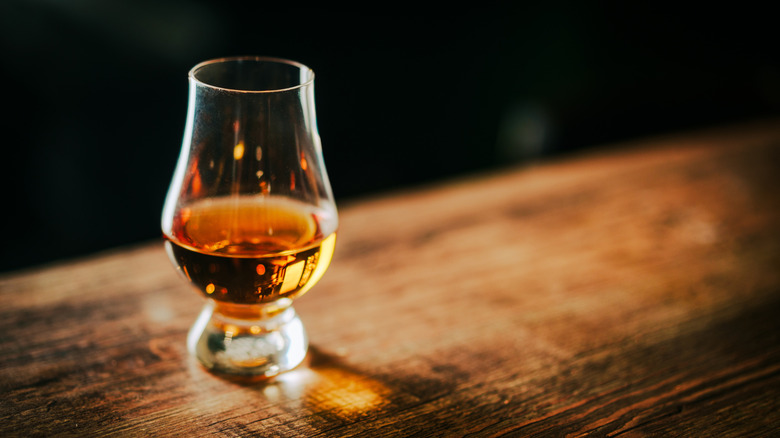
The anatomy of a whisky collection can take many different shapes. For the beginner, it may be a cabinet that receives a new bottle of single malt each month, as they train their palate on different distilleries and regional varieties of Scotch whisky. For the true connoisseur, though, the collection must extend not just to the brands, but also to different eras in whisky history. They don't come cheap, but to truly understand single malt Scotch, bottles from the 1960s offer a unique lens, allowing a glimpse into the rebirth of the style.
Single malt Scotch differs from blended Scotch in a few ways. Single malt must be made with 100% barley, and be produced at a single distillery. Unless it is labeled as a "single barrel" whisky, single malt is still likely blended, but only using that one distillery's stock. Blended Scotch, on the other hand, is something of a free-for-all by comparison. It can be made with whiskies from different distilleries, as well as spirits made with other grains. As a result, blended whisky is typically smooth and mild. In contrast, single malt is more distinctive, capturing the character of a distillery, a region, and a moment in time in each bottle.
Prior to the 1960s, blended Scotch was much more popular. Single malts were produced, but the reliable product and balanced flavor of a blended whisky had broader appeal. To this day, blended whisky sells much more by volume, but whisky connoisseurs prefer the pronounced characters of single malts. And to those curious palates, what could be better than a bottle dating back to the renaissance of single malt Scotch?
The single-malt Scotch boom
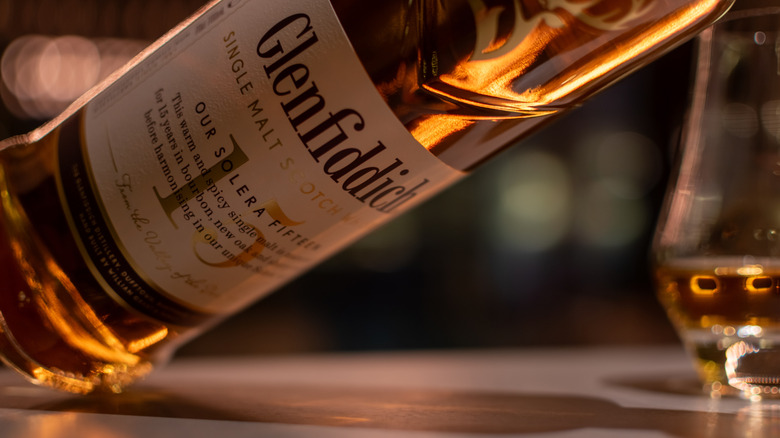
In the mid-20th century, the Scotch industry was suffering thanks to decades of troubles from such factors as the pair of World Wars and prohibition in the U.S. By the late '50s and early '60s, however, the market was back online. For most distilleries, this meant a return to the blended whiskies that had been the more popular style, but one distillery in particular leaned into single malt production. In 1963, William Grant & Sons introduced its Glenfiddich Straight Malt. Plenty of other distilleries at the time were producing single malt whiskies, but only as a secondary offering. Glenfiddich changed the game by making its single malt the brand's focus.
This focus turned out to be perfectly aligned with a change in tastes, as consumer interest turned toward products with history behind them. Across the market, desire shifted toward traditional foods with distinctive flavors, likely in a pointed backlash to the growing industrialization of the food system as a whole. People wanted whisky with character, and that is exactly what these single malt whiskies delivered.
As the decades passed, more and more distilleries began producing and taking pride in single malts. By the late 1980s, there were over 100 single malt whiskies on the market, but the culture and production had also changed. Modernization of the industry in the 1970s had significant effects on the character of the whisky, turning those bottles from the 1960s into a sort of time capsule of the revival of single malt.
1960s single malt whisky doesn't come cheap
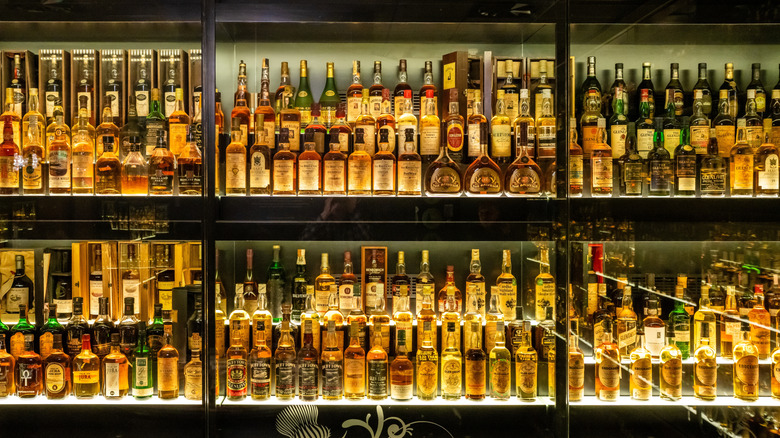
Unfortunately, while these bottles do represent a truly irreplaceable part of the history of Scotch whisky, they are not going to be found on the list of the best beginner single malts. Such bottles are much more likely to land on a list of vintage whiskies worth a fortune, making them almost the exclusive domain of collectors with seriously deep pockets.
There are two ways in which one can buy whisky from the 1960s, however, and they can differ quite significantly in price. At the extremely high end of the price spectrum are whiskies that were casked in the 1960s and then aged for decades upon decades. An example of this is the Glenfiddich 50 Year Old, released in 2019. The "50 year" descriptor means that this whisky spent at least five decades in a cask before it was bottled, meaning it was actually distilled back in 1969 — one such bottle sold for $24,000 in a 2021 auction.
The aging process for casked whisky is expensive because it requires significant storage space and some quantity of the spirit — known as the angel's share — is lost to evaporation each year. Once bottled, the whisky's technical age no longer increases, the spirit's character is locked in, and evaporation ceases. Single malts bottled in the '60s still aren't easy to get one's hands on, but they can be found at a somewhat more reasonable price. For example, a 1960s bottle of Laphroaig can be found at auction in 2026 for closer to $8,000, with bottles from other distilleries coming in closer to the $2,000 mark.