

Amp Up Basic Pot Roast — Make It Cowboy-Style With Just A Few Additions
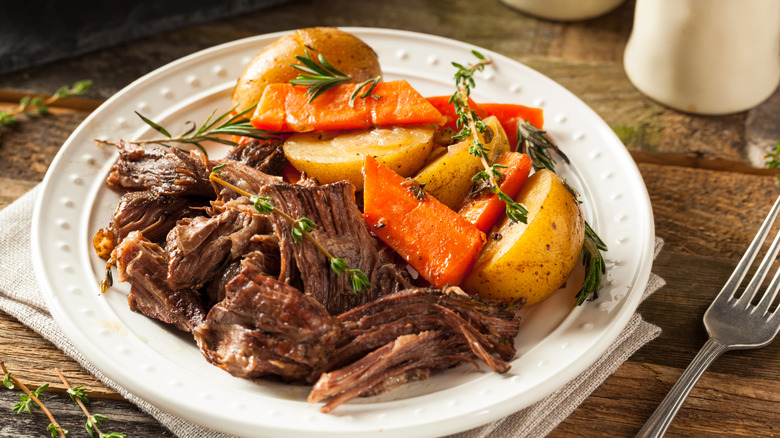
Cowboys were kind of like the original backpackers, right down to the utilitarian cuisine. That practical approach is what makes pot roast structurally suited to further cowboy-ification. Out on the range, recipes and techniques developed around necessity. If a horse couldn't carry it, it wasn't on the menu. But that didn't mean they ate bare bones gruel either. When you're rustling up some grub out of the same pantry provisions day after day, the spice of a little bit of creative cooking could make a meager trail diet feel like a real, sustaining and comforting meal. The same goes for pot roast.
Cowboys may have been surrounded by cows, but practically speaking, fresh meat wasn't an everyday provision. For the purposes of our modern cowboy pot roast, however, chuck roast makes perfect sense. Chuck roast is one of the best cuts for a pot roast because it's rich in connective tissue, so a good long braise breaks down its collagen until the meat becomes tender and the cooking liquid gets rich and silky with gelatin. The classic pot roast tends toward the familiar meat-and-potatoes flavor profile. For cowboy-style pot roast, you can keep the beef and the braise and steer the seasonings toward the Southwest.
Saddle up your seasonings
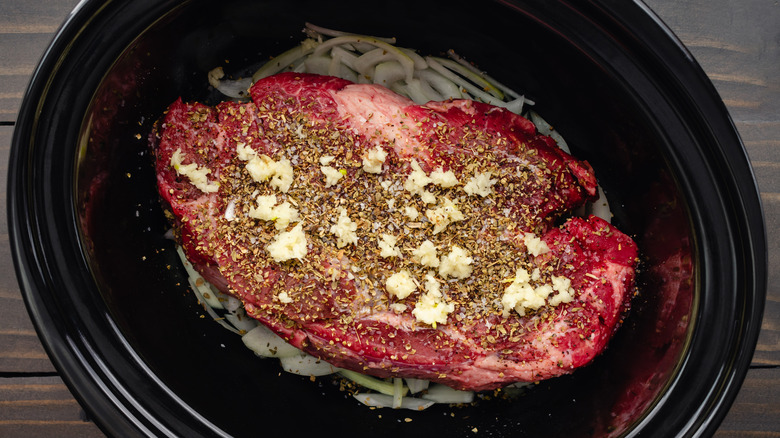
For a Southwest style pot roast, you can use a cast-iron Dutch oven for authenticity but a traditional slow cooker would work just as well. Start by searing your roast until it's deeply browned, then set it aside to cook your aromatics: onion, garlic, and perhaps a bell pepper or a jalapeño in the rendered fat. Add chili powder and cumin, and/or chipotle or smoked paprika. Give the spices a brief turn in the hot fat so that their aromatic compounds bloom.
Then, add a can of Ro-Tel to build your braising liquid. The tomatoes will soften into the sauce and contribute some needed acidity, and the green chilis add complexity and heat. Any other veggies you like can be added in, including more dried chilis or carrots and potatoes to fill up the pot. Once you've established that spice-fueled, chili-and-tomato foundation, there are some fun, on-theme liquids to consider pouring in as well.
Coffee, for example, would have been found in the cowboy pantry, but its usefulness doesn't end at breakfast. A strongly brewed coffee in the braising liquid brings roasty bitterness which would play well with the dark, savory flavors of seared beef. You need only a little to deepen what's already there — you're seasoning a pot roast, not making a latte. If you don't have a stale cup laying around or you'd rather save your coffee for drinking, a little instant espresso powder would accomplish a similar base note.
Home on the braise
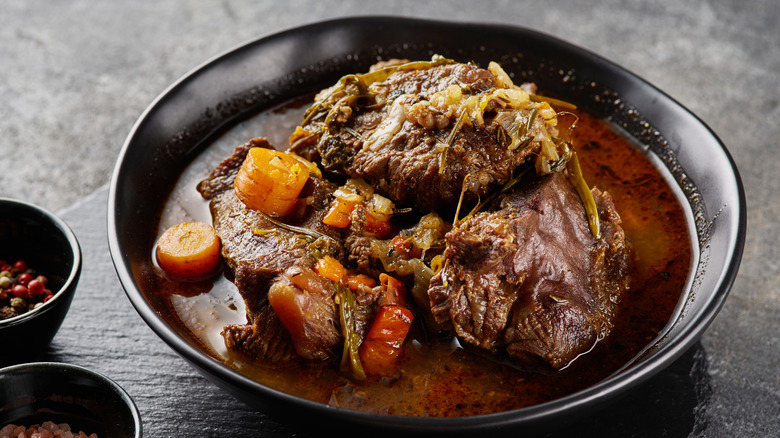
If you're up for you, that cowboy campfire ingredient can get even stronger. After searing the beef and softening your aromatics, a splash of whiskey can deglaze the pan, dissolving the browned fond stuck to the bottom of the pot. This will keep it from burning and bring all that concentrated flavor back into the braise. Depending on the bottle, whiskey can also bring complementary oak, caramel and vanilla notes, which will settle comfortably alongside beef and chili. Beer can also be used, as can tequila if you wish to push the flavors in a sharper direction.
After that, the best technique may be leaving the pot alone. Return the chuck to the braising liquid to give that connective tissue the time and low heat it needs to soften and melt. Beans were one of the pantry staples an Old West cowboy relied on the most, so if you want to stretch the meal further, a can of pinto or black beans fit the spirit of the thing. Just be sure to add them toward the end so they warm enough through and absorb some of the sauce without cooking into mush. Whatever you add, the original one-pot equation is doing most of the work. The seasonings play cowboy, but the chuck puts in the hours.