

The One Pantry Staple An Old West Cowboy Relied On Most
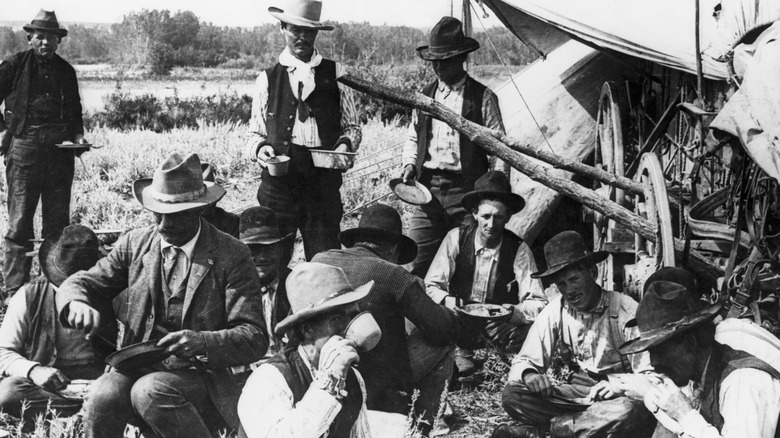
We tend to glamorize the Old West, calling to mind Hollywood pictures with epic shootouts in dimly lit wooden saloons and train robberies on horseback. Despite what the movies may portray, the life of a cowboy in the 1800s was rough, full of intense physical work that didn't pay much. Given the fairly nomadic lifestyle of a working cowboy, it would have been difficult to find three square meals a day. Thus, all meals needed to be substantial, filling, and easy to cook on a campfire in the wilderness. That leaves us one of the biggest staples in Old Western cowboys' diets: dried beans.
Beans were easy enough to cook up out on the trail, as all you needed was a campfire, water, and a large cooking pot. Beans are incredibly filling, and they provided cowboys with calories to get through a grueling day of physical labor. A cup of cooked pinto beans, for example, contains 15 grams of protein and fiber. They also boast plenty of vitamins like iron, magnesium, potassium, and thiamine, as well as antioxidants. Given their dried state, beans were easy to transport and would last a long time before cooking — and pinto beans were amongst the most commonly eaten.
A hearty but monotonous diet
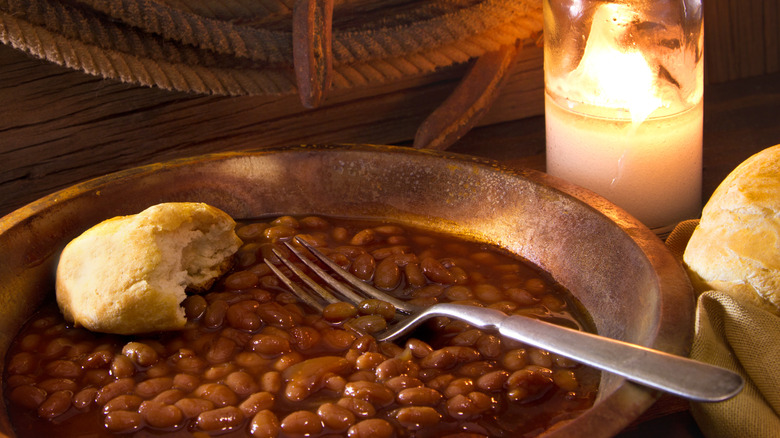
Famously, dried beans take a long time to cook from scratch, so there was usually a dedicated cook within the ranching or cowboy group to prepare meals while the other cowboys were out working. Larger traveling parties that had chuckwagons in their group would have someone soak the beans all day while traveling in preparation to cook them that evening. Soaking dried beans is great for many reasons, not only because they cook more quickly, but it tends to make them easier to digest as well.
Plain beans can be a little boring and monotonous over time, but life on ranches or in the wilderness wasn't exactly able to support a vast pantry of meats and seasonings. However, there were some ingredients cowboys would often use to lend a bit more flavor and variety to beans, like dried or fresh chiles and salt pork. Depending on how close the cowboys were to the Mexican border or if they were working with some vaqueros, dried chiles were more readily available to spice-up plain beans.
Other than beans, there were a few other staples in the Old West cowboy's diet, like beef and buffalo jerky, biscuits made from sourdough starter, dried fruit, vegetables that were hearty and had a long shelf life like onions and potatoes, and bacon and salt pork. With the modern invention of canning in the 1800s, certain canned foods were a luxury that cowboys would occasionally be able to enjoy, like canned tomatoes and fruits. Other than food, what also fueled cowboys' long days on the range was strongly brewed black coffee.