

11 Forgotten Classic Sweet Snacks From The '70s We Miss Dearly
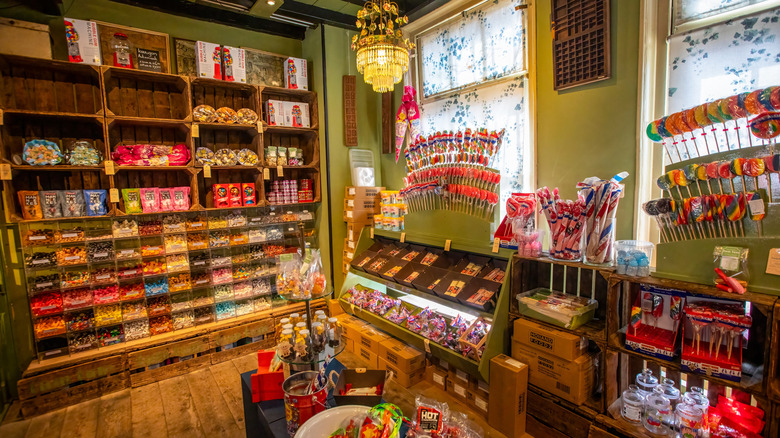
Remembering childhood snacks can be as fun a pastime as actually eating them. If you grew up in the 1970s, you saw all kinds of innovative, creative treats hit the shelves throughout the years. After all, kids needed something sweet to eat after dinner in the 70s, too. Unfortunately, sometimes no matter how creative or fun a snack is, it just doesn't last. A candy bar you grabbed after school or a quirky dessert your parents kept in the pantry can suddenly vanish from stores without warning. Decades later, all it takes is spotting an old wrapper online or hearing someone mention its name to bring those memories rushing back.
Candy companies in the 70s experimented with unusual flavors, eye-catching packaging, interactive treats, and playful marketing that made snacks stand out from other products. While some of these classics have been replaced by modern alternatives, many never found a true successor. To revisit some of the decade's most beloved sweet treats, we looked through discussions on Reddit, Facebook nostalgia groups, vintage food websites, and candy history resources to find the forgotten favorites people wish would return.
Dynamints
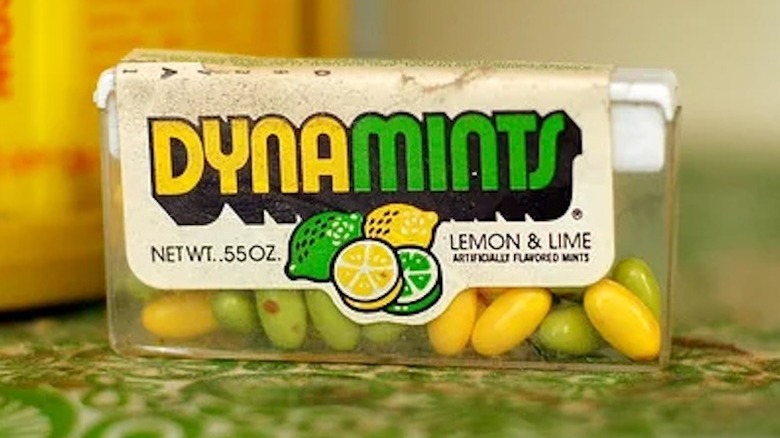
Introduced in the mid-70s as a competitor to Tic Tacs, these tiny, brightly-colored compressed mints had flavors like cinnamon, peppermint, lemon lime, and cherry. They came in a long plastic container that resembled an elongated Tic Tac box. Unlike many modern breath mints, which come in sleek metal tins or minimalist containers, Dynamints leaned completely into a colorful gimmick, which people loved. Nothing quite matched the distinct Dynamint flavor; even Tic Tacs couldn't touch it.
Some nostalgic candy lovers have posted on forums like Reddit that Dynamints were "Like Tic Tacs, but even better!" The fruity flavors were juicier, the cinnamon was spicier, and the mint was fresher. People miss the flavors that somehow combined candy with breath mints, and wish the little mints would return to shelves. Though folks now will settle for Tic Tacs and other fruity mint alternatives, whenever Dynamints come up online, it's obvious that they were the clear first choice for many.
Milkshake Candy Bars
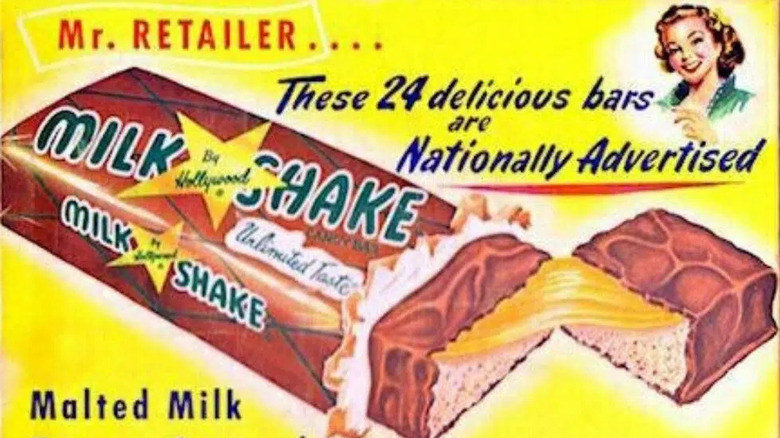
The Milkshake Candy Bar, made by the Hollywood Candy Company, promised the flavor of an old-fashioned diner milkshake in a wrapper. This was popular because malt is one of the best ingredients to add to a milkshake, then and now. The bar featured a creamy malted center coated in milk chocolate, creating a flavor that many fans compared to sipping a thick, malted shake. Some super-fans even added the crushed-up bar to the actual shakes they made at home. While big-market candy bars filled with caramel, peanuts, and wafers dominated aisles throughout the 1970s, the Milkshake Bar built a loyal following among people who appreciated a smoother, simpler flavor. It was especially popular with older customers who had grown up with the malt as a soda fountain staple.
For several decades, candy made by the Hollywood Candy Company was pretty popular. It sold Zero Bars, Milkshake Bars, and Butter-Nut Bars, all of which were pillars of the candy aisle in their day. However, after about 50 years, Frank Martoccio — the CEO of the Hollywood Candy Company — sold the brand, and it became Consolidated Foods. This company continued to sell Milkshake Bars for a few years, but one of its major plants unfortunately burnt down, ceasing production of this and several other candy bars. There are some newer chocolate bars with malt flavoring on the market, but, to malt lovers' chagrin, you can no longer find the original bar.
Super Skrunch
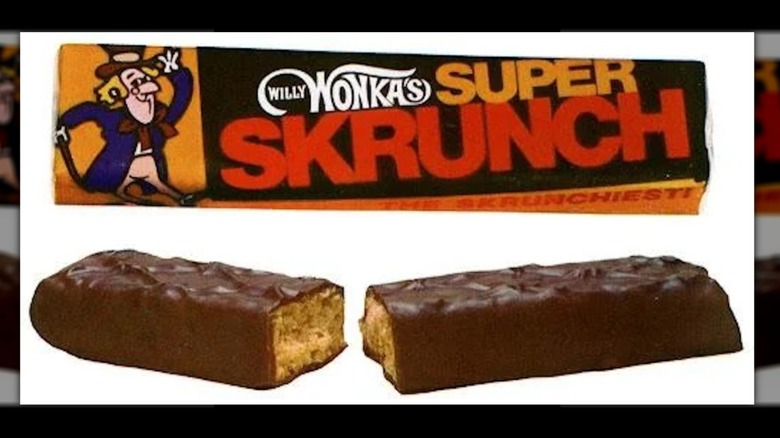
The Willy Wonka candy brand is synonymous with addictive chocolate treats. Following the release of the 1971 movie Willy Wonka and the Chocolate Factory, Quaker launched the Wonka brand, with the Super Skrunch bar being the brand's first item on shelves. Crispy, peanut-buttery, and coated in chocolate, the Super Skrunch Bar was a sweet staple for kids growing up in the 1970s. Rather than slowly chewing through caramel or nougat, Super Skrunch delivered an immediate crackle that made it entertaining to eat. It became a favorite for children who wanted something playful and different, helping it earn a dedicated following.
That following still stands strong today. Online petitions calling for the return of Super Skrunch have gathered enthusiastic support. At the same time, Reddit discussions regularly contain fans sharing childhood memories and wondering why no candy company has revived it. Facebook nostalgia groups are filled with comments from people who vividly remember the delicious taste and distinctive crunch. Even people who haven't tasted it in decades remember exactly how it felt to bite into one. Wonka's whole brand, including its packaging and products, is incredibly nostalgic, leaving many past consumers wishing the brand would bring back classics like the Super Skrunch.
Marathon Bar
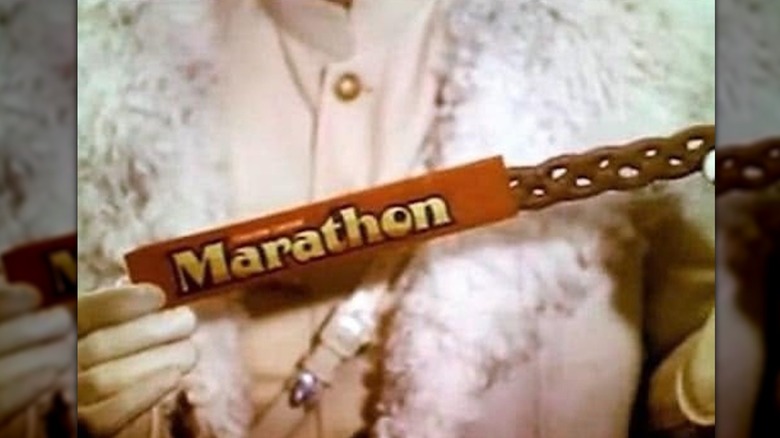
Some candy bars are remembered for their flavor, while others become famous because there has simply never been anything else quite like them. The Marathon Bar easily falls into the second category. Introduced by Mars in the early 1970s, the candy featured braided caramel coated in milk chocolate. It stretched an incredible eight inches (for context, a standard Hershey bar is a little under five and a half inches long). It was packaged with a ruler printed on the wrapper so customers could see just how lengthy it really was. The premise of a super-sized candy bar excited kids; eating a Marathon Bar felt like getting more candy than anyone else, and the chewy caramel meant it lasted much longer than an ordinary chocolate bar.
Its disappearance remains one of the biggest disappointments among candy lovers who grew up during the decade. The bar simply could not meet the necessary sales, and it was discontinued. Reddit threads about favorite discontinued foods almost always feature someone mentioning the Marathon Bar, often followed by dozens of replies agreeing it deserves a comeback. Fans remember the experience of slowly pulling apart the braided caramel or trying to eat the entire thing without making a sticky mess. Part of its enduring reputation comes from its playful design, which turned an ordinary candy bar into something memorable.
No Jelly
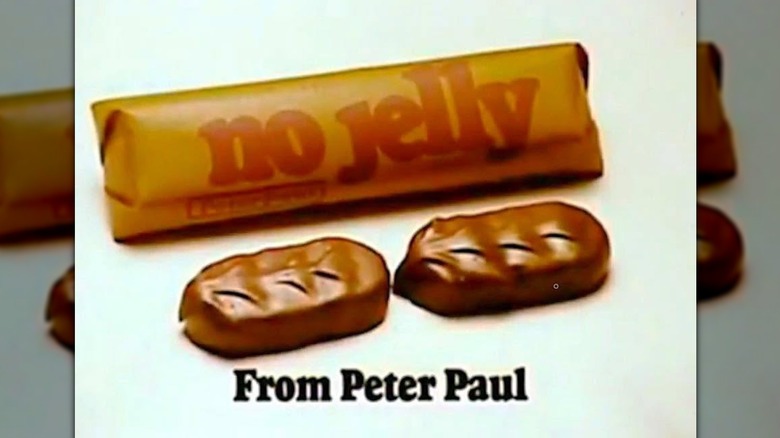
Produced by Peter Paul, the No Jelly bar was marketed as a chocolate-covered alternative to other chocolate bars, emphasizing what it didn't contain rather than what it did. Containing a peanut butter center packed with crispy rice cereal, the brand's idea was that the candy was "all peanut butter, no jelly." The name must have been a bit too cryptic for consumers, though, because the brand renamed the bar the Peanut Butter Bar in 1977.
The unusual name made it stand out on store shelves, while the candy itself earned a following among people looking for something a little different from the standard chocolate bar lineup of the 1970s. Today, No Jelly survives mostly through memories shared in online nostalgia communities, having been long-forgotten by many after its discontinuation. Whenever people discuss forgotten candy bars, someone inevitably brings it up, usually followed by comments from others who had completely forgotten about it until seeing the wrapper again. It may never have reached the household-name status of a Snickers or Milky Way, but it clearly left an impression on the people who bought it.
Mr. Bones
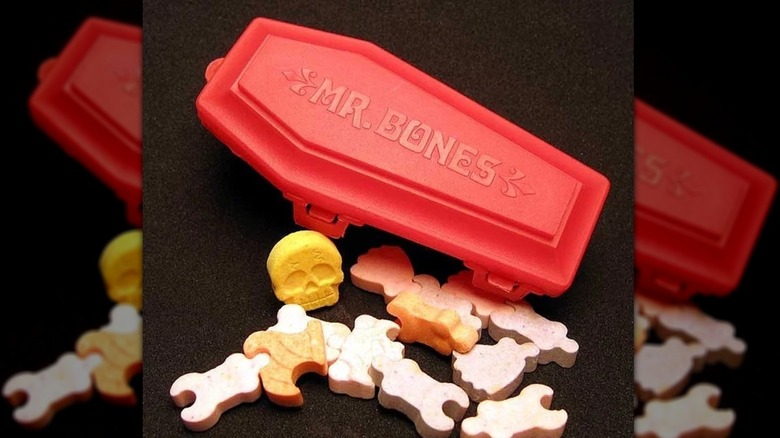
Mr. Bones candy was designed with the imaginative child in mind. Combining candy and toy, Mr. Bones was edible candy bones that kids could assemble into a full skeleton, sold in a plastic coffin. It was equal parts puzzle, toy, and treat, turning snack time into an activity. This candy was also perfect for the Halloween season with its spooky nature. Novelty candy was flourishing in the 1970s with sweets like candy cigarettes and new flavors of bubblegum, and Mr. Bones fit right into this era of imaginative snacks. The candy itself wasn't especially complicated, but putting together the skeleton before taking the first bite made the experience unforgettable.
That playful concept attracts fondness decades later. Reddit users share photos of the tiny coffin packaging, with some admitting they spent much longer building the skeleton than actually eating it. Other people didn't know you could assemble the pieces into a skeleton until they saw the product years later online. Unlike many discontinued sweets that are remembered primarily for their flavor, Mr. Bones is remembered because it transformed candy into a game. Fans have not stopped rallying to bring Mr. Bones candy back to stores; as recently as 2016, a petition was launched on Change.org to bring back the sour and sweet treat.
Heinz Tinned Pudding
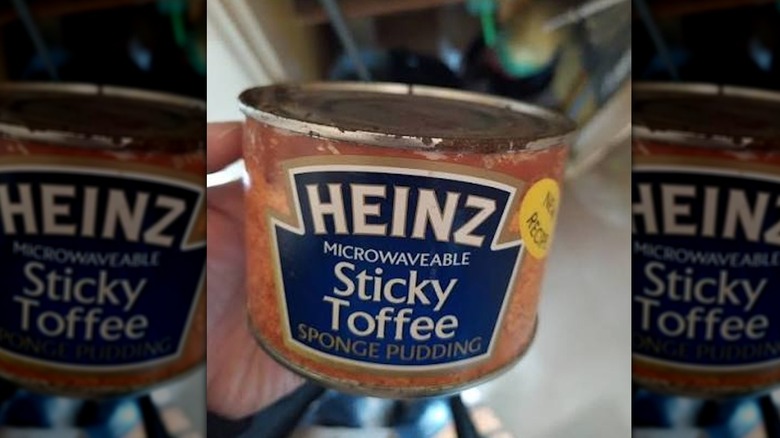
For generations of British families, Heinz Tinned Pudding was a fun twist on a classic dessert. The sturdy tins, filled with steamed sponge puddings in flavors like chocolate, treacle, and sticky toffee, sat in countless kitchen cupboards throughout the 1970s. Preparing the dessert couldn't have been easier: the tin could be heated in simmering water, and within minutes, a warm sponge pudding was ready to serve with custard or ice cream. It offered all the comfort of a homemade steamed pudding without requiring hours in the kitchen, making it especially popular with busy parents. At a time when convenience foods were becoming increasingly common, Heinz managed to package a traditional British dessert without stripping away its homemade appeal.
When Heinz announced it was discontinuing the line, the reaction showed just how beloved the puddings had become. Reddit threads are filled with people reminiscing about the different flavors and lamenting that they are "heartbroken" to no longer see them on shelves. There was also, as with many beloved discontinued snacks, a petition calling for Heinz to bring them back. The discontinuation of the puddings was so subtle that people didn't seem to notice until months or even years after they had been completely removed from stores, and Heinz has confirmed that there are no plans to bring them back, unfortunately for pudding fans.
Jello 1-2-3
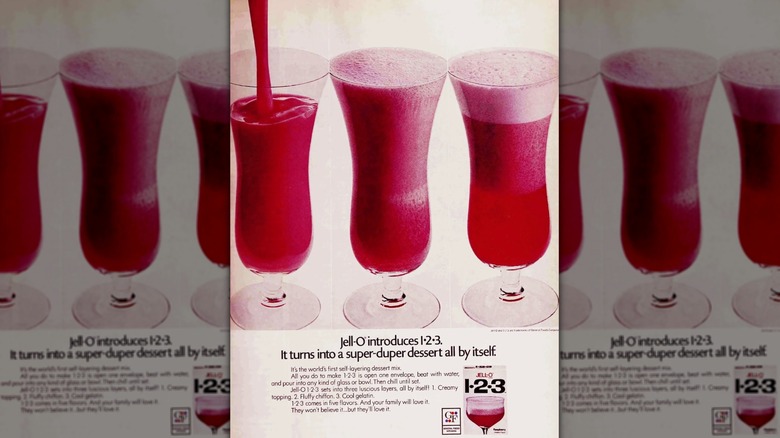
Jell-O 1-2-3 was the definition of a fun snack. Jell-O has introduced countless products over the years, but few are quite as intriguing as this one. Introduced at the end of the 1960s and popular throughout the 1970s, the powdered dessert transformed into three distinct layers after mixing and setting. The bottom became traditional gelatin, the middle turned into a creamy mousse, and the top formed a light, airy foam. Watching the layers magically separate in the refrigerator felt almost like a science experiment, making it one of the most entertaining desserts families could prepare together.
That little bit of kitchen magic is exactly why people still miss it today. Although it was relatively simple, Jell-O 1-2-3 offered something genuinely unique that today's dessert mixes haven't replicated. Although there were avid fans, Kraft phased it out in the 1990s because of low sales. Some recipes, like the magic cake that was circulating during the pandemic, aim to create a similar layered dessert effect, and some try to doctor up classic Jell-O to make something similar, but nothing is quite the same as the three distinct layers of fruity gelatin.
Koogle
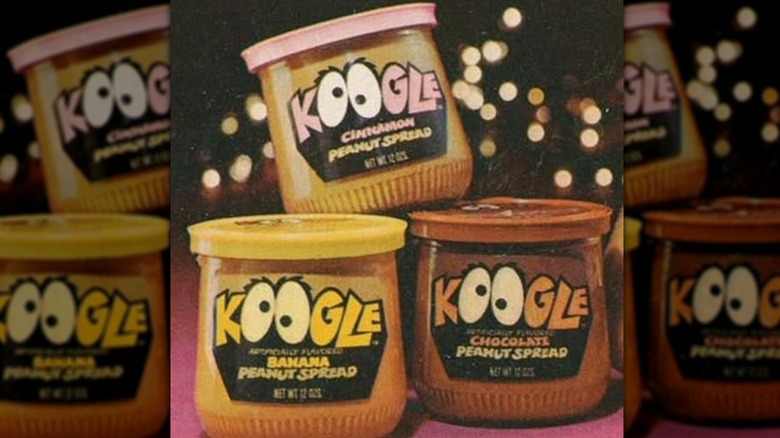
Long before flavored nut butters of all kinds filled supermarket shelves, Koogle was convincing kids that peanut butter could taste like dessert. Introduced by Kraft in the early 1970s, Koogle came in flavors including chocolate, cinnamon, banana, and vanilla (the chocolate being a particular favorite of 70s kids), but all of which were revolutionary for their time. Television commercials featured the unforgettable "Koogle Nut" mascot enthusiastically promoting the spread with his four eyes and frizzy blue hair. The spread made peanut butter sandwiches feel less nutritious and more like a sweet after-school snack.
Koogle represented an era when food companies were experimenting with pantry staples, even if the products only lasted a few years. Not long after its release, Consumer Reports stated that Koogle did not contain enough peanuts to be classified as peanut butter and noted the spread's inferior nutritional value due to sugars and fillers. A reputation like this is hard for any brand to recover from, so Koogle stopped production. Decades after disappearing from grocery shelves, Koogle remains a highly-requested discontinued spreads among people who grew up during the 1970s.
Banana Flip
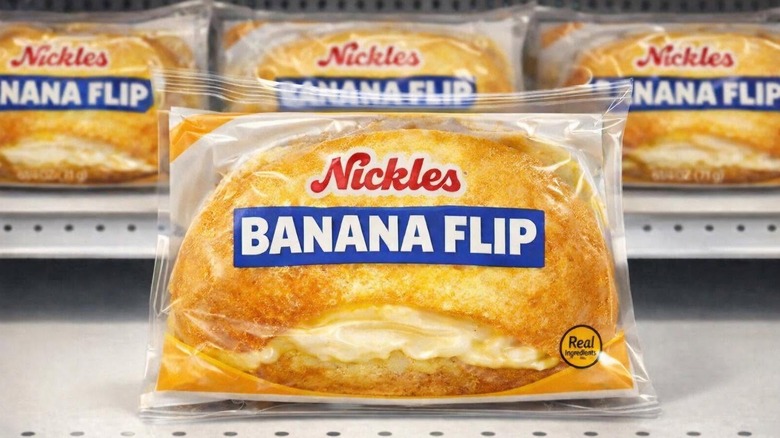
Nickles' Banana Flip is a 70s snack that has yet to meet its contemporary match. Think of a Twinkie-like taco shell filled with smooth banana cream. It looked somewhere between a folded cake and an oversized pastry, making it unlike anything else sold by snack companies. Banana Flips became a regional favorite out of Appalachia that inspired fierce loyalty, being packed into lunchboxes, picked up after Little League games, or enjoyed with a glass of milk after school.
Though big brands like Hostess sold versions of the Banana Flip, smaller bakery brands like Nickels continued to sell them in the Midwest even though other brands discontinued them. YouTube retrospectives and nostalgia websites continue documenting the pastry's history, while online discussions lament the loss. The regional connection has only intensified since the snack was discontinued in the mid-2000s, with multiple generations discussing how they miss the fluffy cream and light sponge cake.
Flicks
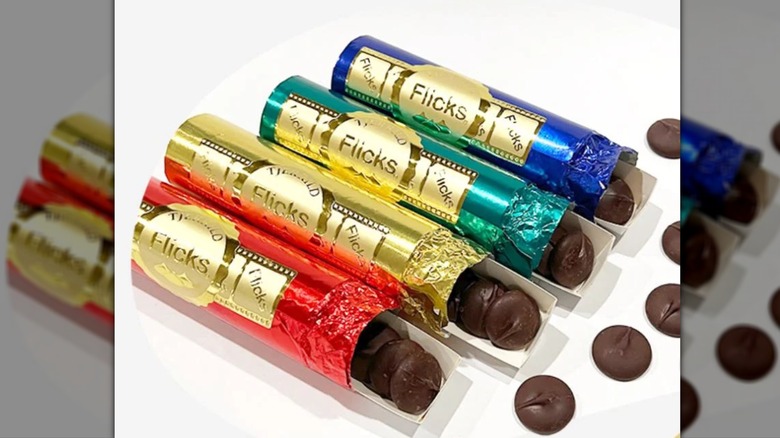
Flicks were once a quintessential movie theater candy. The small chocolate morsels were perfect for sharing or mixing into a tub of popcorn. The candy became so closely associated with moviegoing that many people still remember buying a box every time they visited the theater during the 1970s. Unlike a regular-sized chocolate bar that could melt in your hands, these little chocolate buttons could be eaten a few at a time and were much easier to snack on, especially in a dark theater. Nostalgia articles and Facebook groups continue celebrating the candy's role as one of the defining movie snacks of the era. Not only were they popular among movie-goers, but people remember receiving them in their stockings on Christmas morning. This treat was good enough for special occasions like holidays, but also a fun snack for everyday occurrences like going to the movies.
Flicks were eventually discontinued because Ghirardelli's equipment became outdated and kept breaking down. The special foil tube packaging was also expensive to produce, which added to the factors working against the product staying in production. Although the brand was repurchased and revised in 2004, Flicks are limited in availability.