

The Best Cutting-Board Material For Raw Meat
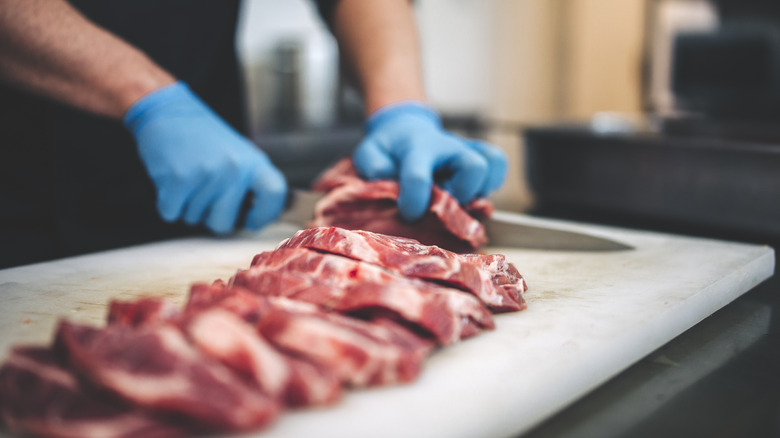
Meat is an essential part of many people's diets and although some don't love to deal with it in raw form, it's pretty hard to avoid when cooking at home. Once you can get past the idea of touching it raw, the only real issue you may face is the risk of cross-contamination. To help avoid this, a certain type of cutting board should be used, and the consensus is that it should be wood or plastic.
According to the USDA, the best material for handling and prepping any type of raw meat is either wood or a nonporous material like plastic, marble, or glass. This is because wood is considered to be naturally antimicrobial, and studies have shown that bacteria trapped in the wood grain die once moisture evaporates from the surface. Nonporous materials like plastic, meanwhile, are easier to sanitize as they can usually be put in the dishwasher.
There is a lot of debate over which option is better. Many cooks and butchers believe wood to be superior, and there has been research conducted by the Journal of AOCA that supports this. Wood is also easier on knives. That said, plastic is often the top choice in commercial kitchens because it's effortless to clean and bacteria won't seep through the surface — though it is prone to knife marks that can increase bacterial exposure. Glass isn't widely used as it can dull knives and it shatters easily. Marble is also harsh on knife blades and is prone to staining. However, there is a cutting board strategy pros use that involves multiple choices.
How to clean any cutting board after using it for raw meat
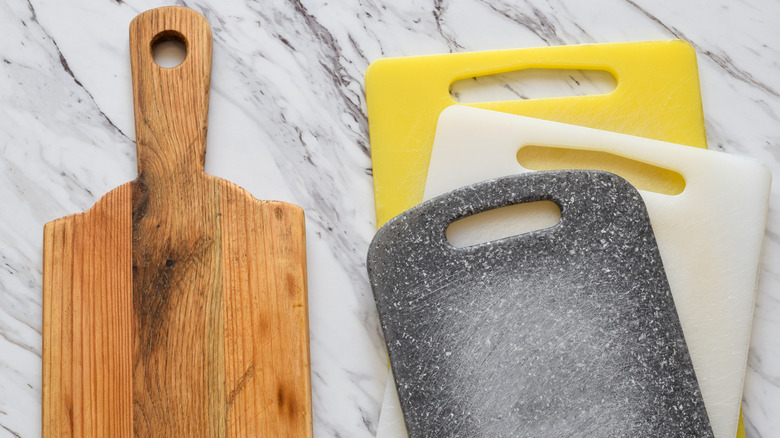
Food safety authorities often recommend keeping two cutting boards in the kitchen to avoid cross-contamination: one for meat, fish, and poultry and another one for fruit, vegetables, and bread. A lot of people choose to use plastic for raw meat and wood for everything else, but you can also buy two wooden boards. Either way, any cutting board should be washed with hot water and soap after every use, especially after touching raw meat.
Plastic can go through a dishwasher cycle. Laminated wood cutting boards need to be washed by hand. After you've scrubbed the board for at least 30 seconds per side, rinse it, and let it air dry upright. If you want to be extra careful, you can sanitize wood cutting boards after using them for raw meat. Just dilute a tablespoon of bleach in about one gallon of water, pour it on the board, leave it for a few minutes, and rinse thoroughly. It is also advised to rub wooden boards with mineral oil every four weeks or so to keep them in good condition.
The best type of wooden cutting board for raw meat is one made with fine-grained hardwood, like maple or even bamboo — here are some of the other types of wood cutting board worth splurging on. As for plastic, HDPE can be better than LDPE for cutting boards, but you can decide which you prefer.