

Your Grandma Probably Had This Sleek 1940s Coffee Maker That Deserved More Of The Spotlight
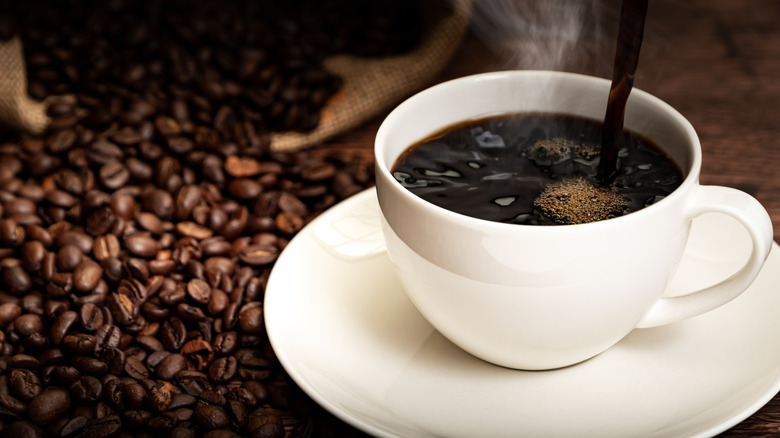
There are so many different ways of brewing coffee nowadays. Walk into any specialty café and you'll find espresso, pour-over, cold brew, or even drip ... if the place still has a traditional coffee maker. Another device that's been popping up in new wave coffee shops is (actually) an old-school brewer that deserves its comeback: The Chemex.
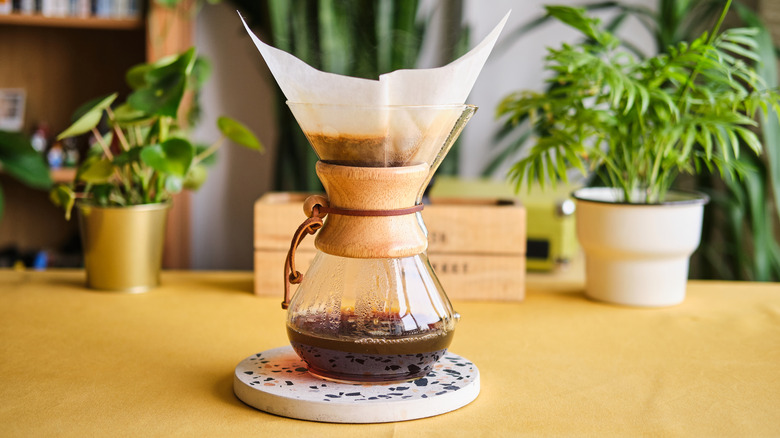
A Chemex is a name-brand coffeemaker that brews a strong pour-over while also doubling up as a carafe. The device is pretty distinguishable due to its distinctive hourglass shape and wooden collar, which was designed by an eccentric chemist named Dr. Peter Schlumbohm in 1941. Inspired by the equipment used in laboratories, Schlumbohm built his invention using nothing but heat-proof glass, giving it a very clinical but sleek look.
Schlumbohm wanted to build something that was attractive and functional at the same time. He studied the chemical reactions that occurred during the extraction of coffee beans and created special filters that he believed would help people brew the perfect cup at home. The Chemex also has a rounded bottom, which increases the surface area and contact time between the water and beans. Meanwhile, the thicker filter slows down extraction, which prevents oils from seeping through, and the spout removes excess air during pouring. All of this weeds out a lot of pour-over coffee mistakes, leading to a well-brewed cup. Yet there were a lot of years where the Chemex fell out of favor.
The early success of the Chemex
Schlumbohm faced a tough challenge when he released the Chemex. Mainly, it was because of the ongoing World War, but he managed to secure deals with major retailers like Macy's within a few years. He also received rare approval from the government to continue production during wartime and soon, the Chemex took off. It became a fixture in many American households and was even featured on the New York Museum of Modern Art's "Useful Objects" list.
The popularity of the Chemex continued into the 1950s, especially after author Ian Fleming wrote that it was the preferred coffeemaker of his legendary character James Bond in the 1957 book "From Russia with Love". The Chemex was also featured in other books, TV shows, and movies, like "Rosemary's Baby" around that time.
But after Schlumbohm's death in 1962 and the invention of faster, more convenient ways of making coffee, like automatic drip coffeemakers (which are still better than Keurigs), pour-over fell out of favor.
The resurgence of the Chemex
That was until what's known as the third-wave coffee scene started to emerge in the early 2000s. Baristas started to switch back to pour-over due to the control it allows and many believe it leads to a cleaner, higher-quality cup, especially if enjoyed black. Chemex continued producing its coffeemakers from its Massachusetts factory throughout this time, with the Grassy family taking over in the 1980s. Sales had dipped but from about 2005, the Chemex was being sought out by coffee specialists again.
By 2010 it had become a fixture in specialty coffee shops and the Covid-19 pandemic led to more people purchasing it for their homes.Connoisseurs love the rich, sediment-free taste and light body, and there is some nostalgia around the coffeemaker too. Some people might remember it from their grandmother's home, others may have spotted it on shows like "Mad Men" or "Friends" or in a museum.
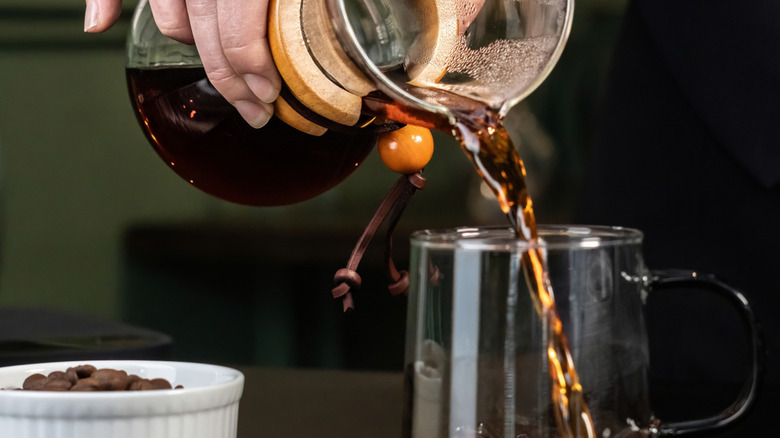
But using a Chemex does take some time. The filters are about 30 percent thicker than normal ones, so expect a slow extraction, and there is a certain way to hold a kettle for a successful pour-over. The grind also matters as does the water temperature. But it's worth it and there a lot of tips you can follow for brewing the best pour-over.