

How To Pick The Sweetest Corn On The Cob At The Grocery Store Every Time
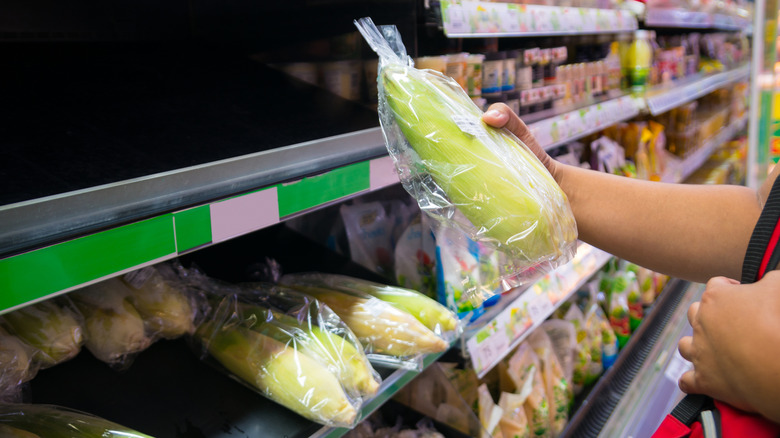
Commercially grown corn falls into a few general categories, but the two most common are field corn — used for cornmeal, ethanol, and animal feed — and sweet corn, which is for eating fresh. So the majority of the corn you find fresh should be sweet corn, but you'll still find a significant difference between one ear and the other when it comes to taste.
The genetics, the point at which it was harvested, and how long it took to get from the field to your supermarket are all factors in how any ear of sweet corn will taste. But there's no way you'll have access to this inside information when you're shopping. Instead, you need to rely on your senses to help you choose the sweetest corn when you're at the store.
Corn needs to stay on the stalk long enough to develop the juices that contain the sweetness. However, once it's reached peak maturity, it should be picked, sold, and eaten as soon as possible. Once the ear is cut from the stalk, the sugars will start to turn starchy, leaving you with a less sweet and juicy cob of corn.
Knowing this, when you're looking for sweetness in corn, you're in essence looking for signs of the corn's freshness and juiciness. Below are some tips to help you make a confident choice.
Look for a tightly wrapped green husk
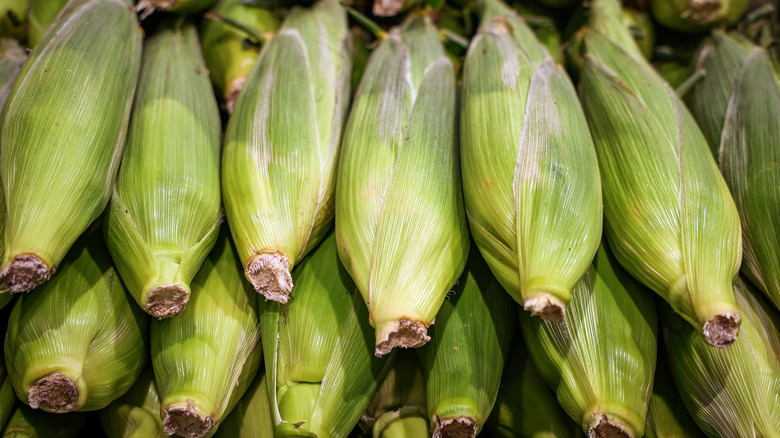
Some corn is shucked and packaged by the time you see it in the grocery store, but those with husks intact can help you to figure out whether it's a good buy or not. Husks on corn that has been recently harvested will be green and cling tightly to the ear. If you have the option to touch it, you'll also find the husk still has some moisture to it.
A husk that's dry, loose, or beginning to lose color — and most likely all three — is a sign that the corn has been sitting on the shelf or in storage for some time. Even if the corn was picked at exactly the right stage of growth, if it's allowed to sit unrefrigerated, the sugars in the sweet sap will start to convert to starches.
The husk is the corn's natural protection, shielding the kernels from insects and dehydration as they grow. But the husk continues to work to keep in moisture after harvest — so for the juiciest ears, don't shuck corn until you're ready to cook it. In the case of grilled corn, you don't even need to remove the husk before cooking. The husk reduces the risk of burning and helps to steam the corn.
Check the silk
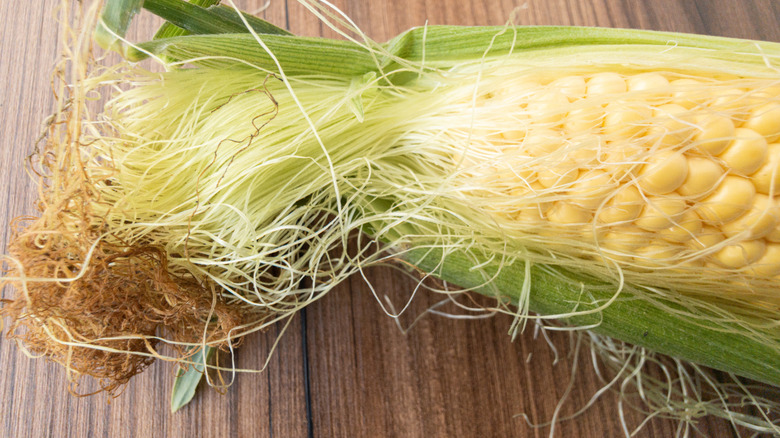
Just as with husks, the condition of the corn silk can be a good indication of the quality of the cob. Corn silk starts as a pale green, yellow, purple, or even red, depending on the variety, before turning brown. When looking for freshness, you might assume that you should be avoiding corn with brown silk, but this isn't the case.
Many farmers leave the corn on the stalk until browning has begun, as this tells them that the corn has reached maturity (and peak sweetness). What you want to avoid is silk that's dark brown or dry and brittle, which hints that the corn was either left too long on the plant or has been sitting in the supermarket for some time. Black or slimy silk is a sign that the ear of corn is turning bad or moldy.
There's a commonly advised tip for choosing the best corn that suggests peeling back the husk to check what's underneath, but all you'd be doing is leaving the corn open to dehydration. If — and only if — you can see the silk beneath the husk without peeling it back, you should be looking for golden and shiny strands. Dried-out silk under the husk will signify that it was harvested some time ago.
Buy ears that are heavy for their size
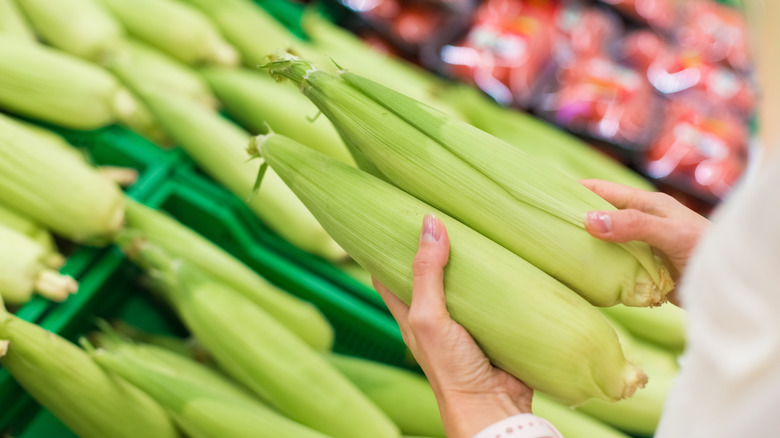
Even if the corn has been shucked or wrapped in plastic, there are still signs you can look for that point out sweetness. You want the corn that feels heavy for its size. The heavier the corn, the fuller the kernels are with juice. This means it grew to maturity and hasn't started to dry out.
Knowing exactly how heavy an ear of corn should be is tricky to determine, so it's easier to check for relative weight. Pick up two ears that are as similar in size as possible, and see which one is heavier. You can keep repeating this process if you want to narrow it down to the heaviest in the display.
A thick ear of corn that's lighter than others usually means it's becoming dehydrated, while a particularly skinny ear of corn is a sign it was harvested before the kernels started to flesh out. Neither of these options will be as sweet.
While you're getting hands-on, you can give each ear a gentle (and we mean gentle) squeeze. You want to be able to feel plump kernels, with no big gaps that would indicate underdevelopment, or soft spots, which are a telltale bad sign for your corn on the cob.
Don't rely on kernel color alone
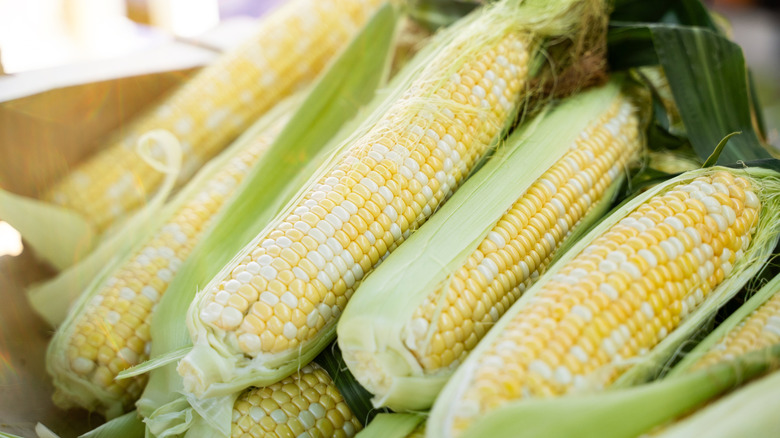
People have been conditioned to look for fruits and vegetables with the brightest or richest colors as a sign of sweetness, and while it might be the case for tomatoes, the same doesn't necessarily apply to corn. While you do want to ensure that the kernels are fully developed, don't assume that white corn is the immature stage of yellow corn; the color is only an indication of variety.
You'll most likely come across yellow, bi-color, and possibly white corn — all of which can be sweet. This is another good reason not to peel back the husk in the grocery store: If you're looking for the yellowest kernels to signify sweetness, you're only wasting your time. That's not to say there's no benefit to choosing one color over the other, but the reason is merely one of aesthetics.
For example, you might want to choose a white variety for easy crockpot cream corn that looks as creamy as it tastes, or yellow corn for a golden cornbread. Similarly, you could choose bi-color corn where you want a bit of visual interest, such as in a fresh corn salad recipe.
Seek out sweeter varieties
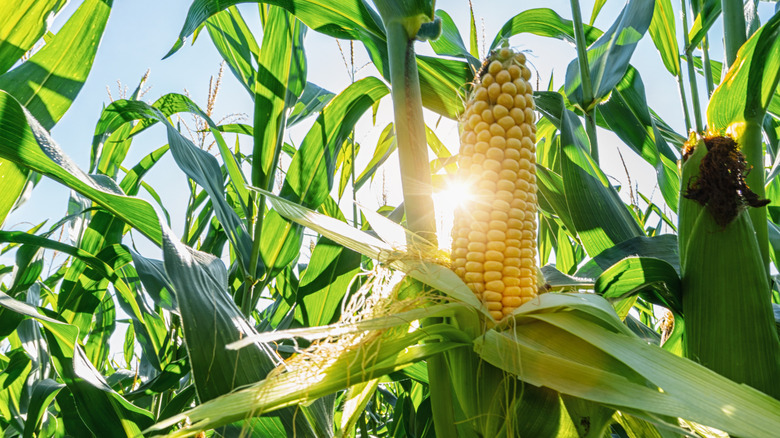
Beyond any measure of freshness or juiciness, what makes the biggest difference to how an ear of corn tastes is the variety. Sweet corn can be further broken down into three categories: standard sugary, sugary enhanced, and supersweet. These represent the corn plant's genetics — the result of decades of human engineering to enhance the natural sugar content.
Now these aren't labels that you're going to find in the supermarket, where corn is more often sold by color, or even in your local farmers market. But they can still be helpful if you're planning to grow your own sweet corn — one of the many fruits and vegetables that are actually man-made. What you'll need to look for instead are the particular varieties of corn that fall under each category.
Standard sugary corn comes in varieties that include 'Silver Queen' and 'Jubilee.' Sugary enhanced varieties include 'Ambrosia' and 'Kandy Korn,' which offer a sweeter taste and a more tender texture. Supersweet varieties of corn, such as 'King Kool' and 'Candy Store,' take longer to convert sugar to starch, meaning they have the added benefit of staying sweeter for longer after harvesting.