

Is It Cheaper To Repair Or Replace A Keurig?
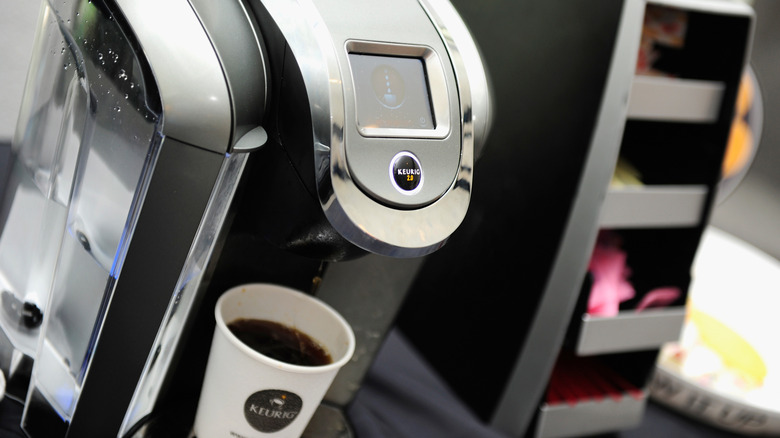
When it comes to single-serve coffee makers in the U.S., there's no bigger name in the market than Keurig. The brand has been around for over three decades, and roughly 40 million American households own a Keurig today. Popular as they are, the problem with machines is that they tend to break down sooner rather than later. While the average lifespan of a Keurig is three to five years, when it starts giving trouble, it can be tough to decide whether you should spend money repairing it or just buy a new machine.
According to Matt Woodburn-Simmonds, ex-barista and founder of Home Coffee Expert, there's no binary answer to this. The decision on whether to repair or replace your Keurig comes down to the type of issue you're facing. "There are a few pretty common issues with Keurig machines that are very easy to fix," Woodburn-Simmonds told Tasting Table. "Depending on how your Keurig has stopped working, there are usually a few easy fixes you can try to see if it's an easily sorted problem that requires no expertise or replacement parts."
According to the company's website, Keurig's coffee makers come with a one-year warranty during which it repairs or replaces malfunctioning machines. However, the warranty doesn't apply if the problem has been caused by a non-Keurig pod, or if it's ever been serviced by anyone other than Keurig or its authorized service providers. So, if you've owned your malfunctioning Keurig for over a year, or it doesn't fall under the warranty for any other reason, here are Woodburn-Simmonds' tips on how to tell if you should repair or replace.
Problems you can fix yourself
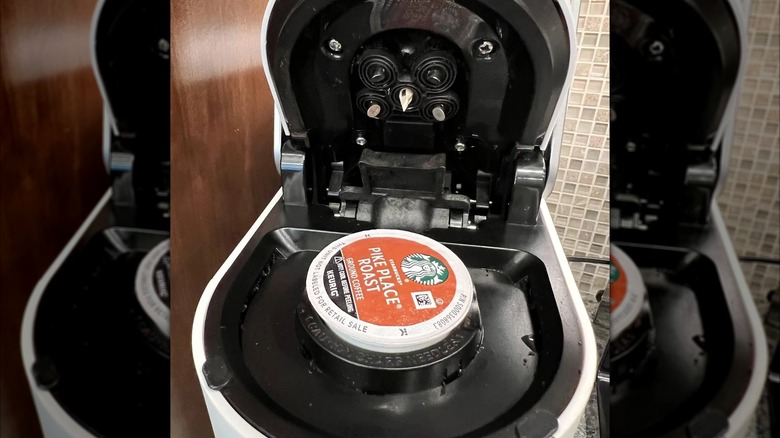
If you're someone who needs your morning coffee fix, your worst nightmare is probably something along these lines: You wake up, turn on your Keurig, pop in a pod, place the mug underneath, and press the button. But when you come back, the mug is either empty or barely full. This usually happens if you've overlooked cleaning tasks, but according to Matt Woodburn-Simmonds, it's a problem that can be fixed. "If you're getting very little or no coffee out, or your machine stops mid-brew a lot, you can check if the needles that pierce the pod are clogged. Remove the pod holder and use a sewing needle or straightened paperclip to remove any coffee grounds that have gotten stuck in them," he said.
If it's not the needles, it's most likely an issue with the water flow itself. This, too, can be fixed at home. "It's not uncommon for the water sensor to get blocked by debris or just be a little out of alignment, causing the 'add water' light to be permanently on," said Woodburn-Simmonds. "You can firmly press the water tank back in to ensure the magnetic base is aligned and check for debris or air bubbles that might be blocking the water intake." If your Keurig still isn't pumping water as expected despite clearing any debris, the problem might be air bubbles. "There may be air bubbles in the lines causing blockages. Unplugging your Keurig and gently tapping the sides can help jar these free," Woodburn-Simmonds says.
Problems where a replacement makes more sense
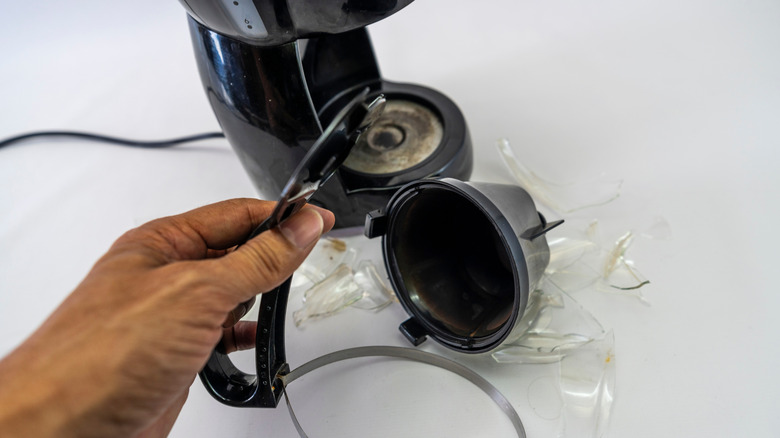
Unfortunately, the list of things you can fix in a single-serve home Keurig is quite short. Unlike its commercial line designed for offices, there aren't many replacement parts available for the single-serve home models. "Things like broken heating elements or [a] cracked internal water tank are more expensive to fix than buying a new machine," said Matt Woodburn-Simmonds.
This isn't just a problem with Keurig. The fact is, appliances used to last way longer. This is something to consider when your Keurig starts causing you problems. As Woodburn-Simmonds said: "If your Keurig is over two years old, then any problem that can't be fixed at home will probably cost more to fix than the value of the machine, so you're better [off] just buying a new one."
To be fair, he doesn't recommend buying single-serve coffee machines like Keurig or Nespresso in the first place. That's for two reasons: the quality of the brew and how much waste they generate.