

What's The Average Lifespan Of A Keurig?
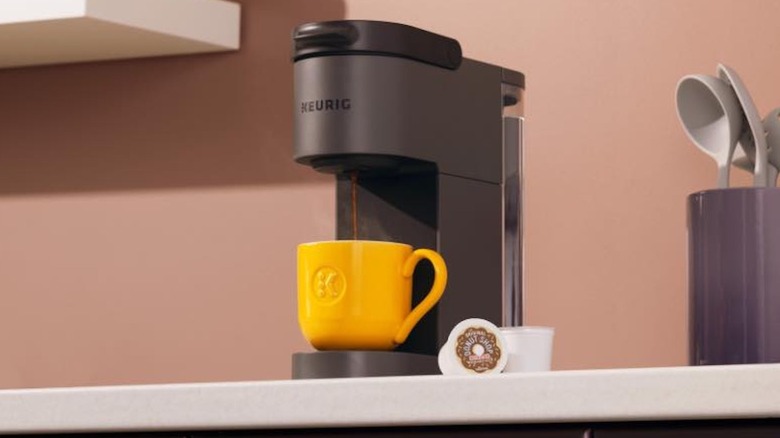
If you're looking for a user-friendly and straightforward way to make coffee at home, you can't beat the ease of a pod-based machine like Keurig. Since its launch in the late '90s, the single-serve coffeemaker has become a staple in offices and homes across America, but in recent years, it seems more and more consumers are noticing a shift in machine quality.
For the most part, the average lifespan of a Keurig seems to be three to five years — some reviewers note they're reaching for a replacement in as little as two years, while others insist their older model is still kicking. Of course, cleaning and maintaining your Keurig should help prolong your lifespan, and there might be things you can do before buying a whole new machine.
How to prolong your Keurig's lifespan
No one sets out to buy an appliance that needs to be replaced every few years, but if you have your heart set on a Keurig, there are things you can do to try to avoid this fate. First, do the research. Look into which Keurig is the best option for you, and seek out machines that are reviewed for their durability.
It's also important to use and maintain your coffeemaker properly, and one major contributing factor is the kind of water you use in your Keurig — both for cleaning your machine and for brewing your coffee. Bottled and spring water is most recommended for both the lifespan of your machine as well as the quality of your coffee, and this comes down to mineral intake. Water high in naturally-occurring minerals such as magnesium, calcium, sodium, potassium, bicarbonate, sulfate, and chloride can impact the taste of your coffee, but it can also lead to a build-up in your Keurig and shorten its lifespan.
This build-up is also why you should descale your Keurig regularly, which is another way to keep your machine functioning for longer—especially when paired with cleaning your Keurig properly, which starts with removng your used Keurig pod after every use. This is necessary because a used pod is highly prone to harboring bacteria and mold, which can spread to the machine and — yes, you guessed it — affect both its quality and its longevity.