

Quote Of The Day By Poet Jim Harrison: 'I See That Women And Food Rather Than Government Can Help Me Abolish My...'
We may receive a commission on purchases made from links.
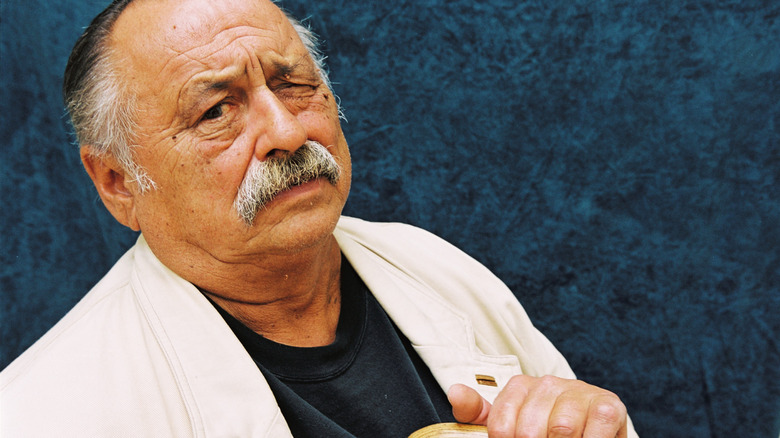
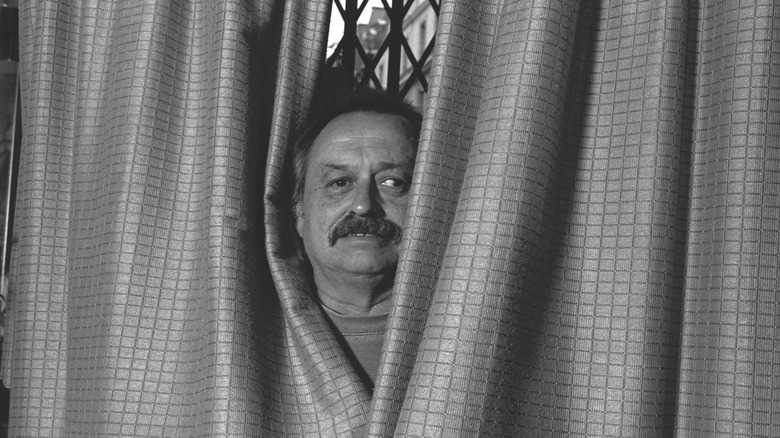
A refined palate is an unsung weapon in the battle against the ennui of modern life. To that end, few palates were as radically tailored toward the pursuit of joy as Jim Harrison's. Harrison (1937-2016) was an American poet and novelist with a published body of at least 40 books, including "Legends of the Fall" and "In Search of Small Gods." A Michigander with a love of the great outdoors, his poetry spilled onto the page dressed in a famously irreverent sense of humor.
His deepest reverence was for food. According to Harrison's publisher, Grove Atlantic, the Wall Street Journal called the bestselling writer "the Henry Miller of food writing," and the Dallas Morning News called him "the poet laureate of appetite." He shared Anthony Bourdain's animosity towards vegetarianism, and he wrote a food column — "The Raw and the Cooked" — for Esquire. Harrison's epicurean talent was even venerated by fellow writers. When asked to participate in a collection of celebrities writing about their favorite foods, Tom Robbins reverentially replied, "I've been willing to leave culinary fiction in the garlic-scented hands of such masters of dinner-plate drama as Jim Harrison," according to an excerpt from "Wild Ducks Flying Backward."
Harrison came out of the freewheeling Key West artistic movement of the late 1960s alongside contemporaries Richard Brautigan, Thomas McGuane, and Jimmy Buffett. The theme of glorious excess would function as something of a through current for the rest of the writer's prolific life. His vivacious musings confirmed that good food can fuel a good life — which brings us to our quote of the day.
Quote of the Day by Jim Harrison
"I see that women and food rather than government can help me abolish my prejudices, also an extremely fat wallet."
This quote comes from "A Really Big Lunch: The Roving Gourmand on Food and Life." The book is a posthumous collection of Harrison's food-centric essays. It was published on the one-year anniversary of Harrison's death in 2016 and became a national best-seller. The anthology is stuffed with witty wine reviews and sociopolitical takedowns of pleasureless contemporary quick-food, and in true Harrison form, it's all salty, insightful, and dripping with style. These essays explore the crucial connections between food and mood, the best ways to prepare duck breast, the magic of fatty guanciale, and "My Problems with White Wine," the essay from which the quote of the day comes.
The collection's titular essay first appeared in The New Yorker in 2004; it chronicles "a really big lunch" Harrison once embarked upon in Burgundy, France with a whopping 37 courses accompanied by 13 wines over the span of roughly 11 hours. According to Harrison, the menu was drawn from the recipes of 17 cookbooks published between 1654 and 1823, featuring such delicacies as calf's brain tart and terrine of hare, and in total "likely cost as much as a new Volvo station wagon." Rare dining events like these are where the "fat wallet" Harrison mentions comes into play. But, the writer knew well that deep, eye-rolling pleasures could be found at many less glamorous tables too, and often with a more spiritually rewarding payoff.
The deeper meaning of Harrison's quote — the critical import of the pleasure prescription
Humanity has long been honing and reimagining food as an art form rather than a utility alone. Harrison prescribes a return to this seemingly simpler, food-honoring dogma as a kind of Dionysian modus operandi for a good life — pursuing pleasure as the holistic antidote to the drudgery of modernity.
As Harrison notes, that historical 37-course lunch represents a massive departure from his childhood growing up on a farm in rural Northern Michigan. These roots would inspire his affinity for many unpopular, meat-centric dishes from which less adventurous epicures might shy away (think homemade mountain lion chorizo and antelope short ribs). Harrison enjoyed rustic fare as much as fine haute cuisine, but experientially, he greatly preferred the laid-back atmosphere of bistros to the stuffy attitude of fine dining. After all, Harrison maintained, a meal worth eating should be as fun as it is nourishing, and an impetus for slowing down.
To Harrison, pleasure was not optional, but essential, at the dinner table and beyond. In the book's first essay "Eat Your Heart Out," Harrison advises foodies to spend as much money as possible on good food and wine, reframing the cost not as a worthy investment. As the writer observed, good food and good company are tools for a renewed sense of humanity and celebrating the present moment as part of life's tapestry.
More quotes from Jim Harrison
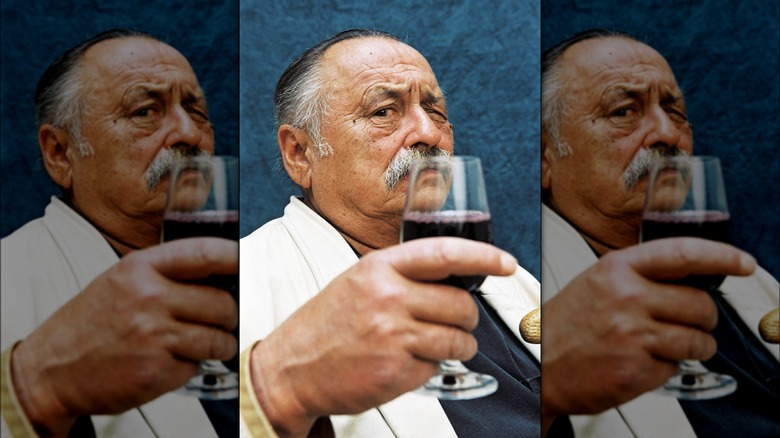
"Once before giving a poetry reading I was handed a glass of cheapish Californian Chardonnay and I said, 'This might be good on pancakes if you were in the wilderness.'" — from "A Really Big Lunch"
"Haute cuisine has rules for those who love rules. Those rules have, for the most part, driven me into the arms of bistros. If I were given the dreary six months to live, I'd head at once to Lyon and make my way from bistro to bistro in a big stroller pushed by a vegetarian." – from "A Really Big Lunch"
"A warning to certain of your left-leaning, spit-dribbling, eco-freak readers: I kill much of what I eat; ducks, quail, deer, grouse, woodcock, trout, salmon, bluegills, the lowly carp [...] These people should know that technically speaking their bean sprouts scream when they are jerked out by their roots." — from "A Really Big Lunch"
"We drink wine with our entire beings, not just our mouths and gullets. Temperaments vary." – from "A Really Big Lunch"
"There is no place in the world for me except where I already am, and luckily that is usually near a kitchen." — from "A Really Big Lunch"