

Not Cast Iron: The Unsung Cookware That Kept Cowboys, Chuckwagons, And The American West Fed
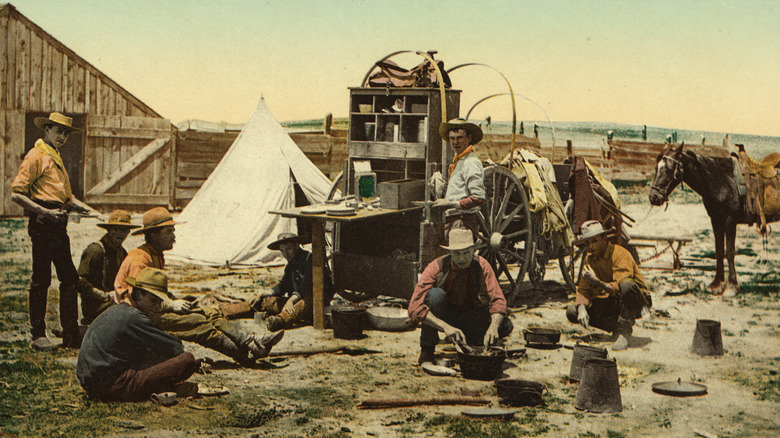
Working on the open trail was a laborious life without many creature comforts. Beyond herding cattle, cowboys also built frontier towns and managed horses. Workdays often lasted for up to 15 hours, involving nonstop physical labor (often on horseback). At day's end, a proper meal was of the utmost importance. For cowboys, the chuckwagon was as much about nourishment as it was lifting spirits. Cooks, often former cowboys themselves, prepared three hot meals a day. It was a vital task, and the most powerful tool in their arsenal was the humble tin cookpot.
Tin camp cook kettles played a crucial role in keeping the burgeoning American West fed. Strong and durable yet ultra-lightweight, tinware made an ideal candidate for travelers over long, rough distances — it was certainly less burdensome than heavy cast iron cookware. Indeed, open-range cattle drives could last for three to six months at a time, which meant that less weight was always better. Tin is also corrosion-resistant.
To prepare more substantial meals, salt pork, wild game meat, lard, onions, potatoes, beans, cornmeal, flour, salt, and sorghum molasses were common staple ingredients that could be thrown together in a tin cookpot in various combinations. These versatile vessels could make everything from rugged cowboy coffee to classic cowboy bread with only minimal ingredients. These thrifty, ambulatory cooks were tasked with turning often meager provisions into a suitable meal — and to that end, stewing miscellaneous elements together in a transformative tin pot offered a solid solution.
Tin cook pots were common tools on the open trail
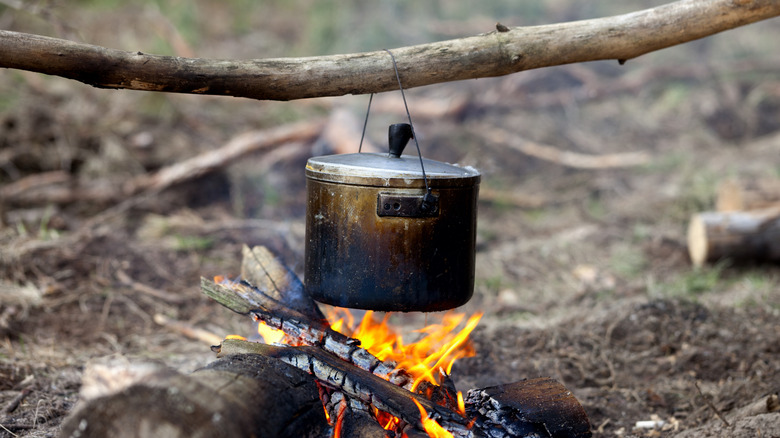
After the American Civil War, a flourishing beef industry drew folks to Texas, the Rocky Mountains, and the Great Plains to pursue cattle ranching. The invention of the chuckwagon is often accredited to Texas legend Charles Goodnight, having crafted the kitchen-on-wheels from an old Army surplus wagon. Influenced by vaqueros and Mexican culinary tradition, some cowboy camps in New Mexico, Arizona, California, and South Texas were known to make chili, chorizo, and fried beans — all of which could be prepared in tin pots.
Around the 1880s, cowboy encampments further north in Montana and Colorado gained reputations for their top-notch range fare, which included canned fruits and vegetables (considered a major luxury), cane sugar, Coleman's mustard, lemon extract, cayenne pepper, and other culinary improvements. These expanded resources might have facilitated the baking of classic cowboy desserts like bear signs which, per the lore, cowboys would ride miles to get. Additionally, canned peaches could be baked into peach cobblers.
Tinware pots had been around long before the dawn of the American cowboy. American Revolutionary War soldiers also relied on this humble yet crucial cooking tool to prepare meals on the battlefield. Until 1890, tinplate was predominantly an export product from Great Britain. Under the McKinley Tariff Act of 1890, however, tinplate imports were taxed at a rate of just over $0.02 cents per pound. Henceforth, the American tinplate industry boomed to become the largest in the world, cranking out everything from cooking pots, coffee pots, and cups to plates, pans, pails, and snuff boxes.