

How Much The Filet-O-Fish Cost In 2001 Compared To 2026
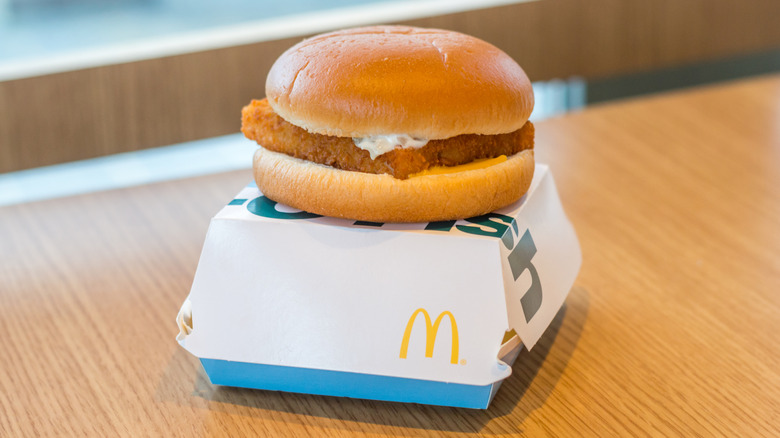
You can probably guess that McDonald's Filet-O-Fish was different back in the 1960s when it first debuted, but you'd still be surprised by changes made to the sandwich as recently as 2001. Like all fast food, the famed seafood staple has gotten more expensive over the years, and the prices from the early aughts might have you wishing for a time machine. Old McDonald's drive-thru menus reveal that the Filet-O-Fish cost between $1.89 and $2.09 in 2001 — and you'll pay over twice that amount today.
According to prices on the McDonald's app, you could pay anywhere from $4.79 to $6.59 for a Filet-O-Fish in 2026, depending on where you live in the U.S. If you went back in time to 2001 and offered up $6.49 at the nearest Golden Arches, you could potentially buy three Filet-O-Fishes with enough coins left over to grab an apple pie for dessert (those cost less than $1 back then). For anyone already feeling nostalgic for 2016 McDonald's prices, the rates from 25 years ago must be an even bigger shock.
If you're feeling as salty as an ocean-caught pollock over these old prices, adjustments for inflation might make you feel a tiny bit better. The buying power $1.89 in 2001 comes out to about $3.56 in 2026, while $2.09 in the prior year is worth about $3.93 today. Granted, these adjusted numbers are still a notable discount from today's Filet-O-Fish, so why the big spike? The reason behind the item's expensive reputation nowadays actually has little to do with the sandwich itself.
Why does the Filet-O-Fish cost so much more in 2026 than 2001?
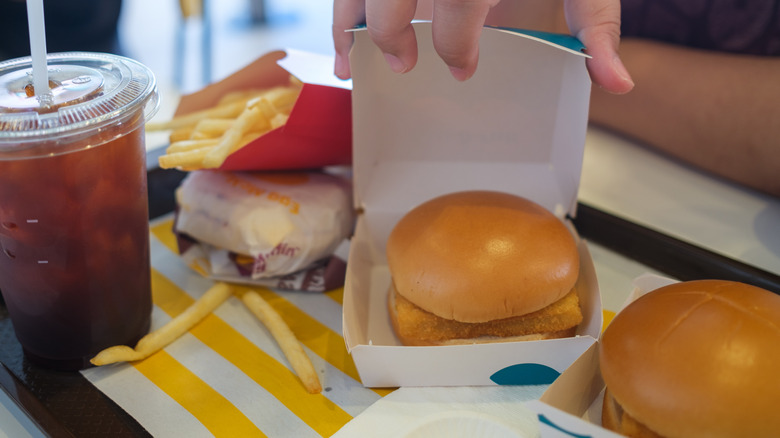
Even prices from 2001 look expensive in comparison to how much the Filet-O-Fish cost when it hit the menu in 1965: a measly 29 cents, or about $3 today. In addition to inflation, you might assume that higher-quality ingredients or larger portions are behind the rise in price, but sadly, it's not so. The original Filet‑O‑Fish was made with pricier halibut, but switched to cheaper cod soon after. Today, it contains wild-caught Alaskan pollock (a member of the cod family). The sandwich hasn't grown in size to justify a higher price, either — in fact, the biggest Filet-O-Fish complaint among McDonald's customers is that it has embraced shrinkflation.
The Filet-O-Fish is likely a victim of the same factors that have made all fast food more expensive, namely rising the cost of ingredients and labor. In 2001, the U.S. Federal Minimum Wage Rate was $5.15, while in 2026, it's $7.25. U.S. import prices for Alaskan pollock have also seen a drastic spike over the 2020s due to high demand and lower supply of the fish. These are just two factors that could be making the Filet-O-Fish more expensive to produce and serve nowadays. McDonald's also clarified in 2024 that individual franchisees can make menu items more or less expensive depending on how much it costs to run that particular location, which is why you may get charged a lot more for your Filet-O-Fish at certain Golden Arches locations.