

Stainless Steel Countertops Come With One Major Advantage
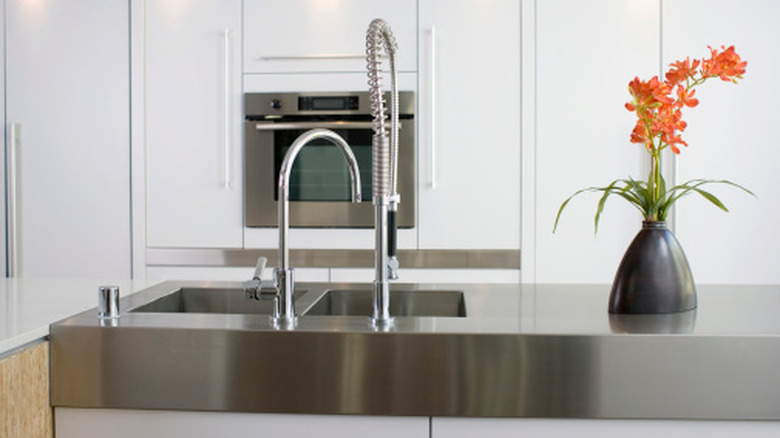
We all know how important it is to have a clean kitchen. In the room where food is prepared, eaten, saved, and disposed of, bacteria can build up. If it's not eliminated, it can lead to foodborne illnesses. Regular, thorough cleaning is a must to avoid this — but you can also make design decisions in the kitchen to help.
One of the most impactful examples is your counters. Understand different countertop materials is a game changer. When it comes to keeping bacterial accumulation at bay, stainless steel can be a very smart bet. Unlike many other materials that are porous, including wood or natural stones like marble or granite, stainless steel is one smooth surface with no hiding places for germs. There's nowhere for bacteria to cling to and grow. Liquid doesn't absorb into stainless steel, either.
It just sits on top until you wipe it down. It's an easy material to thoroughly clean: Just use a microfiber cloth with warm, soapy water. This is one of the reasons stainless steel is the go-to countertop material in professional kitchens and even in hospitals. Plus, stainless steel has a sleek, high-shine aesthetic that's modern but doesn't go out of style. If you want to design a kitchen that doesn't look dated down the line, it's a good contender.
The potential (and drawbacks) of stainless steel
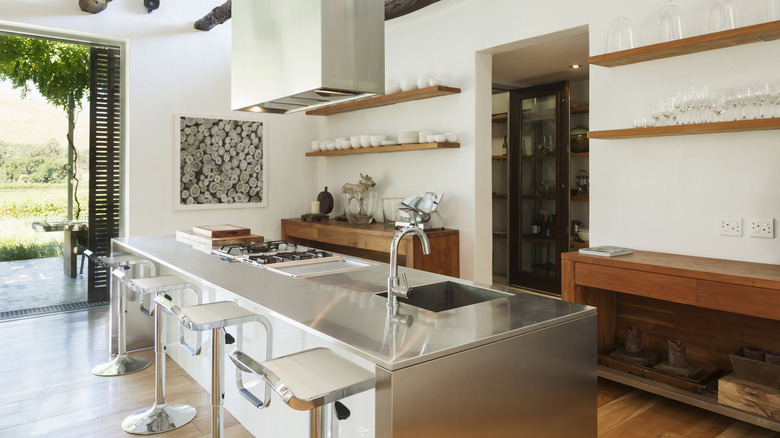
One of the things you should know before investing in stainless steel for counters is that it isn't anti-bacterial. It doesn't provide a welcome environment for bacteria to hang around, but it doesn't go so far as to fight bacteria itself. You need a combination of stainless steel and a good cleaning routine for that. Whoever, there is research in progress to add anti-bacterial properties to stainless steel — though you should never ditch the cleaning part.
The process actually changes the texture of stainless steel, though on such a granular level it likely still wouldn't create crevices for bacteria to hide. Instead, it would cover the surface with microscopic needles that can kill bacteria, including staphylococcus and E. coli. This would lessen the need for harsh chemicals in cleaning, which is good news since it's those solutions that can corrode stainless steel and counterproductively create places for bacteria to hide. So, keep an eye out for stainless steel with this cutting-edge treatment applied to possibly become available in the near future.
Even then, there may be a few drawbacks you'd want to weigh before installing stainless steel countertops. For one thing, it's a somewhat pricey material. It can scratch easily and, with a shinier finish, retain fingerprints and smudges. It helps to choose a matte finish to hide wear-and-tear spots, and to have stainless steel sealed to avoid scratches — just remember this will add to the cost.