

The Best Way To Get Rid Of An Old Refrigerator (You Can't Just Throw It Out)
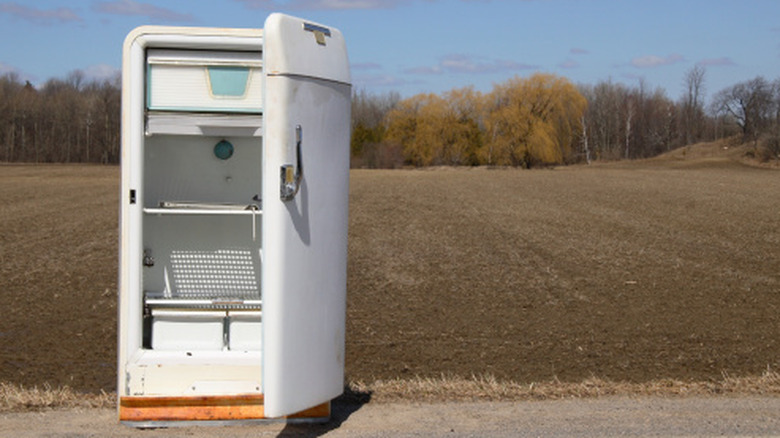
Refrigerator shopping can be enough of a hassle on its own. It takes researching the most affordable places to buy refrigerators, measuring your space, comparing features and prices, settling on aesthetics, and more. Yes, all the hunting around is more than worth it when you have a shiny, new fridge that keeps all your food safe, delicious, fresh, and cold. But when that's all done, you just want to enjoy that new model. But first, you have to deal with one last, which proves to be a not-so-insignificant task. You can't just throw an old refrigerator away. It's actually illegal in most places due to environmental concerns, as refrigerant and other chemicals can be harmful in landfills without proper precautions.
Luckily, you have several options; all you have to do is familiarize yourself with them, formulate a plan, and you'll be making use of that new fridge in no time. First of all, know how often you should replace your refrigerator. Fridges should last 10 to 20 years depending on the brand, how well it's maintained, and how much it's used. If your fridge starts requiring repairs, demonstrating fluctuating temperatures, dripping, or making noises, it's time to move on.
Methods of disposal include taking advantage of haul-away offers at the store you buy your new fridge, recycling or donating it, or working with a junk-removal service or your city. It's all a matter of what options are available and realistic where you live.
How to prep your old fridge and find retailer pickups or rebates

Whichever route you take to safely and responsibly disposing of your refrigerator, it's crucial to take certain preparation steps. Empty the fridge and freezer entirely. Sanitize the interior, especially if you decide to donate the appliance. The best ways to clean a fridge is to scrub the interior with warm water and soap or a baking soda solution. Unplug it so it defrosts for an absolute minimum of four hours — overnight is really ideal. According to the Refrigerator Safety Act, which is what legally dictates how you can dispose of your fridge, you should also completely remove the doors. The open fridge will defrost faster, as an added perk. Just make sure to place towels underneath it. Then wrap up and tie the cords.
The easiest method of disposal is using a haul-away program offered by the store where you buy your new refrigerator. When they deliver your purchase, they take the old fridge off your hands for free. Keep an eye out when fridge shopping for retailers participating with the United States Environmental Protection Agency's Responsible Appliance Disposal program, geared toward recovering harmful chemicals from refrigerators and other appliances to help reduce greenhouse gas emissions. Partnering retailers pick up your used refrigerator and manage that chemical removal.
If that's not an possibility available to you, call your local utility company. Some of them offer the very incentivizing option of coming to remove your refrigerator gratis and even giving you a roughly $50 to $100 rebate for it.
When in doubt, recycle responsibly
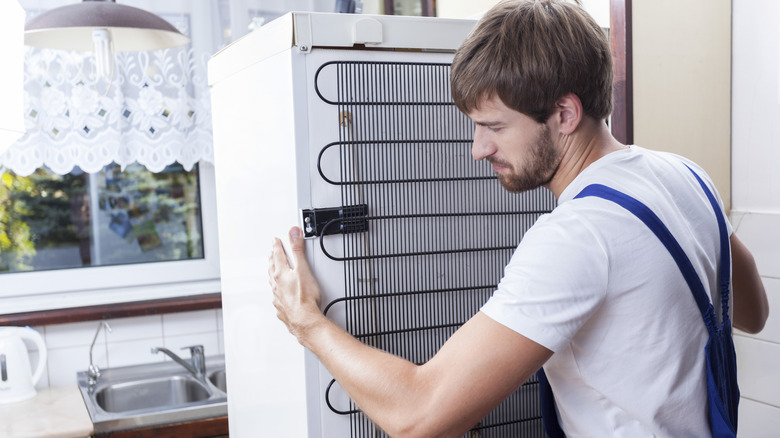
Sometimes, you get a new fridge before your current one is fully on the fritz. If your old refrigerator is in decent shape, you can try reselling it on platforms like Facebook Marketplace or donate it. Many organizations will pick it up for free and you can get a receipt for a tax deduction.
If it's not in good condition, you could also hire a junk removal service. This one is among the easiest methods, though it's also the priciest by far. Alternatively, get acquainted with the best ways to responsibly recycle kitchen appliances like refrigerators. You can DIY it by looking up scrap metal recyclers around you, calling one, and arranging a drop-off. Ensure that they remove and handle chemicals properly. Note that since you have to get the fridge there yourself, you may need to rent a van or truck for this errand.
Finally, there's the choice of checking in your city's guidelines around placing larger items to be disposed on the curb for removal. You want to find out: Does your city pick up refrigerators? If so, are there certain days of the week you can put yours out? Are there any fees, or added steps you need to take to prep the fridge? Do they recycle appliances, or just take them to the landfill? Disposing of your fridge can be easy, free or cheap, and even charitable or sustainable — it just takes a little extra research.