

The 3 Green Flags A Grilling Expert Looks For At A Steakhouse
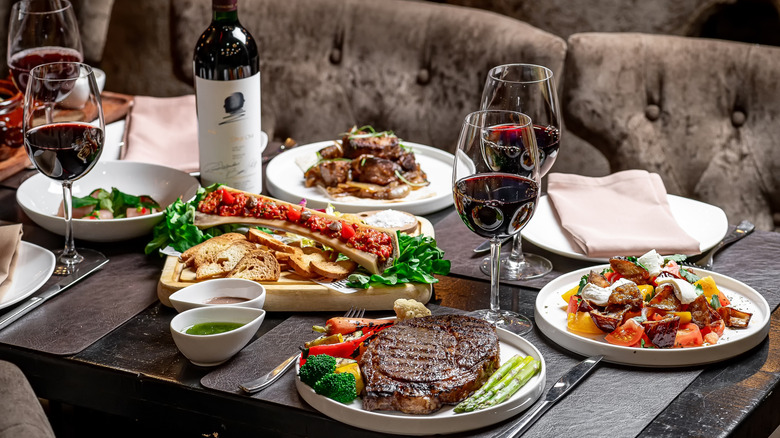
Whether you're eating at a fine dining establishment or a budget-friendly chain, there are ways to tell if the steakhouse you're walking into will live up to justifiably high expectations. We interviewed Silvio Correa, Brazilian grill master, culinary consultant, and co-founder of Silvio's House restaurant in Hermosa Beach, California, who shared three green flags to look for when dining at a steakhouse. According to Correa, a restaurant's scent, the cuts of steak offered, and proper server etiquette are the top indicators of a steakhouse's worthiness.
Aroma is directly connected to taste when it comes to savoring food and drink, so it makes sense that chef Correa's first green flag is "the smell when I open the door." He told us, "I want to smell hardwood or charcoal. If I smell nothing at all, I know we are playing a different game." A toasty or smoky scent indicates wood or coal-fired grilling, which are best for cooking premium-quality steaks because they reach high temperatures to achieve the perfect sear while imparting unique flavors of their own. If you're also bombarded with the aromas of caramelized beef fat or funky, nutty dry-aged meat, that's also a pretty good sign.
The second green flag, according to Correa, harkens to his Brazilian grilling roots. "I look for picanha on the menu," he says. "Not because I will always order it, but because if a chef knows picanha, he knows beef beyond the American cuts. He has done his homework." After all, picanha is the most flavorful beef at Brazilian steakhouses.
Correa's final green flag (and some red flags to avoid)
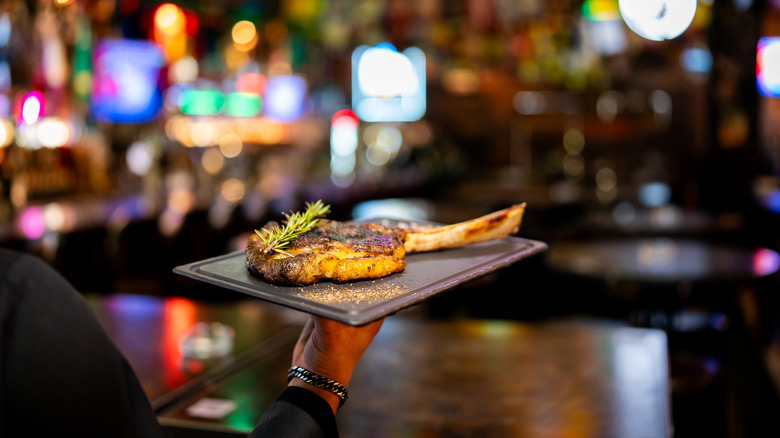
Chef Correa's final green flag puts servers on the spot. "If I ask, 'How is the ribeye cooked?' and they say, 'However you want it,' that's a robot," he says. "But if they say, 'Our chef likes it medium-rare, and the fat cap renders beautifully,' then I know someone back there actually cares. That is where I want to eat." Cooking the perfect steak is a veritable art form, especially at high-end steakhouses. Consequently, chefs and servers alike should be passionate, knowledgeable, and opinionated about the menu and how best to enjoy a cut of steak.
There are just as many red flags at a steakhouse as there are green flags, so if you spot any, you might want to skip your steak dinner altogether. Just as a diverse menu of cuts indicates that the chef has done his homework, the details about the steak should also be front and center. So, if the menu doesn't specify origin, grade, or cooking method, you might want to rethink ordering steak. A glance at the menu's side dishes is also advisable as boring sides are a red flag that could speak to the overall quality of the restaurant and the execution of its steaks. Before even visiting a steakhouse, you might consider doing some research of your own. We've compiled a list of the best steakhouses in every state to help narrow down your choices.