

What Does Sam's Club Do With Leftover Rotisserie Chicken?
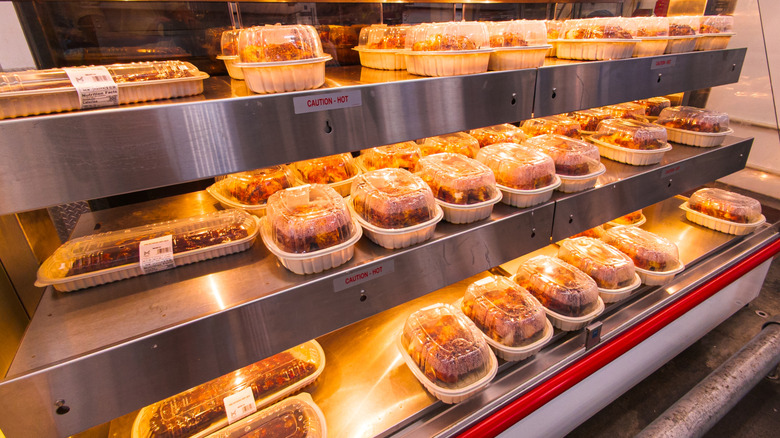
Rotisserie chickens are one of the most affordable ways to buy ready-to-eat roasted chicken, and even the bones can be turned into homemade stock or soup. Plus, whoever gets the job of breaking down the chicken gets to snack on the wings (them's the rules). But these chickens don't come from thin air, and unsold birds have to go somewhere. Sam's Club is one of the big-box grocery stores that sell the cheapest whole rotisserie chickens, yet some inevitably go unsold. Leftover Sam's Club chickens have two potential fates: They can be broken down and resold cold, or they can go in the trash. This fate can depend on the store, its management and staff, and the condition of the chicken.
Anonymous online posts from people describing themselves as Sam's Club employees offer some insight into the process. Sam's Club doesn't publicly detail its policy for leftover cooked chickens, but FDA Food Code guidance helps explain what may happen to surplus birds. If cooked chicken can be rapidly chilled to 40 degrees Fahrenheit or below, employees say it may be reclaimed into aggregated packs of sought-after pieces like breast, legs, or wings and sold cold in the Home Meal Solutions (HMS) section. These packs are usually excellent value for money, so they get snapped up quickly by those in the know.
Not all chickens get a second chance
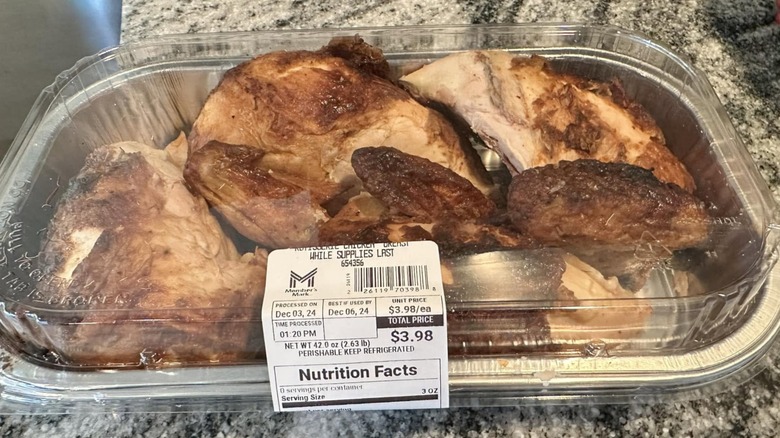
Food that can't be cooled quickly enough or has remained in the temperature danger zone too long must be thrown out. While Sam's Club manages unsold groceries by giving them to those in need, leftover cooked chickens may not always qualify for donation because of the strict food safety requirements surrounding prepared foods.
Reading anonymous claims by people identifying themselves as Sam's Club staff members on Reddit, the plot thickens, with occasional stories of 30 to 60 chickens being dumped every day at closing. Other users claim that strict quality standards mean chickens with torn skin or parts falling off are often deemed unsellable whole. Overcooked chickens might also not be suitable for selling, whether hot or cold. Not all unsold chickens make it to the HMS shelves, however, and practices seem to vary by store. This is a common theme among retailers and restaurant chains that manage leftovers in ways that hinge on staff cooperation, such as Circle K's use of waste management partners.
Some anonymous employees claim that their store hardly ever discards chickens, reclaiming them whenever possible. Others say their store changed how it manages leftover rotisserie chickens, allowing them to be reclaimed only before 4 p.m. Some also claim their stores can sell the previous day's chickens, while others can't.