

8 Common Mistakes Everyone Makes Using Gas Cooktops
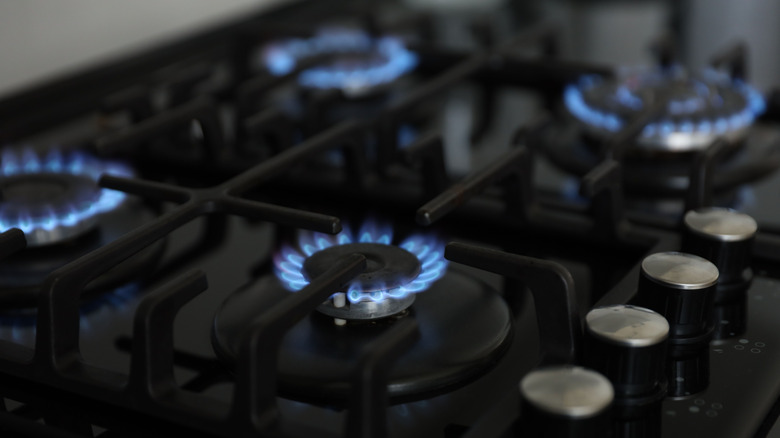
Whether you're replacing an old cooktop or outfitting your brand new dream kitchen, one of the biggest decisions you'll be faced with is choosing a cooktop. They are available in a variety of styles, price points, and colors, but the biggest difference between them is how they are powered. While electric cooktops are arguably the most popular choice in the United States, it's hard to beat the allure of a gas cooktop.
During my career as a personal chef, I cooked in countless home and commercial kitchens on gas, electric, and induction cooktops alike. One of my favorite gigs was hosting events in the showroom of a luxury kitchen appliance company that specialized in gas ranges. I learned which gas ranges were worth buying, and a multitude of tips for cooking on a gas stove. Gas cooktops offer numerous benefits to cooks, but they can be tricky to use properly, especially if you're used to an electric range. These are the common mistakes to avoid making with this type of cooktop.
Not respecting the flame
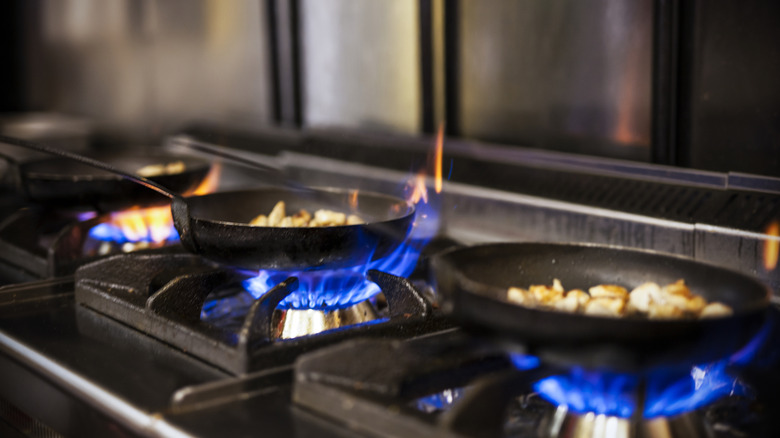
One of the biggest mistakes people make when cooking over a gas-fueled cooktop is failing to respect the flame. Unlike electric burners, which take time to heat up and cool down, gas cooktops respond instantly. Need to turn up the heat for the perfect sear or simmer a fragile beurre blanc sauce? A gas range allows you to do both with ease and speed, but proceed with caution. Cranking the flame too high can burn ingredients before you have a chance to react. This is a crucial adjustment you have to learn quickly to cook successfully on a gas cooktop.
Cooking with gas gives you the gift of precision. The ability to make immediate adjustments as you cook is one of the reasons why pros prefer gas stoves over electric. In a fast-paced professional kitchen where timing is everything, being able to raise or lower the heat instantly gives chefs the control they need to adapt appropriately during service.
Another thing to consider is that gas flames burn hotter than electric ranges, producing intense heat that can quickly scorch a sauce or overcook food. Pay close attention to how your food responds to the heat. Sauce bubbling too vigorously? A lower temperature can correct that. Vegetables not browning well? Bump up the heat to jumpstart the Maillard reaction. Learning to respect the power of a gas flame and adjust it accordingly will give you greater control over everything you cook.
Choosing the wrong pan
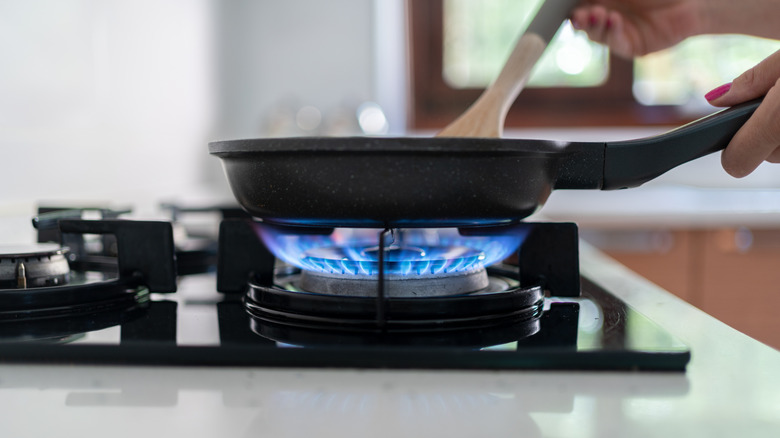
The pan you cook with is just as important as the burner you cook on, and treating every pan like it's suitable for a gas cooktop can lead to disaster in the kitchen. Pairing the wrong cookware with a gas flame can result in hot spots, uneven cooking, and damage to cookware that isn't designed to withstand high heat.
Thin, aluminum pans may not be the best choice for use on your gas cooktop. Thinner pans of any material are more susceptible to warping when exposed to high heat. Warped pans are likely to heat unevenly, making it more difficult to properly prepare food. If you must use aluminum, make sure the pan is thick or anodized. Anodized aluminum pans have been treated to make them stronger, but even anodized pans will eventually start to break down when exposed to high heat over time. You should also avoid using ceramic or glass pans on a gas cooktop, even if they're labeled stovetop-safe. Sudden temperature changes can cause them to crack.
The best types of pans to use on a gas cooktop include ones made with cast iron, carbon steel, or fully clad stainless steel. Cast iron pans are known for their excellent heat retention and are extremely sturdy and long-lasting. Carbon steel pans give you heat retention similar to cast iron and heat up quickly. Layered stainless steel pans are durable and are good conductors of heat. These materials can withstand the intense heat a gas flame produces.
Not centering the pan on the burner
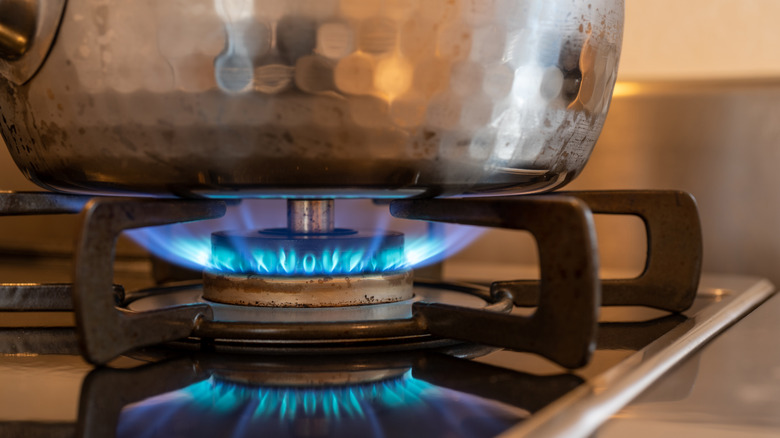
Centering your pan on a gas burner is more important than many home cooks realize. It might seem like a minor detail, but where you place your pan on a gas cooktop has a direct impact on how well your food cooks. Placing your pan correctly on the burner can be your key to success or an inadvertent self-sabotage.
Even the best gas burner can't cook food evenly if the pan isn't centered over the flame. Gas burners are circular for two reasons. First, round burners match the shape of most pots and pans. Second, their circular shape makes it easy to produce an even ring of heat. When your pan is centered properly on the burner, the flame should be centered on the bottom of the pan, without creeping up the sides where it can damage the outside of the pan and the handle. When your pan's off-center, the heat distributed through the pan will also be off center, meaning one side or area will be hotter than others. This can lead to burning or uneven cooking. Be sure to check your pan's placement frequently as you cook, as stirring or flipping food can cause your pan to shift out of place.
Cooking without the exhaust fan
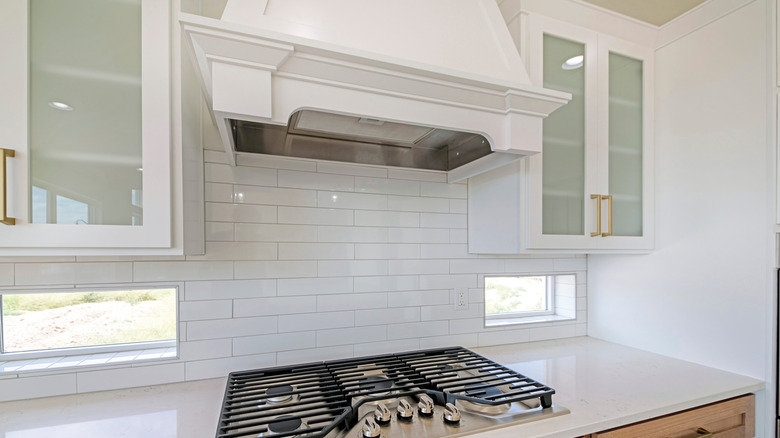
Skipping the vent hood or exhaust fan while cooking on a gas stove allows pollutants to build up in your kitchen. While it may seem like a noisy nuisance, your gas stove's range hood plays a bigger role than you might expect. Burning natural gas releases pollutants like nitrogen dioxide and fine particulate matter into the air, which can cause negative health effects. Research published in The International Journal of Research and Public Health in 2022 found that 12.7% of current childhood asthma in the U.S. can be attributed to gas stove use. While occasional exposure isn't likely to cause immediate harm, a review published in the Journal of Hazardous Materials Advances in 2025 found that long-term exposure to carbon dioxide, nitrogen oxides, and particulate matter can lead to serious and chronic health problems.
Fortunately, there is a way to minimize the risks of cooking with a gas stove: using your vent hood or an exhaust fan. Your vent hood will remove the pollutants from the air in your kitchen, and an exhaust fan will dilute pollutants by recirculating the air through a filter. It's important to change your filters regularly to keep them working efficiently. A vent hood is more effective in removing particulate matter over the back burners on your stove, so use those when possible. If your kitchen doesn't have an exhaust fan or vent hood, open nearby windows and doors to improve ventilation.
Ignoring the color of the flame
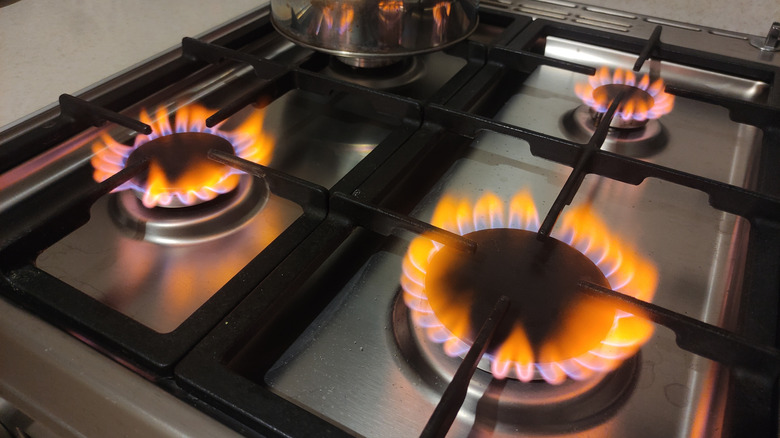
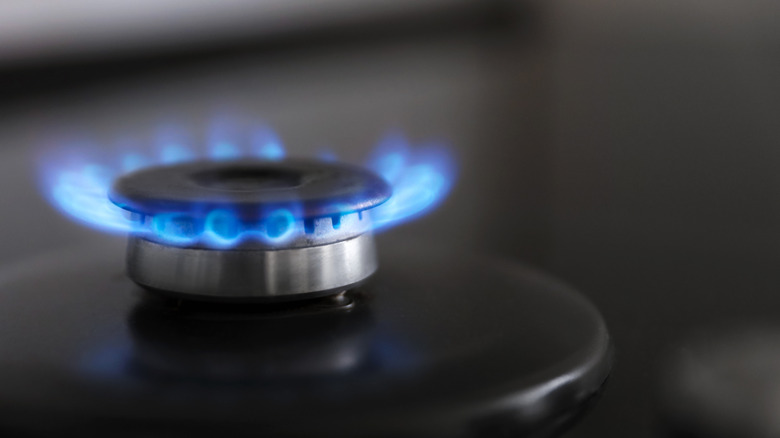
When you think about cooking on a gas stove, bright blue flames hitting the bottom of a pan is the image that likely comes to mind. That vibrant blue flame isn't just visually appealing; it's actually an indication that your gas cooktop is operating properly. The color of the flame on your gas stove can be an indicator of a healthy flame or a flame that could be potentially dangerous. It's imperative that you check the flame color when using a gas stovetop.
A healthy gas flame should be a bright, vivid blue. A flash of yellow may appear at the top of the flame occasionally. This is the result of the proper balance of gas and oxygen, which natural gas needs to burn efficiently. If that ratio is off, the flame changes color. A yellow or orange flame, or a blue flame with frequent flashes of yellow or orange, can indicate a potentially dangerous issue that could produce carbon monoxide, a dangerous gas. The solution could be as simple as dust, grease, or food debris clogging the burner, but if the discoloration continues, call a professional to make sure your cooktop is operating safely.
Not properly maintaining it
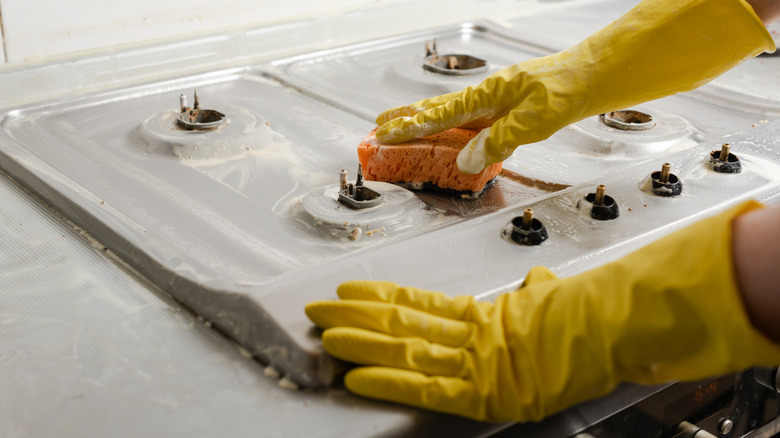
Neglecting regular gas stove maintenance can shorten the life of your appliance and create unnecessary safety risks. Grease, food spills, and other debris aren't just unappealing to look at; they can also clog the ports on your burners, disrupt gas flow, cause the burner to emit an uneven flame, and even become a fire hazard if they're not taken care of properly.
You should regularly wipe down your cooktop with a damp cloth after each use to remove any grease, spills, and food residue. It's best to do this before it has a chance to harden around the burners. Over time, this buildup of food debris can lead to clogged burners, which can weaken the flame, disrupt gas flow, and potentially become a fire hazard.
You'll need water to keep your cooktop clean, but avoid pouring it directly onto your burners. Moisture can work its way into the stove, causing rust or other damage internally. Finally, schedule periodic maintenance visits with a trained professional who is better able to spot worn parts, burner issues, or gas leaks that aren't always visible.
Leaving the burner on
Almost everyone has experienced that sinking feeling after leaving home and wondering, "Did I turn off the stove?" While it's usually a false alarm, forgetting to turn off a gas burner is one mistake you never want to make. Leaving the stove on can be a fire hazard or cause the release of dangerous fumes. As such, after years of cooking for clients in their homes or in professional kitchens, checking the burners before walking away has become second nature to me.
Besides the obvious waste of fuel that comes with forgetting to turn a gas burner off, an unattended flame can ignite nearby items. That kitchen towel on the counter next to the stove could suddenly become tinder and start a fire. However, fire's not the only danger caused by leaving a gas burner on. If the flame is extinguished but the stove is still in the on position, natural gas and the potentially carcinogenic compounds that come with it may still be released into your home. This is not only a fire hazard; it also puts your home at risk of an explosion if there's even the tiniest of sparks. Checking your gas cooktop to make sure no flames are still lit and that each knob — even the ones you didn't use — is in the off position should always be your last step in the kitchen.
Cooking near a wind source
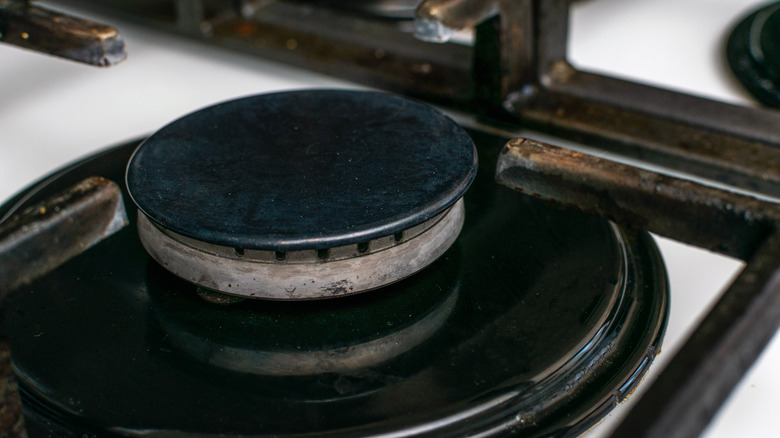
While ventilation is important when cooking on a gas cooktop, strong drafts or gusts of air are bad news when you're cooking on a gas cooktop. Cooking next to a strong draft can destabilize a gas flame, leading to uneven cooking and potential safety hazards.
Gas burners rely on a steady, consistent flame to deliver even heat, but too much air flow from an open window or ceiling fan can cause the flame to flicker or shift. That inconsistent flame will lead to inconsistent heat across the bottom of your pan, making it more difficult for food to cook evenly. A strong draft or gust of air can extinguish the flame altogether, while the burner continues to release natural gas into your kitchen.
It's important to know the difference between proper ventilation and drafts. Proper ventilation in the form of exhaust fans and vented hoods removes smoke and airborne contaminants without affecting or disrupting burners. Drafts and other wind sources, like fans positioned too close to your burner, can be problematic.