

The Best Type Of Pan To Use On A Gas Cooktop
We may receive a commission on purchases made from links.
Anyone who has spent a decent amount of time in the kitchen will have a strong opinion about this subject. After all, there's a universe of choices between the no-fuss convenience of non-stick and the precise elegance of stainless steel, and each of these pans has its own set of fans. But if you were to hold a lighter to the burner and ask us to recommend the best type of pan to use on a gas cooktop, we'd confidently reach for the trusty, crusty cast iron skillet. They're versatile, forgiving, and will literally last forever.
You can use cast iron pans to cook almost anything. From searing a steak to roasting carrots and potatoes to serve on the side (or even frying an egg), there's almost nothing you wouldn't use cast iron for. While cast iron pans take time to get evenly hot, they retain heat very well. This means you don't need to manage wildly fluctuating temperatures, making them perfect for cooking meats, stir-fries, and anything else that thrives on medium to high heat.
There's a myth that you can't use any acids in your cast iron pan. This is not true: you just can't cook acidic ingredients like tomatoes or vinegar in the pan for very long because they could react with the seasoning on the pan. So you can cook with acids — just make sure the pan is seasoned well, and keep the cooking time under half an hour. And if the seasoning does come off while cooking a particularly acidic recipe, or because you left the sauce in the hot pan for too long, it's really not that difficult to fix.
Caring for your cast iron pan
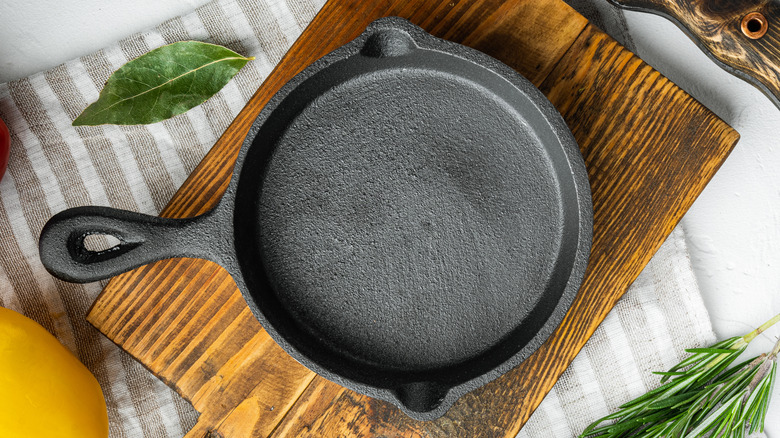
Cases can and will be made in favor of non-stick pans, seasoned carbon steel pans, enamel-coated pans, and stainless steel pans, saying they're low-maintenance. Contrary to popular opinion, cast iron isn't that hard to care for. In fact, once you get used to the routine, you'll barely notice any extra effort. For example, you don't need to scrub your cast iron pan after every use, so we could argue it's less work than other cookware!). Just soak it in, or run it under, some warm water, gently scrub off any grit or burnt bits, and then wipe down with a cloth.
The only goal when it comes to caring for cast iron is to protect the seasoning on the pan. Seasoning is a thin film of oil that solidifies on the surface, which gives cast iron pans a non-stick quality. The more layers of seasoning — and this gets better and better over time — the less the chances of food sticking to the pan.
The best way to ensure your pan stays perfectly seasoned is to keep using it. But if this layer wears off, you can just season your pan again (unlike a non-stick pan, which becomes unusable if the coating comes off). To season your cast iron pan, you just need to coat it with any cooking oil and heat it till it smokes. Repeat the process until there's a nice, glossy layer of oil that's practically baked into the pan. You can do this on the gas cooktop itself, or put it in a pre-heated oven.
The cons to cast iron, and the best options
Cast iron isn't perfect. There are two particular things that can be problematic when using cast iron pans on your gas stovetop: the weight and how hot the handle can get. Both of these together mean that it's quite hard to maneuver the pan when you're cooking (so you can forget about tossing that fried rice). The fact that it's heavy means that, unlike lighter cookware, you don't need to hold the handle while stirring. But if it's a habit you can't shake, you can buy a silicon handle for your pan just to be safe.
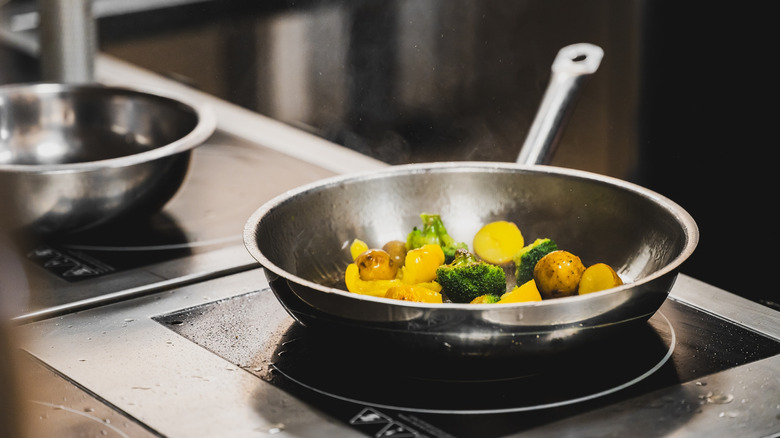
If the weight makes it impossible for you to use altogether, then you can consider buying a stainless steel pan, much like the ones that Chef Carmy uses in "The Bear." The advantage of using stainless steel is that they are light, and you can even use them to slow-cook acidic sauces, unlike with cast iron. The big reason cast iron is preferable is that stainless steel pans are less forgiving. If you don't get the temperature absolutely right, you risk your food getting stuck to the pan, and while there are tips to prevent this with stainless steel, you might be in for a world of pain at the start. In fact, we'd suggest keeping a non-stick pan handy just to fry eggs if nothing else!