

Not Every Fridge Is Fit For The Garage — Look For These 2 Words
We may receive a commission on purchases made from links.
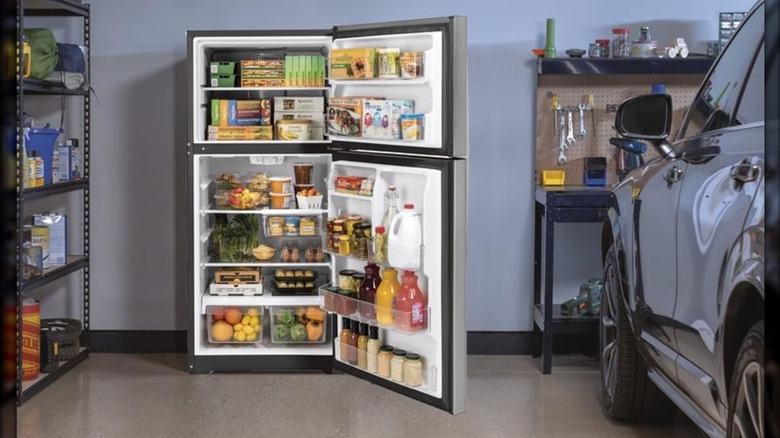
Whether you just got a new fridge and are considering moving the old one to your garage, or are shopping for a second fridge or freezer to keep outside, there is one very important rule to follow. Not all refrigerators are built to withstand intense outdoor temperatures, humidity, or weather conditions. Before making a purchase, look for these two words: garage-ready. This term confirms that it was specifically designed to handle extreme temperature shifts and seasonal weather conditions.
A standard fridge typically has one main thermostat, and if it senses extreme cold, such as the winter temperatures in an uninsulated, unheated garage, the compressor will shut down. This will eventually cause the freezer to stop functioning, leaving all of your frozen foods melted. The fridge compartment will become hot and humid, and food will quickly go bad. In extreme summer heat, the refrigerator's thermometer will register these high temps, causing the compressor to work overtime. Though it will run continuously, resulting in high energy bills, the food in the fridge might still not stay cold enough to ensure its safety. So, if you're thinking of moving your old fridge to the garage, you shouldn't do so if the model isn't specifically designed for that purpose.
Garage-ready models, on the other hand, feature precision-engineered upgrades like multiple thermostats or sensors that account for temperature fluctuations, and added insulation, thicker doors, and more durable gaskets to handle extreme environments. They contain micro-heaters that bring the appliance's internal sensor temperature to the optimal range so that the fridge and freezer function properly even in very cold garages. They also use highly adaptive compressors with more powerful motors, which automatically adjust cooling cycles based on environmental feedback.
Finding the best refrigerator for your garage
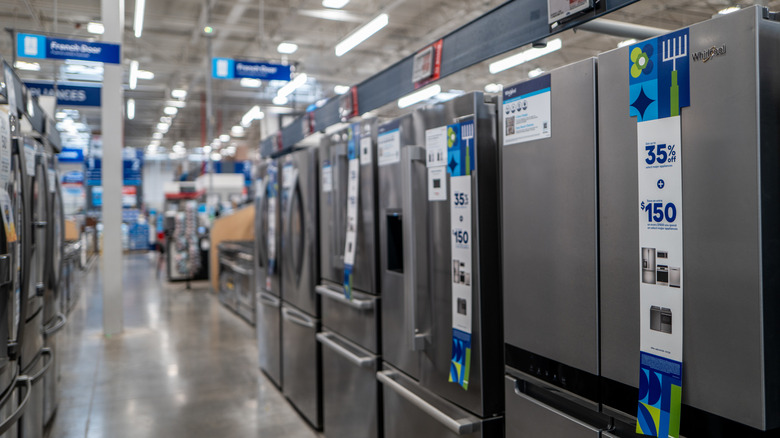
One of the biggest mistakes to avoid when buying a new refrigerator is not considering the environment in which you're installing it. Before you shell out big bucks for a second fridge for your garage, do a little research. First, take temperature readings in a few different areas to determine the best spot to place your fridge in the garage. You should also consider your region's highest and lowest seasonal temps, as many models can't handle ambient conditions below 38 degrees Fahrenheit or above 110. Next, measure the space to make sure you don't get an appliance that is too big or too small; your fridge needs at least one or 2 inches of ventilation on all sides to prevent overheating. Finally, ensure there is access to the right type of power outlet (usually 120 volts) for a standard garage-ready refrigerator.
If your garage is unfinished or doesn't have insulation or a heating and cooling system, you should only shop for top-freezer models. These are more budget-friendly, reliable, functional, and energy-efficient options for garages that experience extreme heat or cold temps. You should also avoid models that have extra features like ice or water dispensers, as they won't function properly or last long in a garage environment.
Finally, read customer reviews to find top-rated garage refrigerators with a proven track record of durability, performance, and reliability. You can also use consumer sites that rank appliances based on cost, lifespan, features, and energy efficiency. For instance, Consumer Reports pinpoints that the best type of refrigerator for hot garages is a top-freezer model that is Energy Star-certified.