

Thinking Of Moving Your Old Fridge To The Garage? Here's Why You Shouldn't
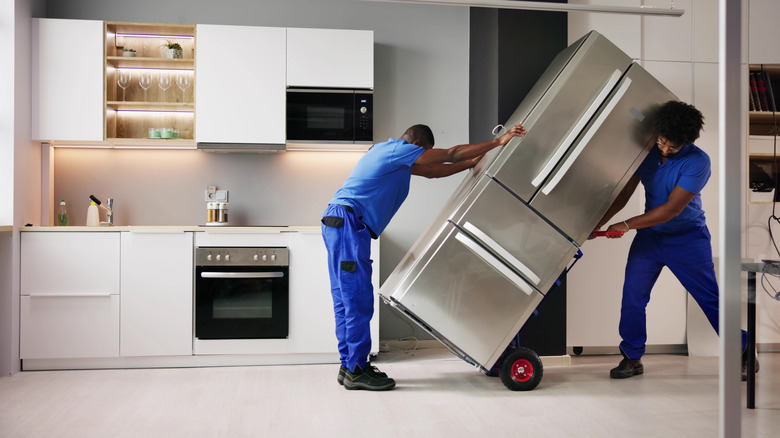
It's a question that often comes up in the middle of a kitchen upgrade. You've bought yourself a new refrigerator, but the old one isn't ready for the scrap heap yet. It's still very functional, and you want to keep it because having extra space never hurts. If there's room in the garage, moving the old fridge there seems like the most obvious solution. However, there are a few reasons you should not do this, especially if you live in an area that experiences extreme weather.
Having a second refrigerator is a great way to store extra food and drink, especially for people who like doing their grocery shopping at wholesale outlets. However, keeping it in the garage is a bad idea because modern refrigerators are designed to perform only in controlled temperatures, typically ranging from 60 to 85 degrees Fahrenheit.
It's highly unlikely that your garage is temperature-controlled, and the moment it becomes too hot, too cold, or too humid, your refrigerator will start malfunctioning. For example, if temperatures drop to 50 degrees Fahrenheit, the refrigerator's thermostat might turn the compressor off, believing the fridge is cold enough, even though it isn't. Your freezer will start to thaw, and the food in the refrigerator will spoil. Similarly, if the ambient temperature becomes too hot, the compressor will be overworked. This could lead to your fresh section overcooling, beverage bottles exploding, and the compressor eventually stop working. Extreme humidity will cause condensation, and that moisture will lead to rust, erosion, and electrical malfunction.
Other reasons to avoid putting your fridge in the garage
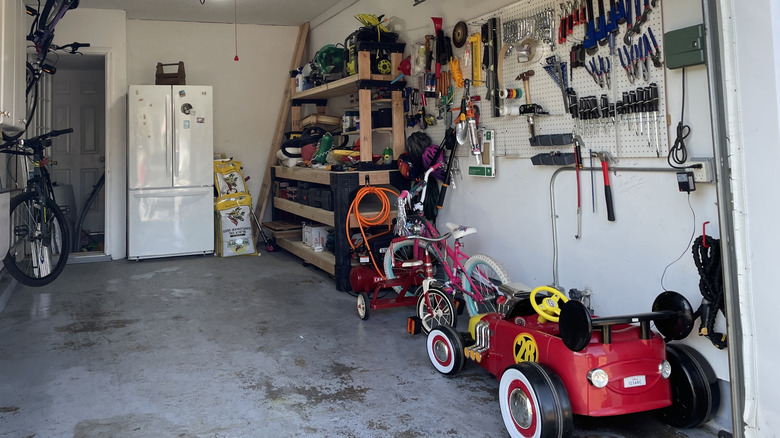
While extreme weather is one of the main reasons you should avoid putting your refrigerator in the garage, it's not the only one. For example, garages will most likely come with power outlets that are protected by Ground Fault Circuit Interrupters (GFCI). These GFCI outlets are equipped with circuit breakers that cut the power if it senses any kind of power leakage. They could misinterpret the voltage draws caused by the compressor going on and off as a leakage, and trip the circuit. This tip isn't restricted to your refrigerator: your garage isn't the best place for your old freezer either.
But it is always nice to have extra freezer space, or even a dedicated drinks fridge at home. And getting rid of a fridge that's working fine feels wrong. So, if you're sure you want to make room for your old fridge or freezer, the basement is a far better option, since it's likely to have more stable temperatures year-round.
If the garage is the only extra room you have, you might want to trade your old fridge for a new one with a garage-ready label. Older refrigerators were often built with simpler mechanical systems and sturdier materials, making them better able to handle temperature swings. The fact is that appliances were built differently then. Many newer models are designed for the more consistent temperatures found indoors. Garage-ready refrigerators are built to perform in more extreme conditions and can typically handle temperatures ranging from 38 to 110 degrees Fahrenheit. Though if you're trading the old fridge anyway, you can invest in the best beer fridge for a perfectly chilled brew every time.