

How To Choose The Best Beer Fridge For A Perfectly Chilled Brew Every Time
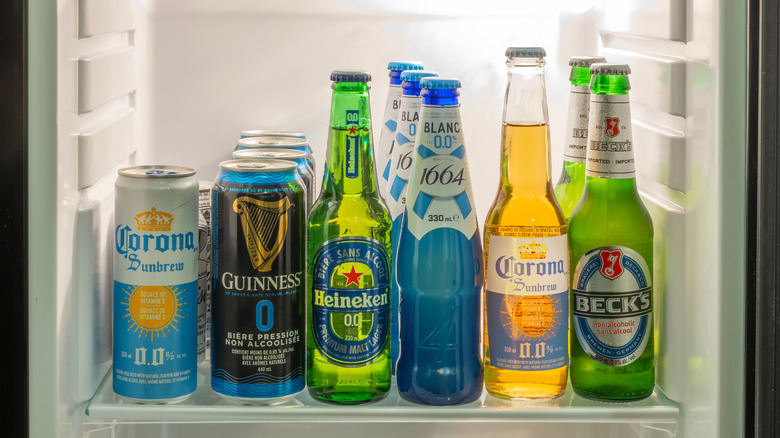
If a visit to a brewery always fills up your refrigerator faster than a trip to the grocery store, it's time to get a dedicated beer fridge. While you could just use a cheap cooler, finding one that's tailored to your collection is better for your brews — and Tasting Table got tips from an expert to help. Tasting Table interviewed Geoff Bragg, beer educator and Cicerone-certified beer server, to find out what to consider before buying a beer fridge.
With beverage fridges, Bragg said there's no one size fits all rule. "Size really depends on how much space you have for a dedicated fridge and where you are going to put it," he said. "Dorm size can be nice for the casual drinker. Taller units for the connoisseur." Consider how many cans and bottles you keep around, then decide if they can fit in a mini fridge or require a double-tier cooler.
As for your fridge's location, it should be accessible and close to a power source, while allowing about an inch of space on all sides of the fridge to ensure proper ventilation and prevent overheating. Bragg also cautioned to consider noise levels: "The fan on a commercial-style fridge may not be noticeable at the bar, but you certainly will notice it in a quiet game room." Overlooking this is one of the biggest mistakes to avoid when buying a new refrigerator.
A Cicerone shares the best features for a beer fridge
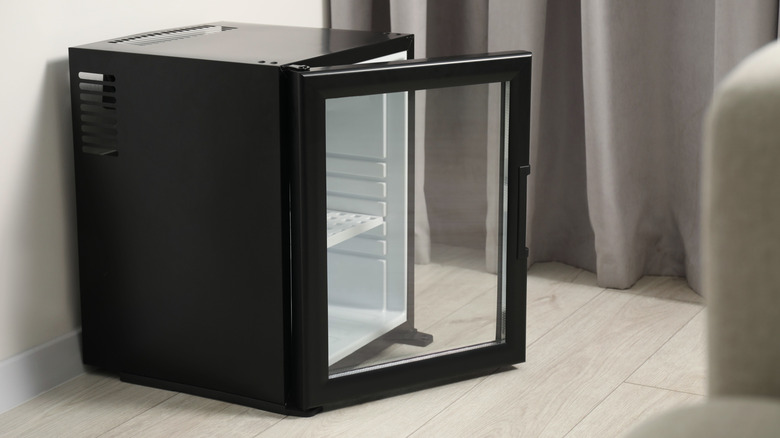
When it comes to beer fridge designs, Geoff Bragg said, "I like ones that have a glass front so that you can see what's inside without having to open the door." However, "The downside is that you ... need to keep the inside organized." If you stock many different-looking brews and don't want to constantly rearrange, a fridge with a solid door will hide the chaos for a neater appearance.
The beer expert added that "Having adjustable shelves is a strong benefit so that you can efficiently use the space" for everything from smaller cans to extra-large bombers. If your fridge comes with a light inside, Bragg advised to switch it off, as "UV can cause beers to become light-struck or skunky in clear or green bottles." "Skunked" beer results from exposing any brew to too much light, resulting in sour, funky flavors and aromas.
As for the right temperature, Bragg recommended tuning your fridge to 35 to 45 degrees Fahrenheit. However, this isn't always an optimal beer serving temperature. "Long term storage of a barrel-aged stout could be in the 50s and you could serve it there," he said. "A light lager, not so much. The colder ... the better." Find out the right temperature for serving your beers and leave them out to warm up a bit if needed, or conversely, move them from your fridge to an ice-filled cooler (or use a party trick to quickly chill beers) before enjoying.