

Do You Have To Wash The Inside Leaves Of Cabbage?
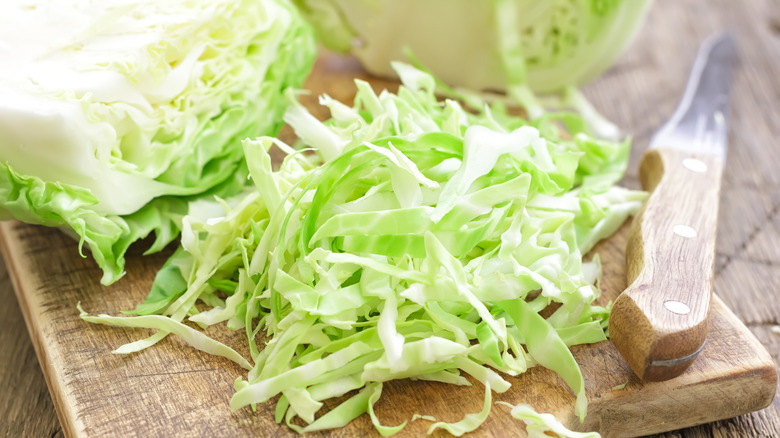
Although it may seem like only the outside leaves on a head of cabbage are exposed to dirt and bacteria, its interior can also collect contaminants. As cabbage grows, all of its layers are eventually exposed to pesticides, dirt, bugs, and other residue. The process of picking, packing, and transporting this produce can also put it in contact with animal waste, along with other harmful agents. If you don't properly clean the leaves before eating, you might find gritty pieces of debris in your cabbage or, even worse, expose yourself to harmful pathogens or toxins. As a result, you should always wash the inside leaves, as well as the outside, before using cabbage for salads, slaws, or other recipes.
While the inside of a cabbage appears to be protected, its dense, tightly layered interior leaves are the perfect place for pathogens to thrive. Neglecting to wash the inside leaves before you eat them is one of the biggest mistakes everyone makes when cooking with cabbage, as it can increase your risk of exposure to salmonella, E. coli, norovirus, cyclospora cayetanensis, and other harmful bacteria, pesticides, and microbes.
With all of the myths floating around about cyclosporiasis and other foodborne illnesses, it's critical to separate fact from fiction. Understanding how to properly clean produce to prevent food poisoning can keep you and your family safe. Wash all vegetables in cold water before chopping or preparing, even if they will be boiled or cooked. Don't use bleach, dish soap, or any other cleansers on cabbage or veggies.
Gently washing cabbage leaves under running water can remove harmful contaminants
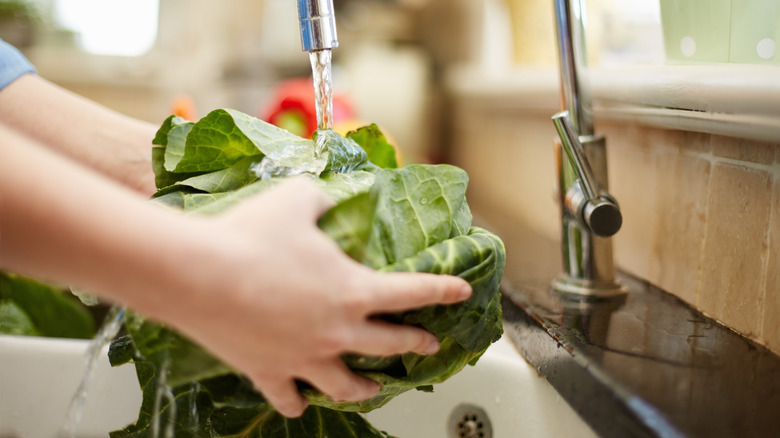
Running leafy greens under water isn't always enough, though. A better way to wash produce like cabbage is to first wash your hands, then remove the outer leaves and damaged leaves. Separate what you plan to use, and store the rest in the fridge in a cloth produce bag or perforated container. Hold individual leaves under cool, running water for at least 20 seconds while gently (yet briskly) rubbing them with your hands. You can also submerge and agitate the leaves in a bowl with ½ cup of distilled white vinegar for every cup of cool water. Drain and rinse the leaves, then dry them with a clean paper towel or in a salad spinner.
There are also some other tips for safely washing, preparing, and storing leafy greens like cabbage. Don't chop cabbage before washing it, as that will just spread any contaminants throughout all of the leaves. Never put produce in a dirty sink to rinse it, either. Instead, hold it under running water — just never use hot water since this can make leaves limp and brown, as well as increase absorption of any bacteria present. Additionally, only use clean surfaces for food prep, and don't cut raw vegetables on the same surfaces used for raw meat.
If you're concerned about the safety of raw produce, blanching or cooking cabbage and other vegetables can be effective at killing bacteria and eliminating pesticides. Although no cleaning method will eliminate all pesticides or microbes, thoroughly rinsing all cabbage leaves can remove a significant amount of pesticides and bacteria responsible for foodborne illnesses.