

Your Eco-Friendly Recycling Habits Could Be Backfiring Because Of This One Mistake
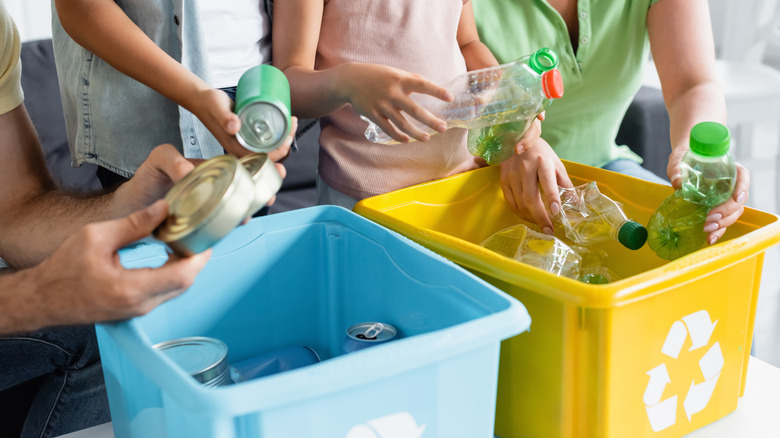
Recycling as much waste as possible is a responsibility that we all share. These days, every trip to the grocery store means bringing home countless items — like cardboard cereal boxes and plastic and glass bottles — that will either end up in a landfill or back in the resource pool, depending on how consumers choose to treat them. The trouble with recycling, however, is that every individual has to sort it on their own, and making a single mistake can, in some cases, send the whole load to the dump. Across the board, one of the most common such mistakes is putting recycling in a garbage bag.
Single-stream recycling makes the process much easier for the consumer, who can toss all of their recyclables together into one can and let the sorting be done down the line. But it does invite a degree of complacency around what is actually recyclable. It's too easy to simply treat the recycle bin like another garbage can and line it with a plastic trash bag, or toss in an item because it has one of the seven plastic recycling symbols even though the local municipality may not have the correct facilities to process it.
Sending recycling to the processing facility in a plastic bag is likely to mean that it will go straight to the landfill. Although much of the recycling process is automated, workers still have to sort through the materials. When a bag comes through, they can't see what's inside to determine whether or not it is recyclable, so they have to toss it instead. Plus, plastic bags and films can themselves really mess up the machines.
Bagging your recycling can turn it into trash
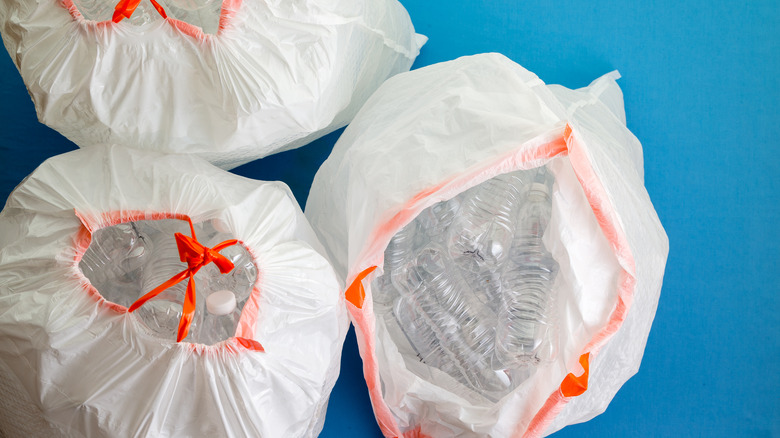
In general, plastic bags and films should not be in your recycling bin at all. Though they are recyclable in some areas, unless you are 100% sure that your local waste management facility can take them, toss them. When they are put in with recycling, these bags get wrapped around the machinery at the plant, causing work stoppages and creating dangerous situations in which employees have to climb inside the machines to clear the jams. Why not instead find a second life for all of those plastic bags?
Better than recycling is reusing, and there are plenty of ways to reuse plastic grocery bags around the house for various tasks. They can be used for everything from simple tasks like lining a can as a free garbage bag alternative to more interesting and unusual uses, like making a sort of yarn out of them. For those with a whole drawer full of bags, though, even these secondary uses are often not enough. In that case, the best option is to take them to a nearby grocery store. Many retailers that give out single-use plastic bags have receptacles to collect them to be recycled — along with some other types of plastic films. Like all recycling, though, they need to be clean and dry, and only certain types of films are accepted — potato chip bags are generally not recyclable, for example.
Filling a bag with recyclable plastic films to take them on the next grocery run is a great practice; just remember to keep them out of the single-stream bin. Everything that goes in there should be clean, dry, loose, and confirmed for its recyclability.