

Ditch The Oven — This Salmon Cooking Method Is A Game-Changer For Crispy Results
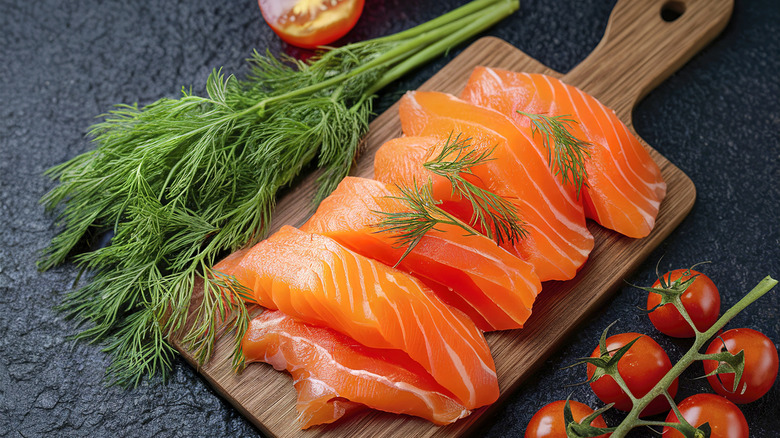
Salmon is a rich, flaky filet of fish with a higher fat content that contributes to its decadent flavor. If you think that restaurant-quality salmon can only be achieved using a two-method technique of searing and baking, deep frying is the salmon cooking method that will be the ultimate game-changer for crispy results.
Searing or pan frying will only achieve a slight crisp, that is, if you pan-fry skin-side down. But if you want a shatteringly crunchy exterior to contrast with flaky and tender salmon meat, there's no better way to achieve it than with deep frying. Not only does deep frying impart an inimitable crisp to the salmon, but it also seals in the moisture and contributes a savory depth of flavor from the frying oil's fat. Furthermore, the battered coating that surrounds the salmon filet gives you more opportunities to season the fish further.
It only takes around five or six minutes to deep fry a filet and two to four minutes for strips or chunks. Ensure you pat the salmon dry before dredging salmon filets through a wet or dry batter as you preheat oil to 375 degrees Fahrenheit in a deep pot or Dutch oven; the oil needs to be deep enough to cover a salmon filet. Once you've dredged the salmon filet, submerge it in the hot oil, frying for three to four minutes per side before removing it with a slotted spoon to dry and drain over a paper-towel-lined plate or wire cooling rack.
Frying tips and ingredient pairings
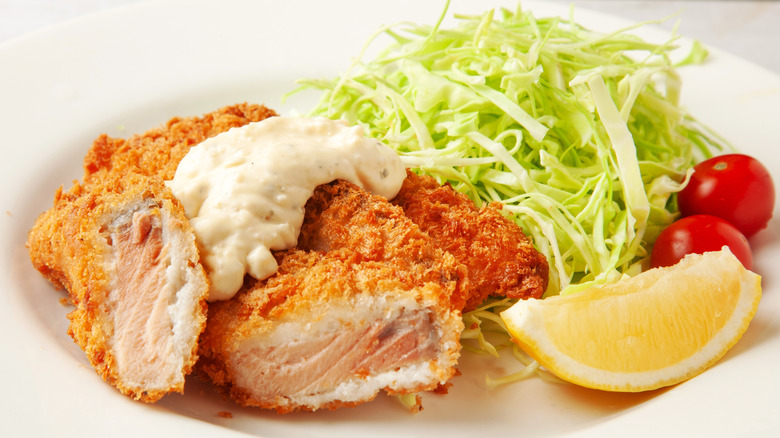
Perhaps the most important deep frying tip to remember is to ensure that the frying oil is at the precise temperature specified by the recipe. You'll need a thermometer to ensure that the oil stays at the same temperature during the entirety of the frying process. If you crowd your frying pan with too many filets at once, the temperature of the oil will drop, resulting in a soggy exterior. You'll also need a meat thermometer to check the doneness of your salmon; salmon requires an internal temperature of 145 degrees Fahrenheit.
Before adding the battered salmon to the hot oil, make sure there's no excess batter dripping off the filet. And, before adding the salmon filets to the batter, season them with salt and pepper or a quick marinade in soy sauce to bring out their umami-rich flavor as they fry. As for the batter itself, you can utilize a diversity of seasonings. Instead of a classic cod or haddock, you could coat salmon in a beer batter with cornstarch, flour, and egg for a more decadent take on fish and chips. Blend breadcrumbs with salt, pepper, parmesan, Italian seasoning, and garlic powder for an almost milanesa-style salmon to serve with chimichurri sauce. A breadcrumb mixture with lemon zest, fresh herbs, paprika, and plenty of fresh ground pepper would bring a fresh and zesty profile to fried salmon.