

Why Salmon Always Tastes Better At A Restaurant
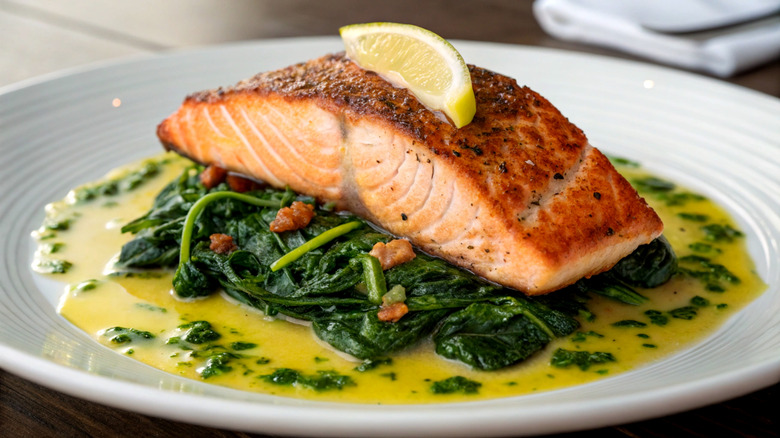
Salmon is a delicious and highly versatile fish that's an excellent choice to add into your dinner rotation. With omega-3 fatty acids, vitamins D and B12, as well as beneficial fat and protein, salmon is an easy way to incorporate vital nutrients into your diet without much extra effort. While it's relatively easy to prepare at home, sometimes home-cooked salmon can be lacking compared to the succulent, tender fish that's served to you at a restaurant. We spoke with Nana Darkwah, executive chef of Ocean Hai in Clearwater Beach, Florida, about why the salmon you order at a restaurant is usually tastier than home-cooked versions.
"Salmon often tastes better at restaurants because of both the quality of the fish and the way it is prepared in the kitchen," explains Darkwah. Restaurants often work directly with seafood suppliers, getting higher quality and fresher fish than most people can find in the average grocery store. Although most of us can't buy directly from fisherman or fish suppliers, there are some ways to select better salmon from the fish counter.
"When buying salmon from a store," advises Darkwah, "you should check how long it has been sitting out (pack date) and look for any discoloration." It's especially helpful to speak to the fishmonger about when the fish arrived or ask how fresh it is. When buying salmon, it's also usually best to opt for wild-caught over farm-raised, if you can find it.
Cooking technique is everything
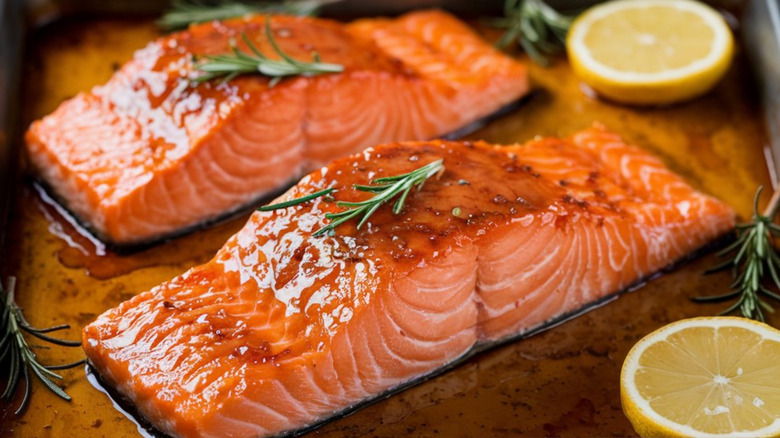
When it comes to the biggest difference between salmon that's prepared at home versus at a restaurant, the most important factor tends to be how the fish is cooked. "Proper cooking technique is also essential for maximizing the flavor of salmon," Darkwah says. He advises home cooks to first pat the salmon dry on all sides to remove any excess moisture, and then season the fish with salt and any other spices you'd like. "Searing the fish is key, as it helps lock in moisture," says Darkwah, "and another useful trick is basting."
Once you've seared the fish and gotten a nice crust on the flesh, or seared skin-side down for a crispy, golden skin, Darkwah instructs us to "place the salmon in the oven for 4 to 5 minutes at 350 degrees [Fahrenheit], then remove it and baste it with butter, crushed garlic, and thyme." This dual-heat technique of cooking fish allows you to get a beautiful crust on the exterior without overcooking the interior. Lastly, Darkwah shares, "Spoon the liquid over the fish to coat it and enhance the flavor."
Fish is a protein that's notoriously easy to overcook, especially at home. Many restaurants, however, tend to cook their salmon just under well-done, which leads to a more buttery and supple texture that many home cooks can otherwise struggle to replicate on their own. The next time you bring home beautiful, freshly-caught salmon to prepare for dinner, check out our 15 tips you need when cooking with salmon so you can prepare your best meal yet.