

Why McDonald's Was Almost Forced To Pull This Iconic McFlurry Flavor From Menus
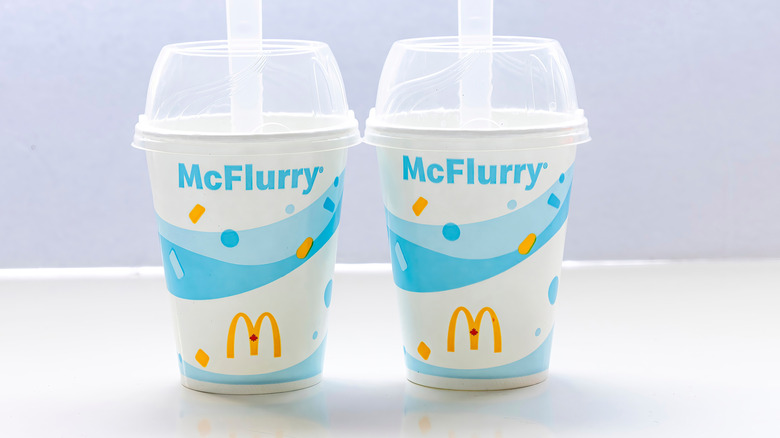
It's no surprise to sweet-toothed foodies that (gasp) fast food ice cream isn't exactly the healthiest treat on the market. However, this not-so-shocking fact was the reason why McDonald's almost had to pull the M&M McFlurry from its dessert menu a decade ago. On the palate, this thick, candy-studded treat is all about the interplay of creamy vanilla soft serve and crunchy mix-ins. On the bottom line, the M&M McFlurry represents a brand marriage between two giants, and its almost-rupture made headlines.
In 2016, M&M's parent company, Mars Inc., announced plans to pull its candy from partnerships with fast food desserts, including Dairy Queen's Blizzard, Burger King's Snickers pie, and McDonald's McFlurry. The motivation behind the potential pull was health-based. McFlurries hit the Mickey D's menu during the mid-1990s, and the American federal government's crackdown on added sugars didn't occur until around 2015. Mars had recently issued a public promise in accordance with the World Health Organization's sugar-related guidelines, particularly related to enjoying sweets in moderation. "We want people to enjoy Mars brands as part of a well-balanced diet," said Dave Crean, Global Head of Research & Development at Mars, Inc. (via Sustainable Brands). "With this in mind, we support the recommendation of global health experts that consumers limit their intake of added sugars to 10% of their calorie intake [...] It just makes good sense."
By 2013, the company had reduced the size of its candy packages to 250 calories or less per serving, and in 2016, it was a vocal advocate of U.S. legislation requiring manufacturers to list the amount of added sugars on packaged foods.
The M&M McFlurry looked too sugary for 2016's consumer trends
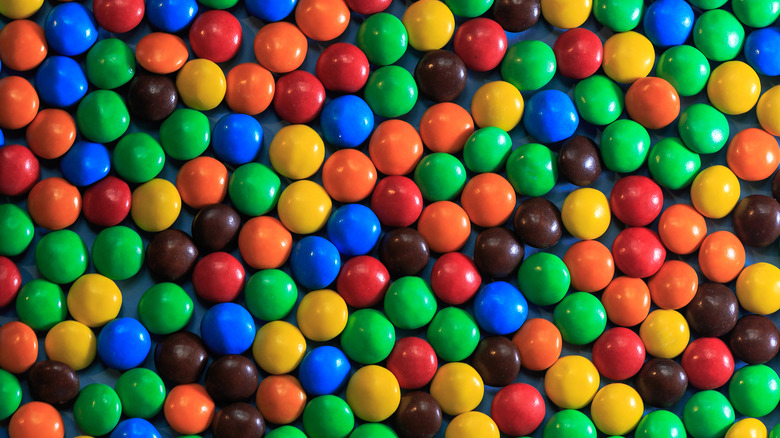
According to Mars, mixing M&Ms into Mickey D's soft-serve-style treat created a dessert that exceeded the total amount of sugar foodies are supposed to consume in an entire day. Current U.S. government dietary guidelines advise no more than 6 to 9 teaspoons of added sugar per day, and per the CDC, an estimated 19% of all added sugars consumed come from desserts and sweet snacks. At the time of Mars' reduced-sugar proselytizing, the 2015-2020 Dietary Guidelines for Americans advised a maximum of 12 teaspoons of added sugars per day.
It's unclear how, exactly, Mars' attempt to lower consumer sugar intake played out over the years. At one point, the company was even considering a reduced-sugar recipe change for its iconic M&Ms. Yet, M&Ms and McDonald's seemed to remain in partnership, churning out that iconic studded soft serve treat. McDonald's regular-sized McFlurry currently contains 62 grams of added sugars (123% of the daily value) and 74 grams of sugar total. Nowadays, Mars' commitment to promoting wellness focuses more on publicly emphasizing the positive attributes of its savory brands like Dolmio and Ben's Original (i.e., reduced sodium, positive vegetable and fiber contents).
Since the debacle, McDonald's McFlurry oeuvre has seen sporadic inductees from the oddly-named "Grandma" McFlurry to global flavors like the Matcha McFlurry in Japan and the candy-collab Cadbury Creme Egg McFlurry in the U.K. Today, the Oreo and M&M flavors remain the two constant fixtures on McDonald's periodically evolving McFlurry menu. We even have an ordering hack for scoring a McFlurry with twice as much flavor ... even if, nowadays, that McFlurry costs more than a pint of ice cream from the grocery store.