

8 Mistakes Everyone Makes When Grilling Salmon
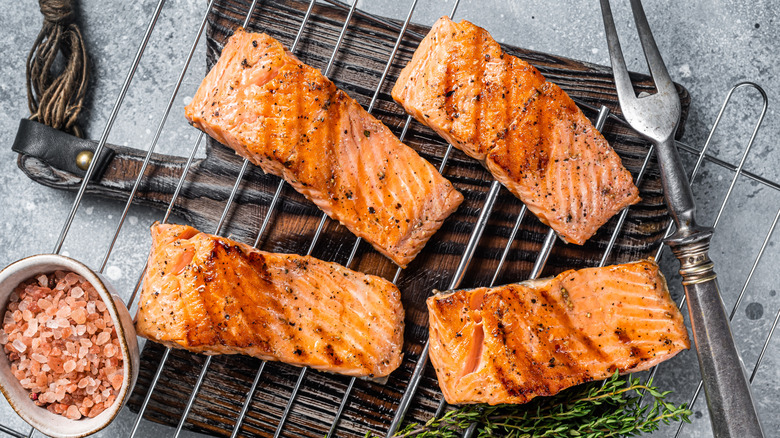
Few ingredients are as versatile as salmon. During my career as a personal chef, salmon was an easy menu option no matter the occasion. Formal dinner party for eight? Salmon. Bridal shower brunch? Salmon. Casual backyard birthday party? Salmon. It was my go-to protein and was always a hit.
Its versatility doesn't stop there. Salmon can also be cooked in many ways: baked salmon, pan-seared salmon, poached salmon — they all produce mouthwatering results, but grilling has to be one of my ultimate favorites. It delivers everything you want in a great piece of fish: a hint of smokiness, a tender, flaky center, and crispy edges.
Grilling salmon may sound simple — and it can be. But there are numerous challenges even great cooks face when grilling salmon, including it falling apart when you flip it or ending up dry and tough. But these mistakes don't have to be part of your future. Here's how to avoid these common salmon grilling mistakes.
Choosing the wrong salmon fillets
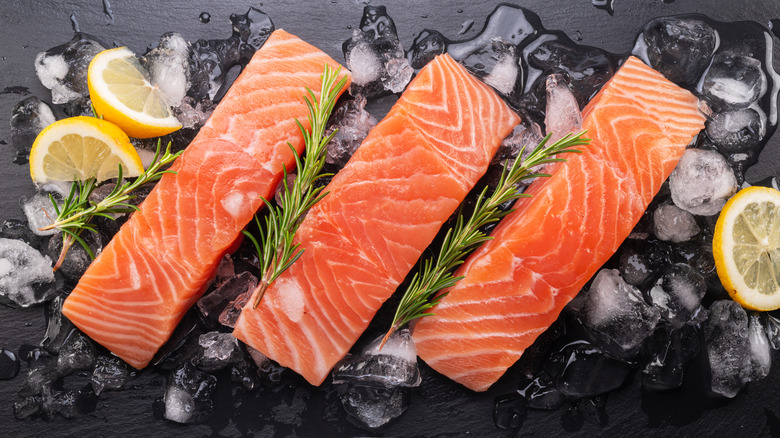
Learning how to grill salmon well starts long before you fire up the grill. The journey to grilled salmon perfection actually begins in the grocery store or at your fish market, wherever you're purchasing your fish. You can technically grill every type of salmon, but some varieties and cuts are better suited for it. The salmon you choose can help make or break your success when it's time to grill.
First, you'll need to decide between farm-raised and wild salmon. Farmed salmon is generally fattier than its wild counterpart. This means farm-raised salmon fillets are thick and sturdy enough to withstand the high heat from the grill. If wild salmon is your preference, grill it with caution. These fillets are often thinner, making them easy to overcook.
No matter which variety you choose, the best cut of salmon for grilling is always center-cut. This means it's cut from the thickest part of the salmon fillet. This thickness is more resistant to overcooking and will help it endure a turn on the grill without falling apart.
Not cleaning the grill
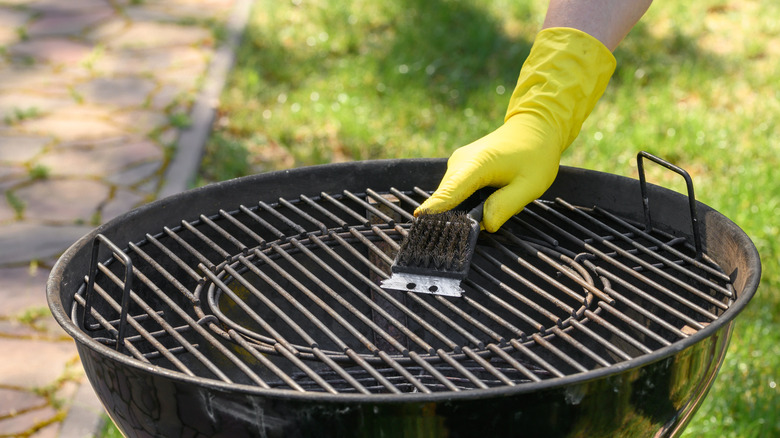
Cleanliness should always be a top priority in the kitchen. You wouldn't start cooking dinner in a pan still dirty from its last use, and this same philosophy should be applied to your grill. You should never cook salmon — or anything for that matter — on a grill that has not been properly cleaned.
Grill grates that are sticky or spotted with burnt bits of food from your last grilling session can ruin your grilled fish. Properly cleaning your grill and making sure it's well-oiled will help prevent the salmon from sticking to the grill grates and ensure that your fish cooks evenly. If your grill is dirty, the fish is likely to stick to any residue or food stuck on the grate, causing it to tear when you try to flip or remove it. Even fattier farm-raised salmon isn't fatty enough to keep it from sticking to a dirty grill, so starting with a clean grate will minimize the chances of your salmon sticking.
A clean grill will also produce a better-looking piece of salmon. Think of each bit of burnt food stuck to the grill as a barrier standing in the way of the gorgeous grill marks a well-cooked salmon fillet has.
Cooking it directly from the fridge
If you're a baker, you're likely used to recipes directing you to bring ingredients to room temperature. For example, cold, hard butter straight from the fridge is not going to mix well with the other ingredients, and the end result will be a batter that's full of clumps. There's no batter involved in grilling salmon, but the concept of bringing the fish to room temperature before cooking it applies here as well.
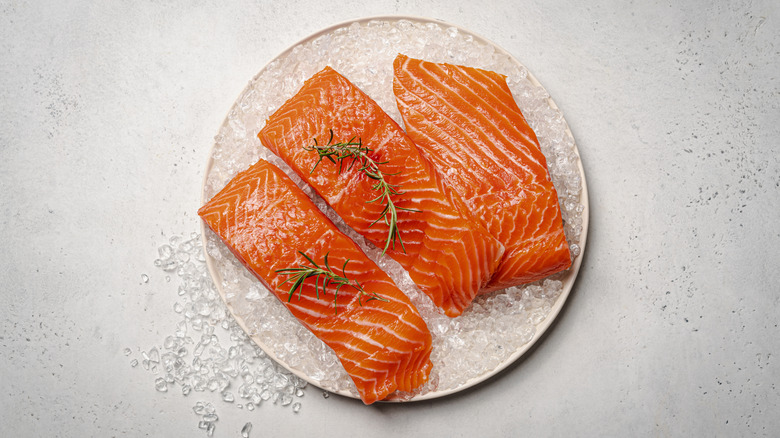
If you're eager to get dinner on the table and grilled salmon's on the menu, you might be tempted to shorten the journey from fridge to grill, but you'll end up with lackluster results at best. Putting cold food on a hot grill will cause your fish to cook unevenly. The high heat from the grill will cook the outside of the fish quickly before the inside has a chance to reach the same temperature. By the time the center catches up, the exterior may be overcooked.
For best results, take your salmon out of the refrigerator for 15 to 20 minutes before adding it to the grill. This allows the salmon to warm slightly so the temperature difference within the fillet isn't as drastic.
Not patting it dry
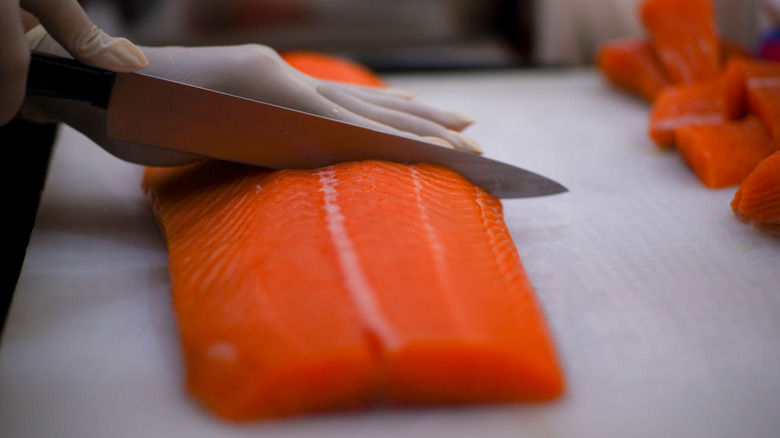
Fresh, high-quality salmon is naturally moist. The flesh should feel damp to the touch, but excess surface moisture is your worst enemy when it comes to grilling salmon. If you've thawed a frozen salmon fillet or rinsed your fish, there may be even more water clinging to the fish's surface. This will make it harder to grill your fish properly.
Moisture is important if you're steaming or poaching salmon, but when it comes to grilling, placing wet salmon on the grill is a great way to ruin a nice piece of fish. When wet salmon hits a hot grill, the moisture evaporates and produces steam. The extra moisture will make the surface soggy and prevent it from browning. Excess water can also cause the fish to stick to the grill, and instead of developing a crisp sear, it will be pale and soft.
It's easy to prevent this from happening. Use a paper towel or dry, clean kitchen towel to pat the surface of the salmon dry before grilling it.
Removing the skin
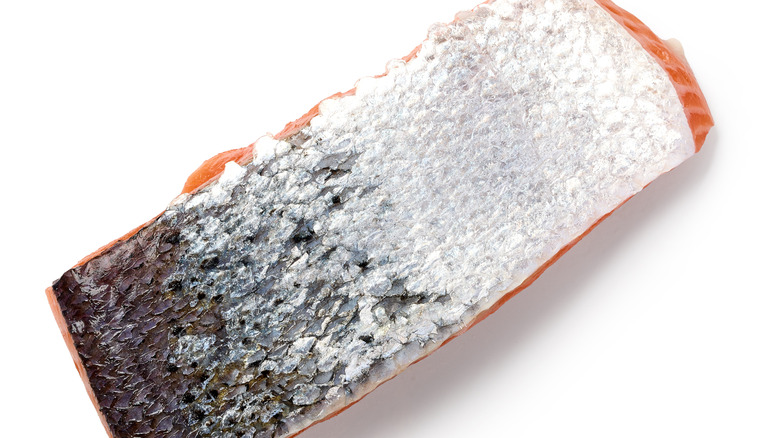
To skin or not to skin? That is the question many cooks have when it comes to grilling salmon. Salmon skin is completely edible and turns super crispy after it's cooked, which are some of the reasons you should always grill salmon with the skin on.
Salmon skin is durable and prevents the fish from curling up on the ends as it grills. It also serves as another layer of protection from overcooking. The skin locks in the salmon's natural moisture, preventing it from dripping onto the grill. As long as you put the fish skin-side down, it's hard to dry it out or overcook it. Think of the skin as built-in insulation; it protects the flesh from the extreme heat of the grill.
Once the salmon is done, it's easy to slide a thin spatula between the flesh and the skin to separate them. Regardless of whether you eat it or toss it, you should leave the skin in place while grilling.
Forcing the flip
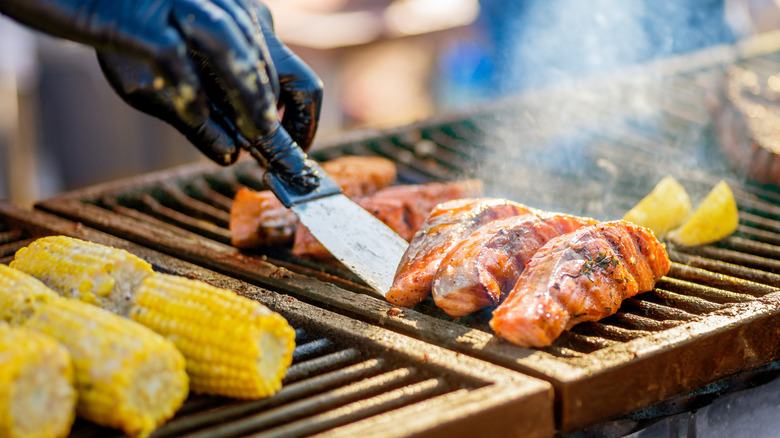
Patience is a virtue in life, in the kitchen, and on the grill. There are certain tasks that can't be rushed. You can't speed up caramelizing onions, rush bread dough while it's rising, or flip salmon too soon after it hits the grill. The latter is a big mistake you need to avoid when grilling salmon.
Most cooks are worried about overcooking salmon, so they flip it before it's ready. Flipping the fish too soon can cause it to tear or even fall through the grates. How do you know it's not ready? If the fish sticks or you feel any resistance when you attempt to flip it, that's your sign that you're moving too quickly.
When you place salmon on a hot grill, the protein in the fish can adhere to the grill's grate, making it difficult to flip. The simple solution is to give the fish more time on the heat. When it's ready, the salmon will release itself from the grill. If it's not releasing, leave the fish alone and try to flip it every 30 seconds or so. It'll eventually separate from the grill grate and you'll be able to flip it without forcing it or struggling.
Not using two heat zones
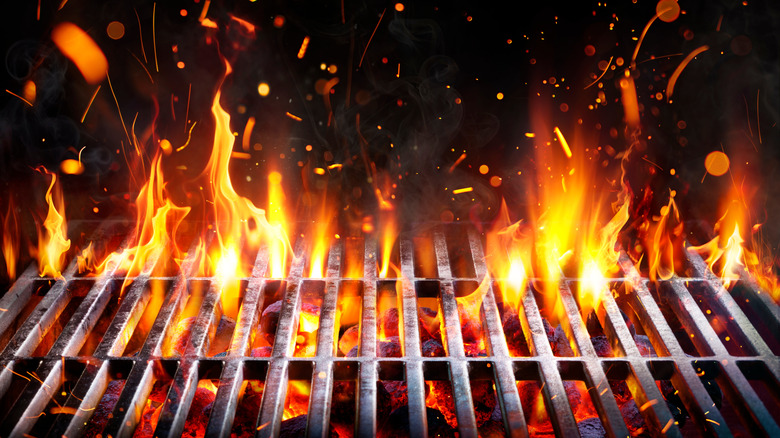
There's nothing like cooking over an open flame. The smoky aroma, food sizzling on the hot grates, and gorgeous grill marks are all part of what makes grilling such a fun experience. Unlike cooking on a stove, getting the temperature just right on a grill can be tricky, especially when you're grilling salmon.
For best results, you need to sear the salmon on high heat, then cook it over gentle heat to ensure it cooks through to the center. You should strive for the same level of heat control on your grill as you would your oven or stovetop. The easiest way to accomplish this is to create two separate heat zones and take advantage of both direct and indirect heat. Direct heat means the food is placed directly over the flames, where the fire burns hottest. When the salmon is cooking over indirect heat, it does not come into contact with the flames, and instead relies on convection heat. You can sear the salmon over direct heat and then shift it to the cooler indirect heat area to cook it through.
Cooking it too long
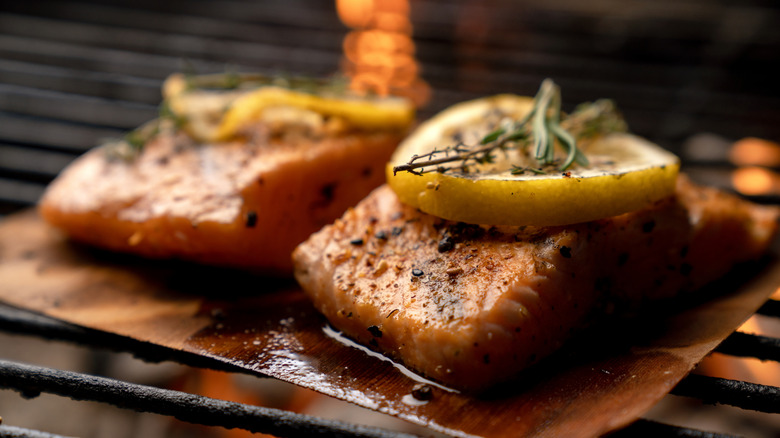
Leaving salmon on the grill even a few minutes too long can undo all your hard work. Though salmon is a fatty fish, which gives it a built-in advantage when it comes to staying moist, it has its limits. Leave salmon on the grill too long and the moist, tender, flaky flesh will become dry and tough.
To make sure you're cooking salmon properly, invest in a meat thermometer and insert it in the thickest part of the salmon to determine the internal temperature. For a well-done salmon fillet, remove it from the grill when its internal temperature hits 135 to 140 degrees Fahrenheit. It will continue to cook once you remove it from the grill and will eventually reach 145 degrees Fahrenheit – the temperature the United States Department of Agriculture (USDA) recommends for safety. If you prefer your salmon less well-done, take it off the grill when the internal temperature reaches between 125 and 130 degrees Fahrenheit.
You can also use cooking time to determine doneness. The timing rule to remember when grilling salmon is simple: Grill it six to eight minutes per inch of thickness, or about three to four minutes per side.