

What A Whiskey's Finish Tells You About The Quality Of The Liquor
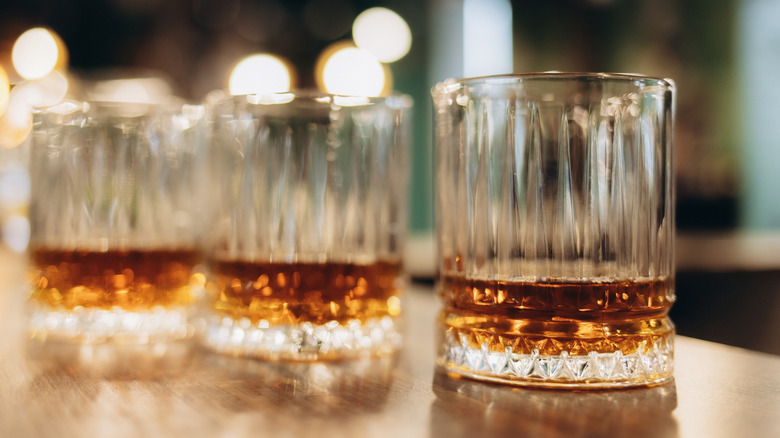
Say your friends have invited you to a whiskey tasting tomorrow, and you've exactly zero clue about the whole thing. Basic etiquette and what-to-avoids aside, if there's one concept that'll make you sound like you know what you're doing, it's this: nose, palate, finish. The first two are rather self-explanatory. The nose is what you smell, the palate is what you taste while the liquid's still in your mouth, but the finish ... What's the finish? What does it look or taste like? This is the one that trips people up, mostly because it happens after the whiskey's already gone.
The transition from palate to finish occurs the instant you swallow. Once you've swallowed and the burn's made its way down, the finish is what lingers on your tongue. This is where a whiskey can pull a switch on you — sweetness turning to spice, smoke showing up out of nowhere. It's often the most memorable part of the tasting, and usually the difference between a whiskey you forget by the next round and one you'll still think about weeks later.
The length of the finish matters just as much as its intensity or character, too, though what counts as long is relative and depends on personal taste. What isn't relative is whether that lingering aftertaste is any good. A whiskey that burns hard and fades into nothing but raw alcohol heat is telling you something about its quality, and it's not a compliment. As our guide to identifying high-quality whiskey points out, a finish that's both long and enjoyable is one of the clearest signs of a well-made bottle. That's the theory, anyway — here's how to actually catch a finish in the act of being good or bad.
Beginner's guide to enjoying whiskey's finish

Tasting whiskey is different from slamming a shot. When you taste it, give it time. After swallowing, allow the whiskey a beat — around 30 seconds or so — to fully bloom in your mouth and throat. Are the flavors from the palate holding steady, or gradually shifting into something else? Some whiskies (especially the cheap kinds) fade fast with little in the way of flavor progression. The premium kinds will continue developing long after the liquid's gone down your throat.
Breathing matters, as well. Breathe in slightly through the nose right after swallowing (if the burn's bad, you can open your mouth slightly to let the alcohol vacate a bit) — this can bring out notes you'd otherwise miss. The way it works is that after the whisky has been warmed in your mouth, the intensely aromatic chemical compounds within it evaporate. When you swallow and breathe in, you draw some of this vapor into your nose, where it's picked up by your olfactory receptors. Since so much of taste is actually smell, that breath is what lets you pick up on notes you missed the first time.
Here's the real test for a good finish: Does it round out the tasting, or feel like an afterthought? A whiskey can get the nose and palate right and still fail this part — if the finish vanishes fast or tastes like nothing, the whole pour drops to mediocre. And keep in mind this quick tip — which is to keep water nearby if you're doing multiple pours. Your palate fatigues fast, and the flavors start running together. The water will reset your mouth and let you better distinguish between the finish of a great whisky and the flat nothing you get from a bottle that's just okay.