

Tokyo-Style Neapolitan Pizza, Explained. What Is It And The Best Spots To Try It In The US
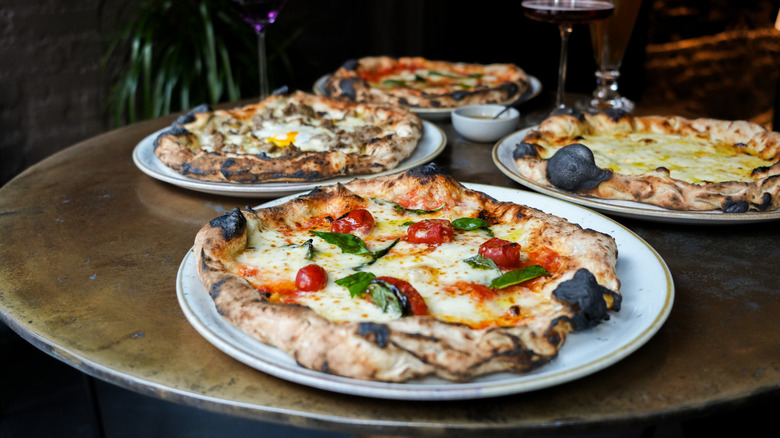
From New York to Chicago to Detroit, the U.S. has many distinct regional varieties of pizza. One lesser-known variety, though, is starting to gain some traction stateside: Tokyo-style Neapolitan pizza. As its name implies, this style builds on pizza that originated in Naples, Italy, but has been developed and altered by a set of skilled pizzaiolos in Japan. The result is something familiar, yet distinct: the same ingredients you'd find on top of any pizza but prepared according to an entirely different process.
There aren't many Tokyo-style pizzerias in the U.S. just yet, but a few chefs have begun to import the techniques, bringing these unique and delicious pies to an international audience. Tasting Table spoke with Tsubasa Tamaki, executive chef and pizzaiolo of New York's Pizza Studio Tamaki (PST), and William Joo, executive chef of Pizzeria Sei in Los Angeles, to learn what distinguishes Tokyo-style Neapolitan pizza from other varieties and why every pizza lover needs to try a slice.
Origins of Tokyo-style Neapolitan pizza
Chef Susumu Kakinuma is generally considered the pioneer of Tokyo-style Neapolitan pizza. He fell in love with traditional Italian pizza while backpacking through Italy in the 1990s; he ate his way through Naples, and eventually resolved to bring the style back home with him.
Kakinuma's first restaurant, Savoy, was one of the first Neapolitan-style pizzerias in Tokyo when it opened its doors in 1995. He followed with Seirinkan in 2007, which offers just three pies on its menu — marinara, margherita, and white pizza — and remains a destination for pizza lovers today.
Between Savoy and Seirinkan, Kakinuma became not only a pioneer of a new pizza style but also a mentor to the next generation of Japanese pizzaiolos, many of whom would put their unique spin on the style and continue to experiment with techniques and ingredients. One of them, Tsubasa Tamaki, would go on to help popularize Tokyo-style Neapolitan pizza in the U.S. at his New York restaurant, Pizza Studio Tamaki.
Fluffy outer crust, thin and crispy center
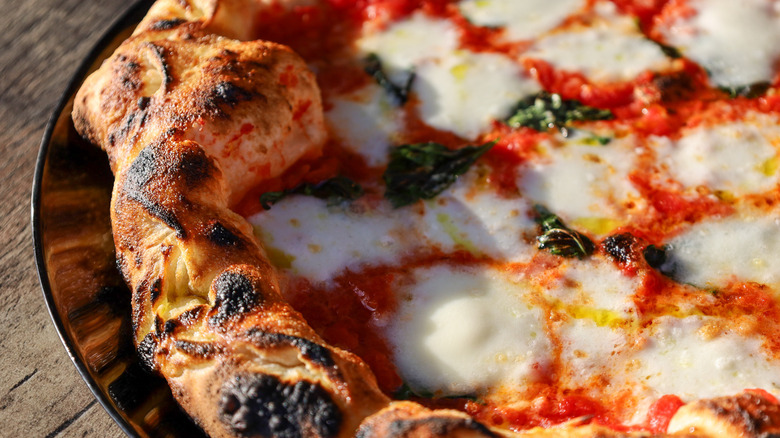
Tokyo-style Neapolitan pizza can most easily be distinguished from other varieties by its crust. Like any good traditional Neapolitan pizza, it's fluffy around the outside; unlike Neapolitan pizza, though, the crust should rise up at least a good half-inch from the rest of the pie, with an uneven shape that leaves lots of room for air bubbles and an even char. Also, in a departure from traditional Neapolitan pizza, which can get pretty soggy in the middle, Tokyo style should be a little crispier.
Tamaki credits this to a unique method of shaping the dough: "The distinct shape of the pizzas ... is primarily the result of our special kneading and pinching technique used when handling the dough prior to placement in the oven." Tokyo-style pizzaiolos shape their pies by pinching around the edges, which creates the characteristic uneven crust. More surface area means more opportunities for blistering once it hits the oven.
"By pinching and shaping the dough while stretching, the gluten is redistributed throughout the pizza," says William Joo. "This creates areas that are more hollow and airy, particularly around the rim, while other sections become more compact and crisp." Tamaki also credits PST's unique flour blend and 30-hour fermentation process to the dough's characteristic texture.
Tokyo-style Neapolitan pizza is (usually) cooked at a higher temperature
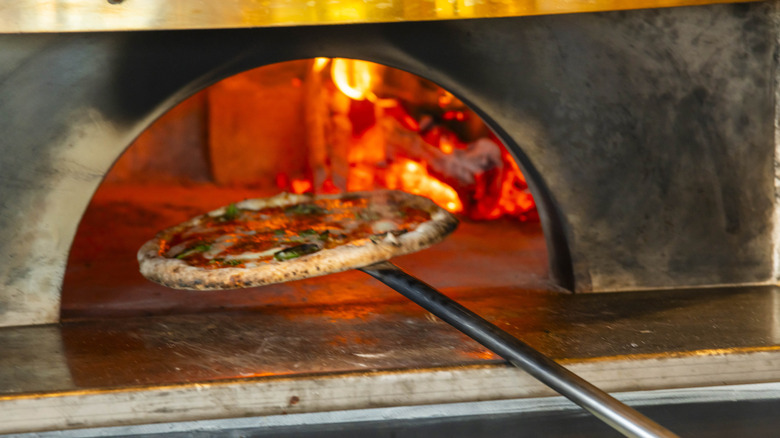
But all that careful shaping does no good if your oven's too cold. Tokyo-style Neapolitan pizza is typically cooked in a wood-burning oven at a temperature significantly higher than the 500-600 degrees you'd likely see at a New York-style pizzeria. "Our pizzas are cooked at 900 degrees Fahrenheit, which helps us create the blistering effect on the crust," says Tamaki.
Meanwhile, Joo points out that this is one technique Tokyo-style pizza borrows directly from Italian tradition: "Actually, both Japanese-style and traditional Neapolitan pizzas are generally cooked at similar temperatures, though this can vary from pizzeria to pizzeria." It's certainly not unheard of for Neapolitan pizza ovens to hit 900 degrees, although it's definitely at the higher end of the spectrum.
These high temperatures mean that Tokyo-style Neapolitan pizza is cooked for a much shorter period of time than other kinds of pizza. To keep the non-crust ingredients from burning, Joo notes, "Japanese-style pizzas often use a bit more olive oil, which helps preserve aroma and allows ingredients to cook properly during the extremely short bake time."
The salt punch technique, explained
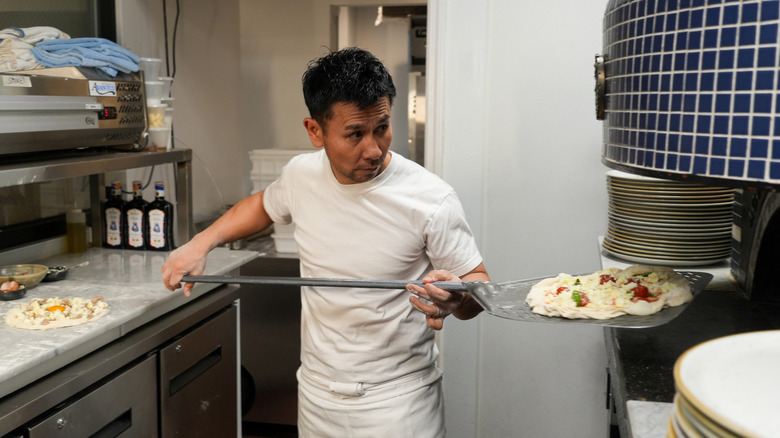
Behind the scenes, another process that distinguishes Tokyo-style Neapolitan pizza is what's called shio no shigeki, or the "salt punch" technique. As Tsubasa Tamaki explains it, "One of our signature techniques is what we call the 'salt punch,' where we season the oven floor with Okinawan salt immediately before cooking each pizza."
The point, Tamaki says, is the flavor. "It adds a subtle seasoning element during the baking process, contributing to the overall balance and salinity of the finished pizza, particularly in the crust." William Joo notes that this extra salt will often be used in lieu of a finishing cheese (like Parmigiano Reggiano, Grana Padano, or Pecorino Romano) used at some pizzerias to add an extra pop of salt.
However, while you'll definitely taste the results of the salt punch technique, Tamaki cautions, don't expect an overly salty pizza. "We pay close attention to how every ingredient interacts with the dough and with one another, and the salt punch is one of the techniques we use to help achieve that balance and give the pizza its distinctive taste."
It's still Neapolitan pizza
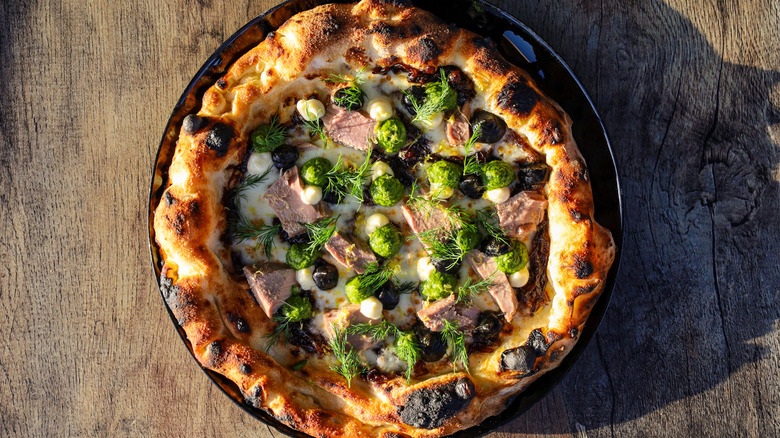
But even though Tokyo-style Neapolitan pizza has evolved a great deal over the years, William Joo is quick to remind us, "At its core, it's still Neapolitan pizza." The techniques have changed slightly, but the base components have generally remained the same. "Many shops in Japan use the same core ingredients found in Naples, including mozzarella from the Caserta region."
However, Tsubasa Tamaki explains that Tokyo-style Neapolitan pizza has been forced to undergo certain changes as it's gained international popularity. "We've had to make adjustments based on local conditions," says Tamaki. New York's soft tap water has a lower mineral content than most other cities, which creates the ideal conditions for gluten development in dough and, New York-style pizza lovers insist, is what makes the region's pizza so special.
For Tamaki, however, who was used to making dough with harder water, this caused a problem. "The mineral content of New York City water ... changed how the dough behaved, which led us to shorten the mixing time." He also explains that the colder weather in New York posed challenges to fermentation, "So we increased the amount of yeast and adjusted how we store the dough."
Pizza Studio Tamaki brings Tokyo-style Neapolitan pizza to New York
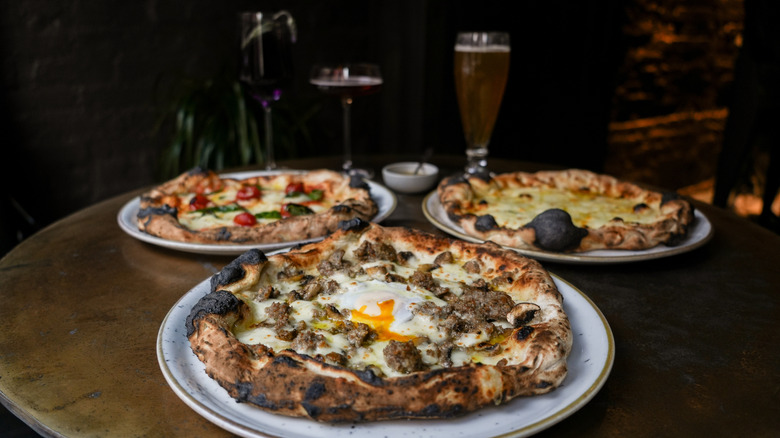
Founded and operated by executive chef Tsubasa Tamaki — a protége of Susumu Kakinuma — Pizza Studio Tamaki, or PST, is an authentic source for Tokyo-style Neapolitan pizza in New York City. With a location in the cultural heart of the East Village at 123 St. Marks Place, it's one of the few places offering this unique style of pie in one of the country's most jaded pizza cities.
As for how he adapted his menu for local palates, Tamaki says, "We continue to use our proprietary flour blend milled in Japan, but we also work with local and seasonal ingredients. In New York, that includes experimenting with seasonal vegetables and developing pizzas that reflect different influences, such as our butter chicken pizza."
In addition, Tamaki says of his pizza, "It pairs really well with beer! The dough complements almost any pour." While it's true pizza and beer are a perfect match, PST offers a variety of beers from Moody Tongue Brewery, which specializes in brewing with Japanese citrus fruits. Moody Tongue also bears the unique distinction of being the only Michelin-starred brewery in the world.
Pizzeria Sei is your Tokyo-style Neapolitan pizza source in LA
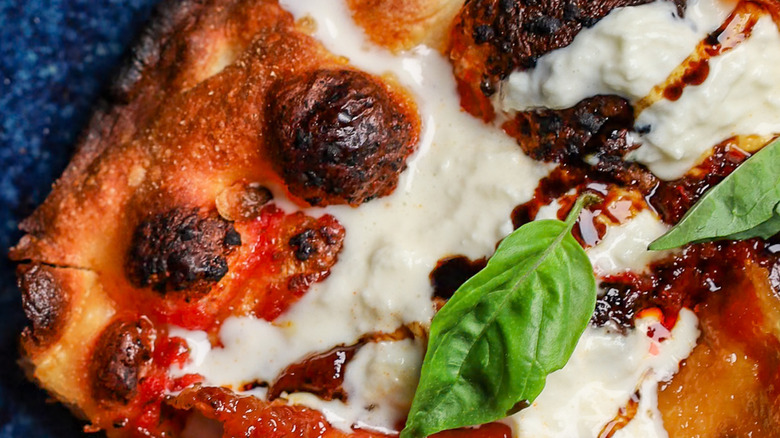
Meanwhile, on the West Coast, you can try Tokyo-style Neapolitan pizza at Los Angeles' Pizzeria Sei. The original location at 8781 W Pico Boulevard has now transitioned into a takeout-focused business, with a new, dine-in Pizzeria Sei opening its doors in West LA's Palms neighborhood on June 24, 2026.
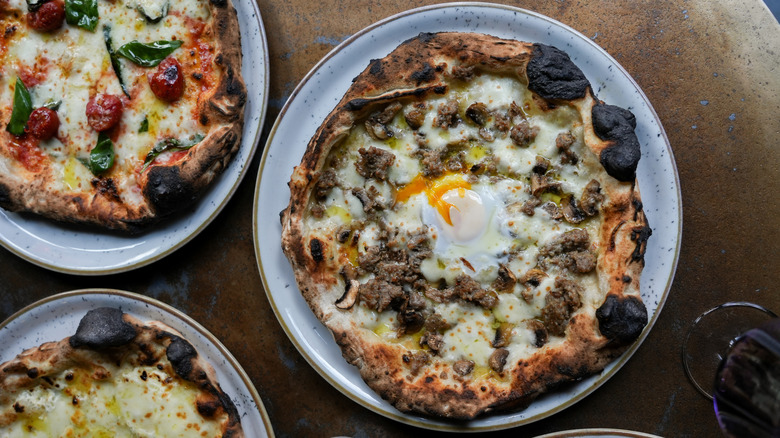
Although Joo has worked in the kitchens of numerous pizzerias, he ultimately chose to pursue Tokyo style because it offers a balance of tradition and expressivity. That's reflected in the menu, which offers classic Italian pies like the margherita and marinara alongside creative presentations like the Bismarck (featuring a runny egg in the center) and the mala lamb sausage pie. "Every pizza style has its strengths, says Joo, "and for Japanese-style Neapolitan pizza, those strengths are freshness, balance, and the ability to showcase exceptional ingredients."
Beginning on July 7, 2026, Pizzeria Sei will also participate in a series of Tuesday evening pop-ups on the garden patio at Culina Ristorante and Caffè, part of the Four Seasons Hotel in Beverly Hills. As part of the residency, diners can try an exclusive Culina x Sei white capricciosa pie, topped with artichoke, olives, capers, smoked provola, mushrooms, sun-dried tomato, prosciutto cotto, and basil. Each evening will also feature seasonal appetizers and sides by Culina executive chef Jesus Medina, a curated selection of Italian wines, and a pistachio, roasted cherry, and dark chocolate dessert pizza by executive pastry chef Riccardo Minicucci.