

7 Of The Biggest Failures In Pizza Hut History
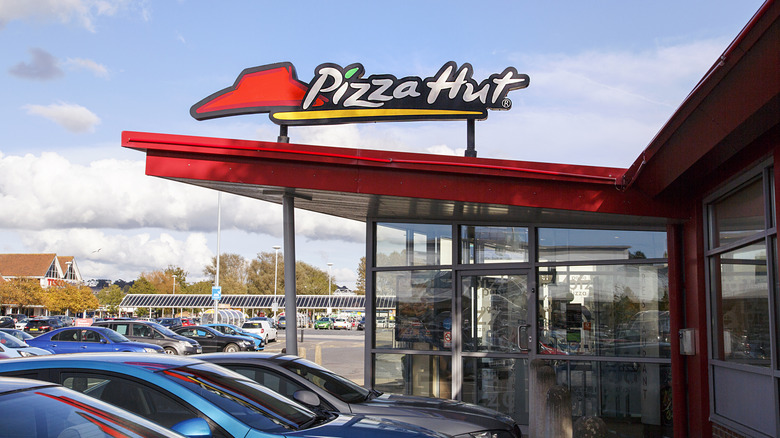
Once a sought-after birthday party and family dinner destination, Pizza Hut isn't having that much fun right now. In February 2026, it revealed it would be closing 250 restaurants across the U.S. due to declining sales. Yum! Brands, which acquired Pizza Hut in 1997, is now giving up on it completely. In June 2026, it revealed it was selling the chain for $2.7 billion to private equity firm LongRange Capital and Yum China Holdings (which will operate the mainland China restaurants).
But how did we get here? It's been a long road for Pizza Hut, which was founded in Kansas back in the 1950s. Over the decades, there have been many wins (the introduction of stuffed crust has to be a big one), but there have also been many failures. Here, we take a look back at some of the times it has gone pretty wrong for Pizza Hut. From bankruptcies to lawsuits and menu changes that didn't go down well, it's been quite the journey.
When it tried to be gourmet
In 2014, Pizza Hut was still the biggest pizza chain in the world, but company executives were acutely aware that it might not stay that way unless something changed dramatically. Domino's was hot on its heels after a rebrand in 2009; no longer the underdog, the chain's sales were surging after a PR disaster (remember the employees who put the cheese up their noses?) and complaints about its quality. To compete with the new and improved Domino's, Pizza Hut had to make a big statement, so it embarked on a rebrand of its own.
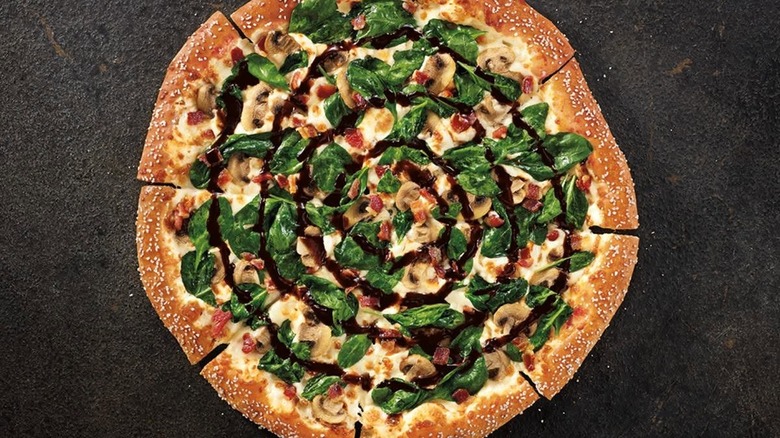
For the first time in five decades, Pizza Hut tried to dramatically overhaul its image. It changed its website, updated its logo, and, after conducting extensive market research (by asking New York's food truck owners what millennials were eating), revamped the menu. It went decidedly more gourmet and experimental by offering options like balsamic drizzles, garlic Parmesan, grilled chicken, and honey sriracha-flavored crusts.
Pizza Hut hoped the new menu, called Flavors of Now, would turn things around, but on the ground, things failed to pick up. In fact, by March 2015, sales at major franchises were still down. Worse than that: Pizza Hut failed to keep Domino's at bay. Three years later, Domino's declared itself as the biggest pizza chain in the world.
Priazzo
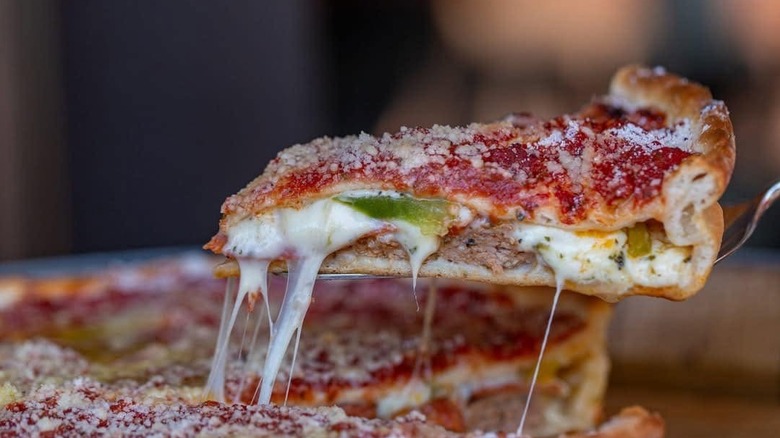
Pizza is arguably perfect as it is. The Italian dish needs no reinvention, but in 1985, Pizza Hut decided to give it a go anyway, with the release of the Priazzo. And just in case you had any doubt, Priazzo is not a real Italian word; Pizza Hut made it up. But it still wanted people to eat the dish — which was basically a stuffed deep-dish pizza, with a layer of dough on the top and on the bottom — and think of Italy. It gave each variety an Italian name; there was the Roma Priazzo, for example, with Italian sausage, pepperoni, mushrooms, beef, pork, onions, and three different types of cheeses. The Milano was similar, but had extra bacon, while the Napoli contained five cheeses.
It's not that people didn't like the Priazzo idea; they actually quite enjoyed it, but they just didn't love it enough to choose it over pizza. Many would try it once, before going back to their usual favorites. By the early 1990s, the Priazzo era was over. Still, some remember it fondly enough to ask for it back. There's even a Facebook group dedicated to the return of the Priazzo, which, at the time of writing, has 2,500 members. Would it be a flop for the modern era, too? There's only one way to find out. Pizza Hut, we're ready to try again when you are, but we understand this is a fast food item we may never get back.
Bigfoot pizza
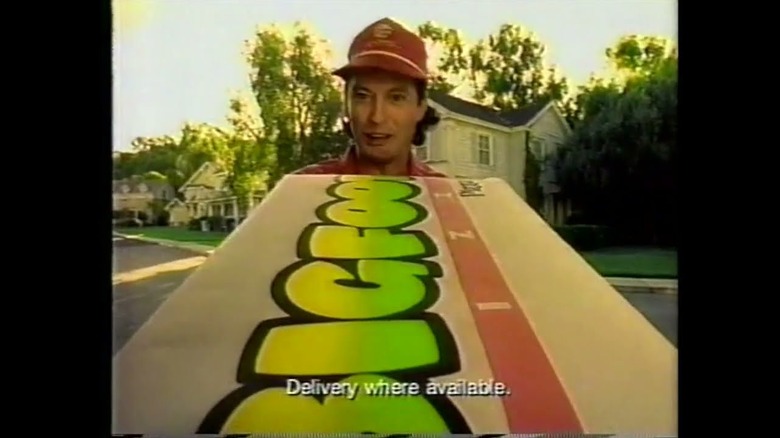
When one pizza exits, another one hits the menu. Pizza Hut wasn't done with innovation after the Priazzo flop. In the early 1990s, it launched Bigfoot Pizza, which, as the name suggests, was giant. In fact, it measured 2 square feet, and could easily feed a large family. At first, it was a hit. As one Redditor put it in the r/forgottenfoods subreddit, "getting a Big Foot and going to Blockbuster was peak '90s Friday night." Bigfoot wasn't entirely unique, though. It was Pizza Hut's entry into the giant pizza wars; Little Caesars had the Big! Big! Pizza and Domino's had the Dominator.
While fun and novelty, none were actually that successful in the long run. In the end, despite the fact that the company actually thought it might generate billion-dollar sales, Bigfoot went the way of Blockbuster pretty quickly. It was too time-consuming to make, difficult to deliver because of its size, and not as good-tasting as some of Pizza Hut's smaller options.
The general lack of association with delivery
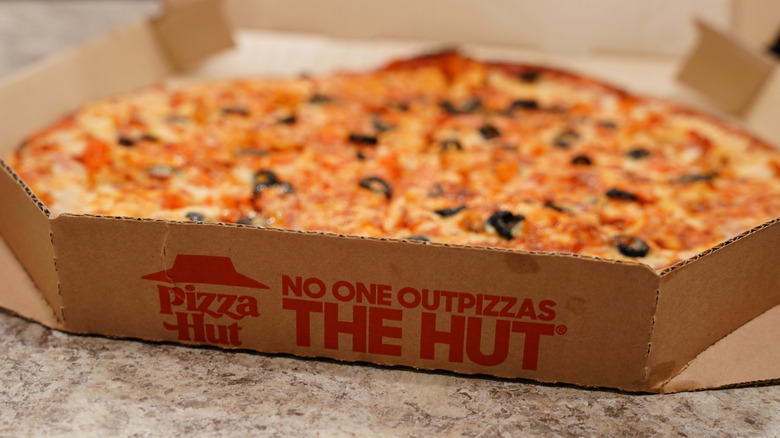
When you get home from a long day, and you can't face turning on the oven, what do you do? If you said order a pizza, you're far from alone. In fact, according to research by Gozney, more than 90% of Americans like to get a pizza delivered when they don't feel like making dinner (and they'll usually eat it while binge-watching their favorite series). The problem for Pizza Hut, and one of its biggest failures, is that many of those Americans won't think of The Hut when they pick up their phone to order.
It's not that Pizza Hut doesn't offer delivery; it does. It's just that people don't associate the chain with takeout pizza, but still see it as a fast-casual restaurant chain where you dine in. This is largely a marketing failure: Historically, delivery hasn't been central to the chain's advertising. This is despite the fact that it was actually the first pizza chain to launch its own online ordering platform. Domino's, on the other hand, built its entire brand around delivery from the start.
A lack of modernization after its 1990s and 2000s boom
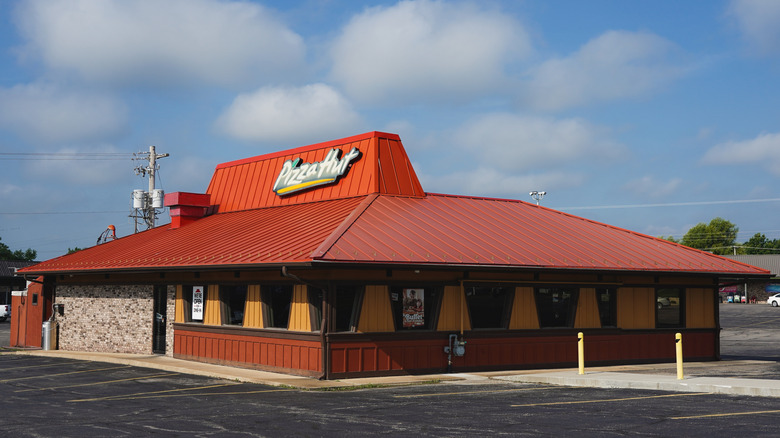
The lack of association with delivery is one example of Pizza Hut failing to pivot and modernize. Back in the 1990s and 2000s, The Hut was the place to be. Families loved dining at its restaurants, with their iconic red roofs, lunch buffets, jukeboxes, and Pac-Man games. "I remember the place being packed on Friday and Saturday nights and keeping an eye on the buffet so we could run over when they brought out the cheese and pepperoni pizzas because they always ran out so fast," recalled one Redditor in the r/nostalgia subreddit.
But the chain failed to keep up with the times. Not only did it fail to embrace delivery to the extent of its rivals, but in the 2010s, it wasn't excelling at creative marketing, intuitive technology, or menu innovation, either (ahem, Flavors of Now). In the years since, it seems to be having a slight identity crisis. It's not a delivery behemoth, and it doesn't offer the nostalgic dine-in experience of the past either (although it has tried to bring back the retro look in some restaurants recently).
For some, another issue is that the pizza just isn't that good. One Redditor posted in r/nostalgia that the chain's pies now remind them of "old socks." They added: "I still get one from time to time if I'm feeling nostalgic, but it's just never the same. It's sad, really."
AI-powered delivery systems
Pizza Hut got the memo on the modernization. In 2021, Yum! Brands acquired Dragontail Systems Limited, an AI-powered platform that aims to optimize kitchen flow and delivery, and implemented its technology across almost 1,500 Pizza Hut locations. The goal, of course, was to improve Pizza Hut's food systems and its delivery process, and by 2024, Dragontail was in operation in Pizza Huts across the country. But it was a giant flop, according to some franchisees. Actually, that's an understatement. It was a big enough failure to warrant a lawsuit.
In May 2026, Chaac Pizza Northeast, which operates more than 100 Pizza Hut locations, filed a $100 million lawsuit against Pizza Hut over Dragontail. It claimed that the chain had forced it to use the technology, despite the fact that it actively slowed down Chaac Pizza's business model. According to the franchise, it was once one of Pizza Hut's top-performers, but Dragontail led to late, cold pizzas, unhappy customers, and, inevitably, reduced sales.
Chaac Pizza Northeast is the only franchise to file a lawsuit (so far), but it's worth noting that customers across the U.S. don't rate Pizza Hut highly for delivery, and consider it to be one of the chains you should never order takeout from.
Multiple franchise bankruptcies
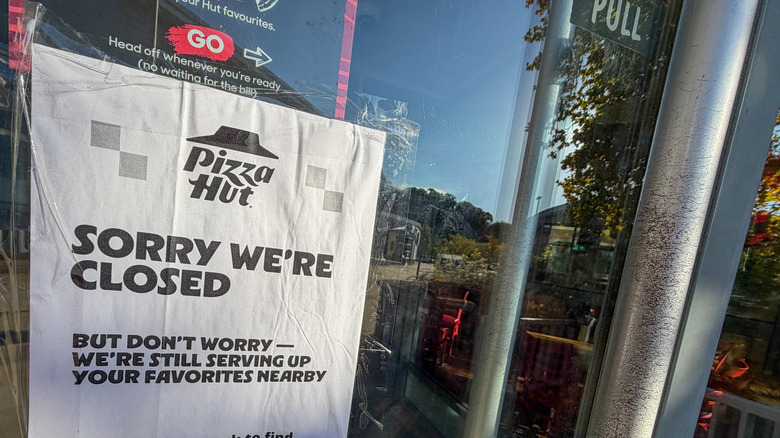
Chaac Pizza Northeast isn't the only Pizza Hut franchisee that has had a rough time of it lately. In 2020, NPC International, which ran more than 1,200 restaurants, making it the biggest Pizza Hut franchisee, filed for Chapter 11 bankruptcy. While the company hoped to lower its almost $1 billion debt and emerge stronger, NPC International ended up closing more than 300 restaurants and then selling the remaining locations, alongside its Wendy's restaurants, to Flynn Restaurant Group for $801 million in 2021.
Unfortunately for Pizza Hut, NPC International wasn't alone. In 2024, EYM Group, which owned around 140 Pizza Huts, also filed for Chapter 11 bankruptcy, after closing more than a dozen locations. Things aren't much better overseas. In 2025, DC London Pie Limited, which ran all of Pizza Hut's U.K. restaurants, fell into administration. Yum! Brands stepped in to rescue some locations, but it still had to close nearly 70 restaurants in the country.
As Yum! Brands moves to sell Pizza Hut to LongRange and Yum China in 2026, only time will tell if things will start to look up. But many aren't particularly hopeful. "This is at least the middle of the end," said one Redditor in the r/fastfood subreddit, in a thread dedicated to debating the chain's demise. "Pizza Hut doesn't even pop into my mind when I'm thinking about ordering pizza from a national chain."