

Container Gardening: How Often You Should Replace Your Soil
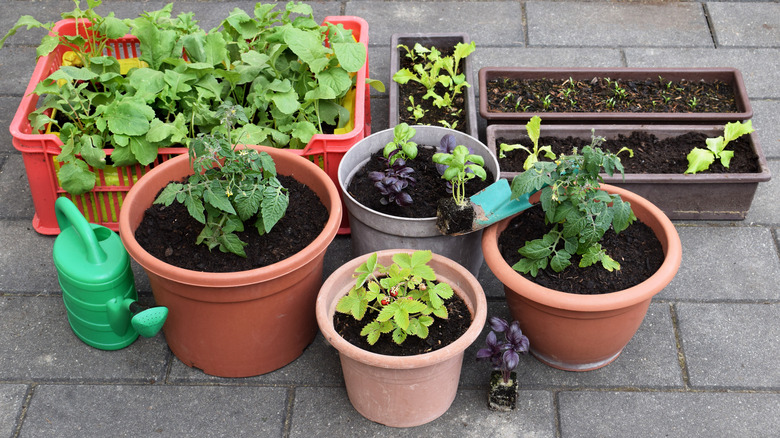
Growing your own home produce is rarely a low-maintenance endeavor, even if it's a satisfying one. It's all too easy to make a slew of common mistakes in your vegetable garden, and one often-overlooked element comes down to your soil. Along with monitoring its overall health throughout the growing season, the soil in your container garden should ideally be replaced somewhat regularly — every one to two years for standard container sizes or two to three years for larger planters. However, you may not need to replace the entire amount — a refresh may do.
With time, your soil can become depleted of its vital nutrients, such as nitrogen, phosphorus, and potassium, making it less effective for supporting healthy plant growth — especially in nutrient-hungry plants like herbs, fruits, and veggies. Fresh soil also offers better drainage and aeration, as well as a more neutral pH, and when the soil ages, your plants' roots can become deprived of these necessary factors.
Fortunately, there's a lot you can do to enhance your soil's health and maximize your home produce output before a full replacement is necessary — from burying eggshells in your soil for calcium to sprinkling leftover coffee grounds around the base of plants that enjoy added acidity. But when enhancing your existing soil isn't enough, further steps should be taken.
How to know if your soil needs to be replaced or refreshed
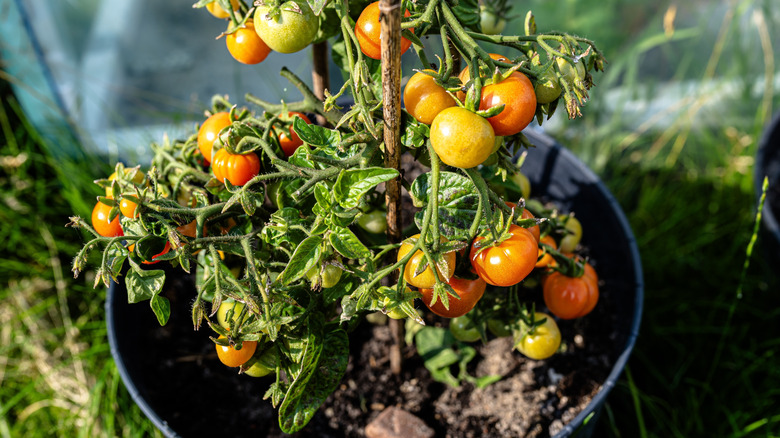
If you are growing perennial plants like tomatoes that can thrive through multiple seasons, the first step is to gently remove your plants from their containers, shake off the existing soil, and inspect the roots. Look for signs of disease, such as blight or powdery mildew, as well as pests. If you spot any of these or notice a general odor that smells off, your soil should be discarded. (Your plant may be able to be saved, however, with treatment.) It's best to ditch the used dirt completely and start fresh, ensuring that your fruits and veggies are ready to thrive.
However, if everything mostly looks healthy, then it's time to add some organic matter, worm casings, or slow-release fertilizer capsules. You should also fluff up the soil left behind in your container — move it around, give it some air, and break apart the clumps. Top it all back up with fresh soil, and place your fruits and veggies back in their spruced-up container. If you're planting new fruits and vegetables for the season, the same applies — potting soil should be swapped out about once a year, but if you're working with larger containers, a refresh with only a partial replacement should do.
Once everything is in place, keep an eye on things. If your soil appears compacted, this means its organic components are breaking down as designed. However, compacted soil can also mean an imbalance of minerals and soil pH, so new, fresh soil may be just the thing your plant pals need.