

Why You Need To Prune Tomato Plants And How To Repurpose Those Trimmed Leaves
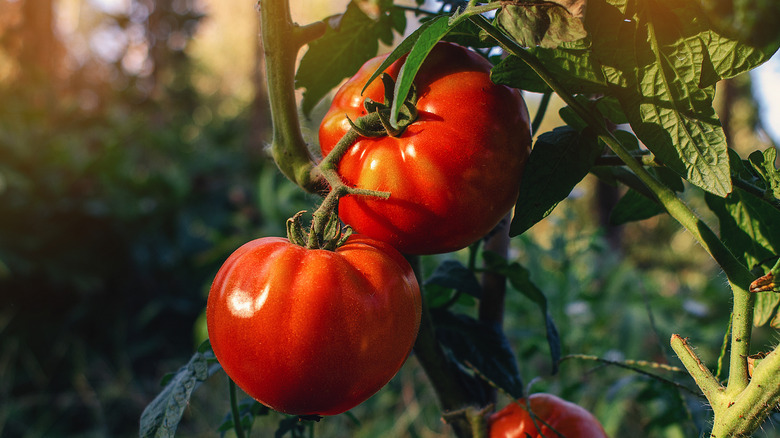
Many gardeners, especially novice ones, have a hard time pruning their plants. They often lack confidence in how and when to do it, fearing that they will damage their plants irreparably. But when done the right way at the right time, it is incredibly beneficial, especially if you're growing tomatoes. In fact, tomato plants should be pruned for many reasons, aside from keeping the plants from spreading everywhere.
Pruning tomatoes improves airflow and reduces humidity around the plant. This is super important, as many tomato diseases and pests are encouraged when the leaves are damp. Pinching the suckers of indeterminate tomato plants and removing the lower leaves are among the most important tips for growing the juiciest tomatoes, as this redirects the plant's energy to producing fruit. Pruning extra foliage also allows the sun to reach the fruits so they can ripen faster.
If your indeterminate tomato plants are turning into an unruly mess, now is the time to grab your favorite pruning shears and give them a nice haircut. While pruning tomato plants may not double your harvest, it will certainly improve the plant's health and give you bigger, better tomatoes. If you're growing determinate, or bush, tomatoes, you only need to remove lower leaves that are touching the ground, and branches that appear diseased, damaged, or dead.
When pruning tomatoes, it is important to use sharp, clean pruning shears or scissors to prevent the spread of infections between plants, and sanitize them after using. Some people can develop a rash or itch when touching tomato plants, so wear gloves to prevent this from happening.
And don't feel bad about taking off unnecessary healthy foliage. There are ways to repurpose them aside from adding to your compost pile.
How to repurpose those pruned tomato leaves
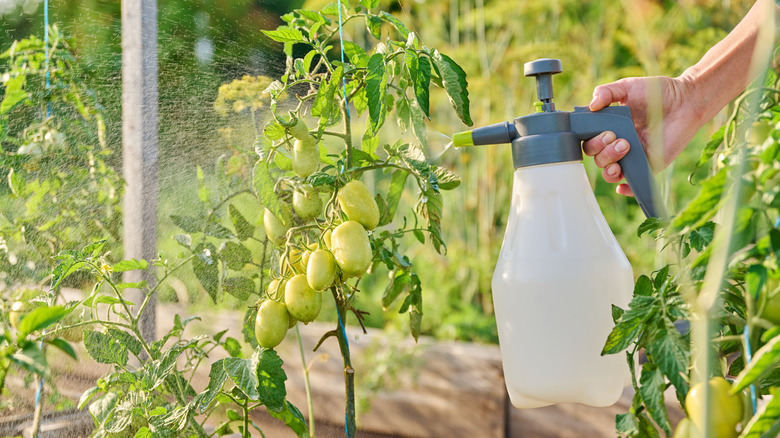
Healthy tomato leaves can be repurposed to make an infusion that wards off pests and helps to fertilize the plants. Take the leaves and chop them into small pieces, put them in a bucket, and cover them completely with water. Cover the bucket with a screen or cloth to prevent mosquitoes from laying their eggs. Let this infusion steep for a few days, and up to two weeks, stirring daily. This will transfer the nutrients from the leaves to the water. Strain the solution and discard the leaves into the compost.
To use it as fertilizer, dilute it at a ratio of 1 part infusion to 10 parts water. You can use this on any plants when you water them, or use it as a foliar spray. Make sure to follow the right fertilizer schedule for thriving tomato plants.
To use it as a pest deterrent, mix 1 or 2 cups of chopped tomato leaves with 2 cups of water and steep for a couple of days, then strain. In this case, do not dilute the infusion — put it directly in a spray bottle and apply to any plant to combat aphids. These little critters are among the most common problems with tomato plants, but the alkaloids contained in tomato leaves can be effective against them. Plus, this spray is safe for both pets and people.
Tomato leaves also have interesting uses in the kitchen. You can add depth to your classic tomato sauce by adding a small amount of tomato leaves as an extra herbal flavor, and you can even dry them and use them as your usual dried herbs. Use fresh tomato leaves to make pesto for an interesting change, or to infuse olive oil for an extra punch of umami.