

The Right Fertilizer Schedule For Thriving Tomato Plants
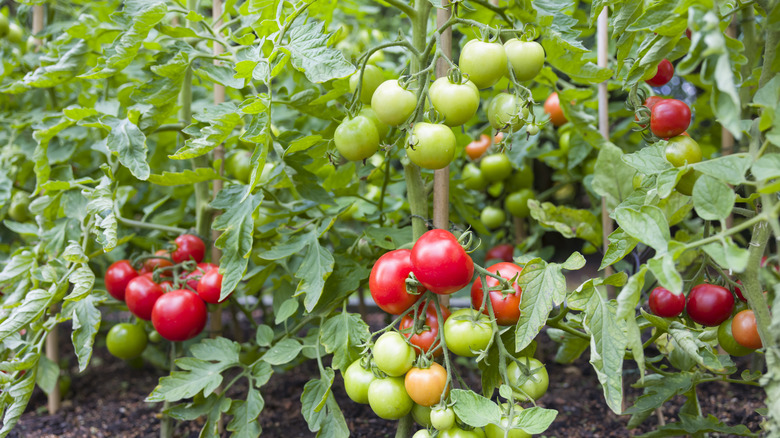
Using the right fertilizer for your tomato plants is crucial. Tomatoes are considered heavy feeders, which means that they require a steady, consistent supply of nutrients from the start. Choosing the right type of fertilizer for each stage of growth, and applying it according to the right schedule, can maximize fruit yield and reduce the risk of problems such as pests, diseases, nutrient deficiencies, and stunted growth.
One of the biggest mistakes to avoid when growing tomatoes is using the wrong type of fertilizer, as it may affect fruit outcome or cause nutrient burn. Proper fertilization can be a delicate balancing act, as it's easier than you think to accidentally use a variety that contains too much nitrogen or end up over- or under-fertilizing your plants. If you are starting tomatoes from seed, you can add plant food or a bit of diluted liquid fertilizer to your growing medium. The best type of fertilizer to use on these young tomato plants is a balanced 5-5-5 NPK (nitrogen-phosphorus-potassium) fertilizer.
When it is time to transplant your seedlings into a pot, feed your plants every two to three weeks with a nitrogen-rich fertilizer such as a 20-10-10 or 16-6-4 mix. When your plants start to flower, you will need a fertilizer that contains more phosphorus. The ideal blend is a 10-20-10 or 5-10-10 fertilizer. When fruit starts to appear, switch to a low-nitrogen, high-potassium mix like 10-10-20 or 5-10-20.
More tips for fertilizing adult tomato plants
One of the best hacks for growing the juiciest tomatoes is to use pots, as doing so gives you the greatest control over soil quality and nutrient levels. However, if you prefer to plant tomatoes in a garden bed or soil, you should test your soil first. The ideal soil type for tomatoes is neutral with a pH between 6.5 and 7.0. To enhance the soil, mix a high-phosphorus, low-nitrogen fertilizer into the top 6 inches of your garden bed.
You should apply fertilizer to adult plants every four to six weeks, or if you notice changes in plant health. You can use either liquid or dry fertilizers for tomato plants. Liquid fertilizer must be diluted and you may need to apply it more often. Dry fertilizers can be added directly to the soil, which should be heavily watered afterward to encourage the mixture to integrate into the soil. Always take care to avoid applying any type of fertilizer too close to the plant's roots or stems, as this could cause rapid uptake or burn the plant.
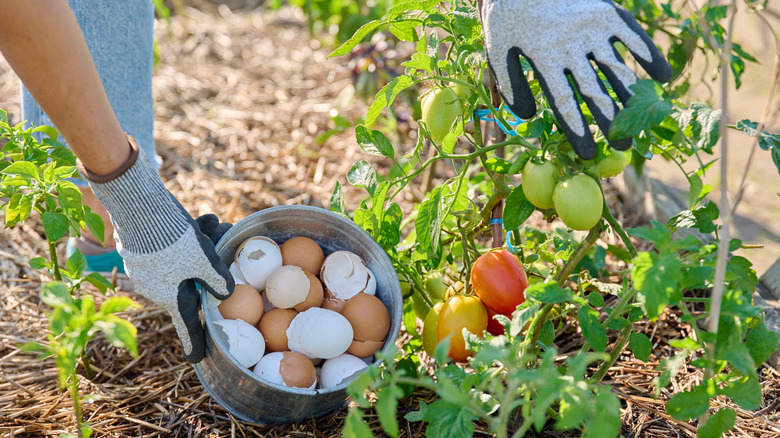
You can further boost the health and growth of your plants by integrating organic fertilizers. Though these shouldn't take the place of traditional fertilizer, they can add supplemental benefits. Thriving tomato plants come easier with a natural fertilizer made from kitchen scraps like onions. Animal manure, bone meal, and fish emulsion can also add valuable nutrients, particularly phosphorus and nitrogen. Applying Epsom salt to the soil around the plants may improve nutrient uptake and promote healthier leaves. Placing crushed eggshells around each plant's base can increase levels of calcium and magnesium and may lower the risk of blossom end rot.
Warning signs of fertilizer problems with tomatoes, and how to fix them
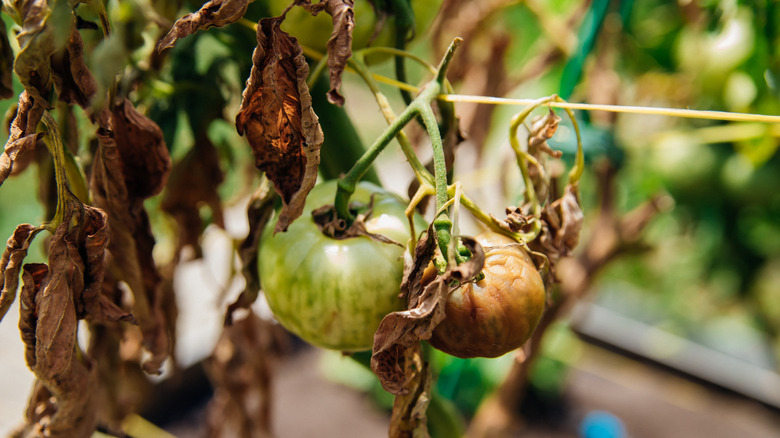
Healthy tomato plants have lush, full leaves and steady fruit development. This requires optimal levels of phosphorus, nitrogen, and potassium. Even diligent home gardeners can encounter unexpected fertilizer issues and other common tomato plant problems. Knowing how to troubleshoot these issues can save your plants and restore their health. If you notice yellow leaves and reduced growth, your plants may have a nitrogen deficiency and could benefit from the addition of a nitrogen-rich fertilizer or the integration of blood meal or fish emulsion into the soil.
Lack of phosphorus can also cause obvious problems, such as purple leaves, low flowering, and stunted fruit development. You can add bone meal or rock phosphate to the soil or use a phosphorus-rich fertilizer. Low potassium levels can cause a tomato plant's leaves to turn yellow, and may also result in leaf curling, fragile stems, and low or no fruit yield. Incorporating a fertilizer high in potassium can reverse these issues.
If you notice blue-green leaves that are curling upward or under, your plants may be getting too much nitrogen. The best way to correct this is to stop using fertilizer for a few weeks until you notice the plants returning to a healthier appearance. You can then start incorporating a fertilizer with a lower nitrogen content, gradually increasing levels until your plants are healthy once again.