

Thriving Tomato Plants Come Easy With This Natural Fertilizer Made From Kitchen Scraps
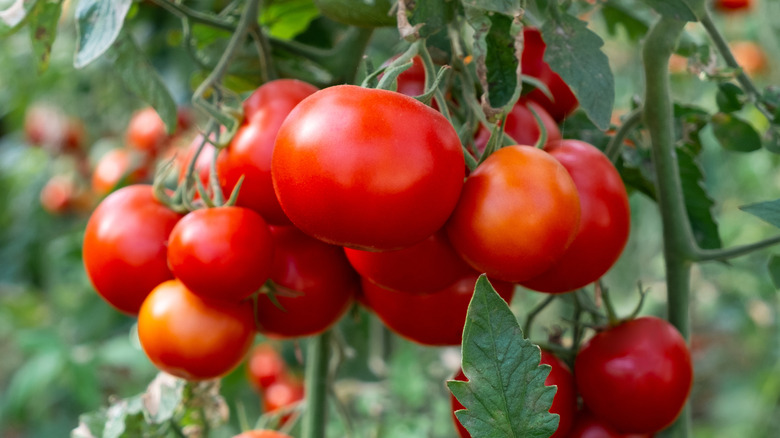
Most cooks go through pounds of onions without thinking twice, and their papery peels probably end up in the trash with even less consideration — they're basically just inert, inedible wrappers, right? In fact, those scraps can do more than moulder in the bottom of the bin, because you can use them as fertilizer to help grow thriving tomato plants.
There are a lot of tips and hacks for growing juicy tomatoes, but it's important to know that tomatoes are particular about nutrients, especially once they move past the sprouting and leafy growth stages, and start putting out fruit. Nitrogen drives green growth early on, but too much of it later on will leave you with a lush plant that gives a small harvest. Phosphorus supports root and flower development, while potassium helps the plant stay functional and move toward ripening. If calcium is missing, tomatoes can develop blossom end rot, which is the kind of problem that shows up late and ruins an otherwise healthy-looking fruit.
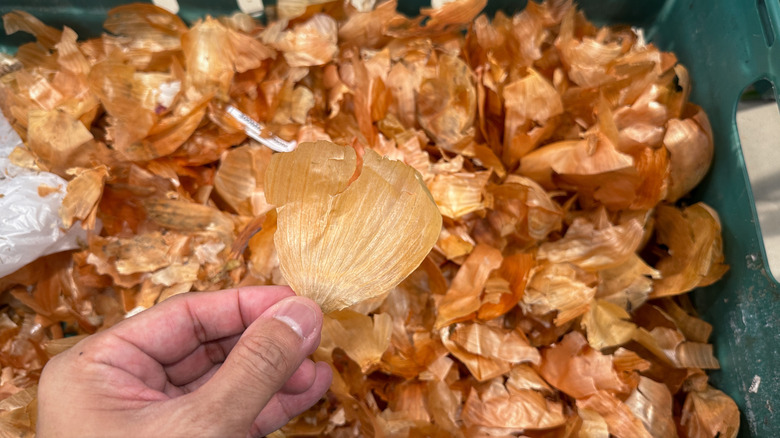
Onion peels contain iron, copper, magnesium, potassium, and calcium, all of which support fruiting and overall plant stability, making them helpful when the tomatoes are transitioning into their productive phase. They also provide natural sugars and starches that support the soil's friendly, healthy microbial community. Onion skins alone are not a complete fertilizer, and they can't replace a balanced, well-built soil system, but they add something helpful and meaningful without overwhelming the plant or soil chemistry. You can powder them and work the powder into the soil directly, or make a fertilizer tea by soaking them in water. Both methods will put what would have gone to waste back into the useful circulation of your own private food system.
Liquid diet
You might be wondering how the nutrients in the onion skins get into the tomatoes. Roots absorb dissolved minerals, and then they're moved up through the plant's xylem system to the leaves and fruit. This is why any soil amendments, like onion skins and other compost, have to be broken down before they can be useful. That process is handled by a network of microbes that live in the soil and act as intermediaries, converting organic material into forms that plants can utilize.
As microbes work through the material, they release nutrients that dissolve into the surrounding moisture, which the roots can draw from. This is the same principle behind all compost. Time and microbial action turn organic waste into absorbable nutrients. Pulverized onion peels are relatively easy for that system to process, compared to tougher plant matter like orange and avocado peels, which can be composted but just take longer. With just onion peel powder, instead of waiting for the heat and time of a full compost cycle, you're introducing smaller amounts of material that can break down more quickly, similar to leaves falling and naturally decomposing.
Soaking onion peels in water goes one processing step further. The onion skin nutrients leach out into the liquid, which can then be applied directly to the soil, where the roots are actively drinking. That makes the nutrients more immediately available without in-ground decomposition. It also keeps the input relatively gentle, which matters a lot with tomatoes, since overfeeding can push the plant into excess foliage or throw off the soil's pH balance, which needs to stay stable for good root health and fruit production.
Here's to peeling good, all the time
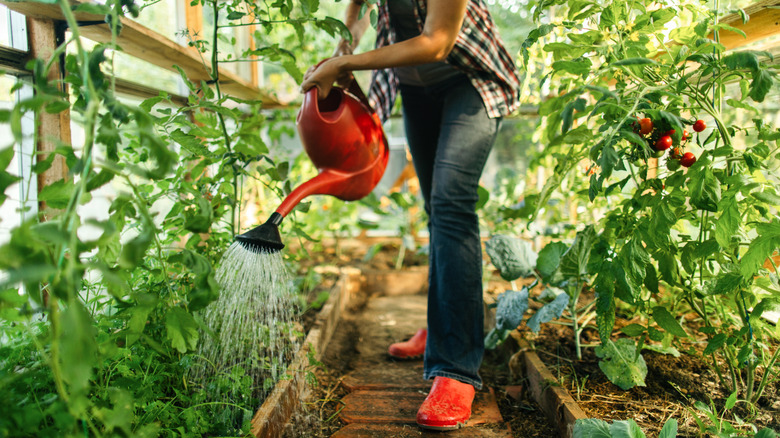
Collect the dry outer skins as you go through onions, and when you have a decent amount, soak them in water for a day or two, or for about a week to allow them to ferment a bit. Either way, strain off the liquid and use it to water your tomato plants at the base. This makes a mild nutrient infusion that integrates easily into a normal watering routine. If you want a more direct approach, grind the paper-dry peels in a coffee grinder or blender, and work them lightly into the top layer of soil, where they will break down slowly and thereby contribute nutrients more gradually.
There are a lot of good ways to use up vegetable scraps, and once you start paying attention to this kind of reuse strategy, it's hard not to notice how many little inputs pass through the kitchen every day. If you don't throw away your onion peels, they can go into veggie stock, if used sparingly, as too much will cause bitterness. They can also be used in natural dye, staining fabrics in shades that range from pale gold to rusty amber. Other scraps can be helpful in the garden, too, although each one contains different nutrients and needs the same consideration and understanding as the onion skins, before being applied to your plants.
If you're already putting time into growing tomatoes, it follows that the materials moving through your kitchen can be a part of that effort. Onion peels won't solve every problem in the garden, but they're a practical way to close a little loop, feeding plants, and eventually yourself, using materials that would otherwise be discarded, and building a value system and routine of paying attention to how things connect.