

Is Ranch Dressing An American Thing? Here's Why It's Hard To Find Abroad
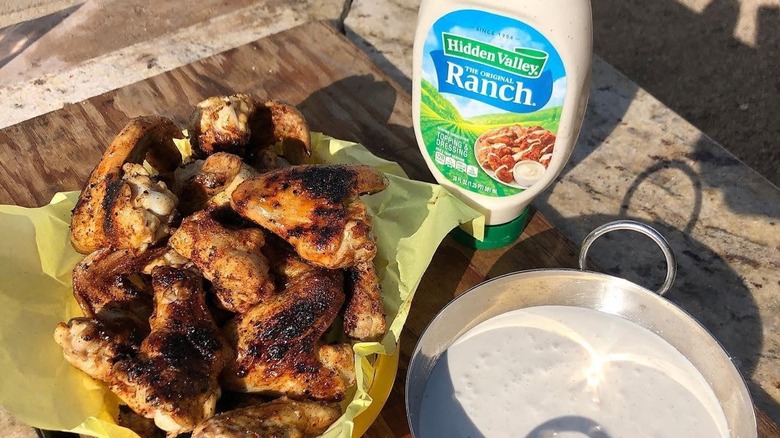
While you've probably heard the expression "as American as apple pie," you could easily exchange apple pie for ranch dressing. Not only is ranch dressing the most popular dressing in the U.S., surpassing other creamy recipes and vinaigrettes by a long shot, but it's also a 100% American invention. Nebraska-born plumber Steve Henson created the original ranch dressing recipe while working in Alaska in the 1940s, but didn't begin to produce it for others until he and his family purchased a California ranch known as Hidden Valley in the mid 1950s. Sound familiar? Hidden Valley Ranch offered event space for guests who sampled and delighted in the homemade ranch dressing the Hensons would serve during steak dinners. So, you can thank California for the dressing Americans put on everything.
By the 1970s, Clorox (the unexpected company that took a chance on Hidden Valley Ranch) purchased the recipe from the Hensons for $8 million and began mass producing it in the bottled form we all know and love today. Over the subsequent decades, ranch took over not just as a salad dressing, but as a dipping sauce and seasoning flavor — Cool Ranch Doritos took ranch into the snack realm, expanding its reach even further. Today, the Midwest is the biggest consumer of ranch in the U.S., but it's a fixture in households and restaurants around our great nation. Yet, while ranch reigns supreme in the United States, you might have a hard time finding it abroad.
Ranch is hard to find abroad
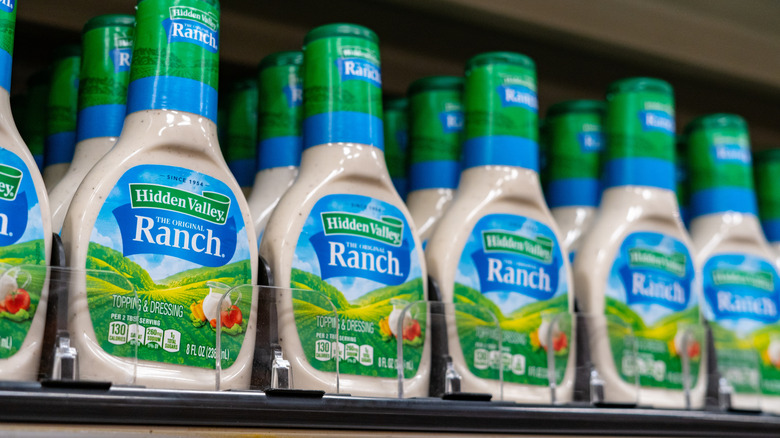
In the U.S., you can find countless brands of ranch dressing lining grocery store shelves, ranch-flavored snacks, and ranch dipping sauces at pizza and wing joints, as well as on dinner party crudite boards. But the obsession hasn't migrated overseas. You might find bottles of ranch dressing on grocery store shelves in Canada and Australian, or in the imported section of supermarkets in European countries, Mexico, and Japan; but it's hardly a household staple, much less a menu item at restaurants.
There are various reasons that ranch dressing hasn't caught on abroad, starting with culinary customs. Many cultures aren't big into dipping sauces, and even if they are, each culture has well-established favorites of their own. Creamy, mayo-based sauces like aioli are far more favorable in Europe, while soy or fish sauce-based condiments and chili oils reign supreme in Asian countries. Mexico has one of the longest lists of beloved condiments, including everything from salsas to cremas. As a salad dressing, oil-based vinaigrettes are also more popular in Western European and Mediterranean countries. Furthermore, lactose intolerance is an issue that affects a large part of the world, limiting consumption in a lot of Asian and African countries.
Lastly, ranch dressing needs to be refrigerated when opened and has a much shorter shelf life compared to more globally acclaimed condiments like ketchup. That said, ranch dressing is gaining ground abroad with international tourism and the help of fast food chains who have begun to expose foreigners to their many versions of ranch dipping sauces.