

8 Types Of Mozzarella Cheese, Explained
Compared to stinky cheeses like Roquefort or tangy cheeses like chèvre, mozzarella is one of the most approachable cheeses you can find. Plus, nearly everyone has eaten it — if not in a Caprese salad or panini, then certainly on pizza. Mozzarella is slightly more complex than the average consumer realizes; after all, bags of shredded mozzarella don't just come out of a cow. This cheese variety is made first by curdling milk, then stretching it in a process dubbed pasta filata ("spun paste" in Italian). Pasta filata gives milk curds elasticity, and it's therefore responsible for mozzarella's superb melting capacity. It's also why a pizza topped with mozzarella can boast a mile-long cheese pull.
But the complexities don't stop there. Different varieties of mozzarella can be achieved through specific shaping, aging, and processing techniques, not to mention milk source. With that said, we spoke to two cheese experts to learn more. Diana Sadri is one of the family members behind ABC Farms Pvt Ltd, a business that has been making dairy and cheese products in Pune, India, for 50 years. Meanwhile, Salvatore Olivella is an Italian chef currently heading up the highly acclaimed New York City restaurant Forno D'oro. Their insights will make you appreciate mozzarella in a new light — and maybe even want to try making it.
As Sadri says, Mozzarella is "one of those cheeses that feels just as fun to make as it is to eat." But if you're not feeling up to the task, look no further than our ranking of store-bought mozzarella brands for guidance.
Fior di latte
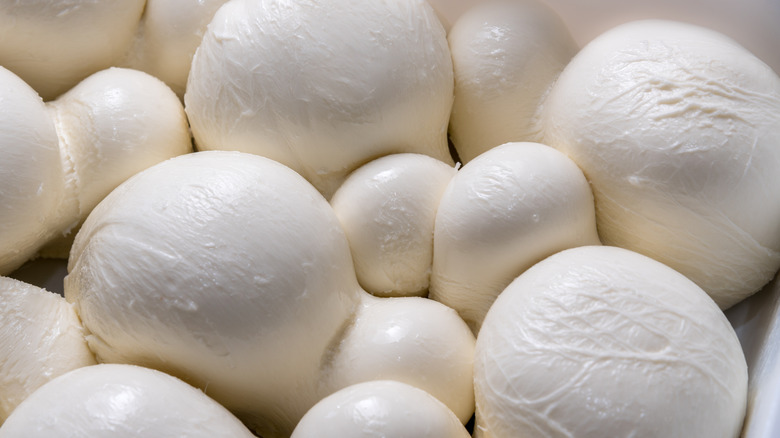
Made from cow's milk and the pasta filata technique, fior di latte is approachable, familiar, and versatile. While it's still a soft and creamy mozzarella, our experts explain that it's got enough elasticity, firmness, and structure to set it apart from Mozzarella di Bufala DOP, a variety we'll get to in a moment. This cheese is also less moist than its buffalo counterpart. Both Diana Sadri and Salvatore Olivella describe the flavor of fior di latte as clean and dairy-forward, with Sadri elaborating that it can taste subtly buttery. If you're looking for a mild, crowd-pleasing mozzarella, this is the one.
How can you use fior di latte? Pizza comes to mind immediately, thanks to this cheese's superb melting capacity, which is why Olivella prefers it in cheesy pies and sandwiches. In other words, if you're trying to achieve an Instagrammable cheese pull, reach for fior di latte. However, don't miss out on trying this cheese in a salad, either. There are countless ways to enjoy fresh mozzarella, many of them requiring minimal kitchen prep.
Mozzarella di Bufala DOP
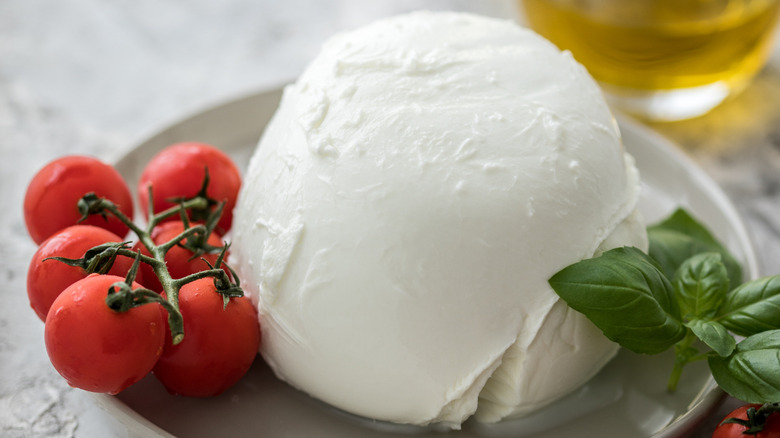
"Fresh mozzarella celebrates milk, moisture, and freshness," proclaims Diana Sadri. Nowhere is this clearer than in Mozzarella di Bufala DOP. Because this cheese falls under the Protected Designation of Origin label, its textures and flavors are unique and reliable. Notably, this mozzarella is made from water buffalo milk, which features a significantly higher fat content and lower water ratio than whole cow's milk. Water buffalo milk also contains slightly more protein than its cow counterpart.
As a result, Mozzarella di Bufala DOP is richer than fior di latte. Pay close attention, and you'll find that this variety is more nuanced, too. Both Salvatore Olivella and Sadri describe this cheese as being especially creamy and soft. "The higher fat and protein content creates a softer, creamier texture with a subtle tang and very high moisture," says Olivella. Meanwhile, Sadri specifically suggests serving it in a Caprese salad alongside basil and tomatoes. When you slice open this cheese, she adds, don't be surprised if a bit of whey leaks out; it's normal and totally safe.
Stracciatella
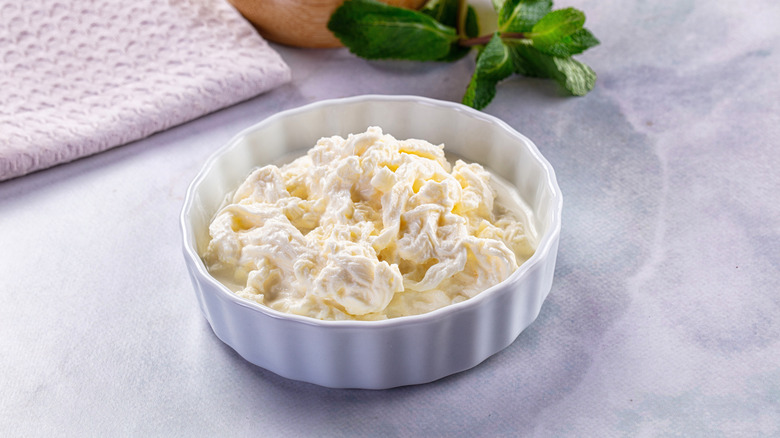
There are three distinct Italian foods that all share the name stracciatella, so don't think that your favorite gelato flavor is made of cheese. It's not. The chocolate pieces within it simply bear an aesthetic resemblance to this mozzarella variety, as well as to the egg slivers in a traditional Italian soup. But that's a story for another day. What you need to know about stracciatella, the cheese, is that it's composed of stretched curd that's torn into strands and mixed with cultured cream.
"Stracciatella is one of those cheeses people fall in love with once they understand what it is," shares Diana Sadri. Its flavor is approachably milky, and its soft, rich texture means that it can be spooned over anything from a warm slice of bread to roasted vegetables to salad. You might also implement stracciatella as a finishing element on pizza or pasta, shares Salvatore Olivella. And if you really fall in love with it, this type of mozzarella can be eaten straight from the spoon.
Burrata
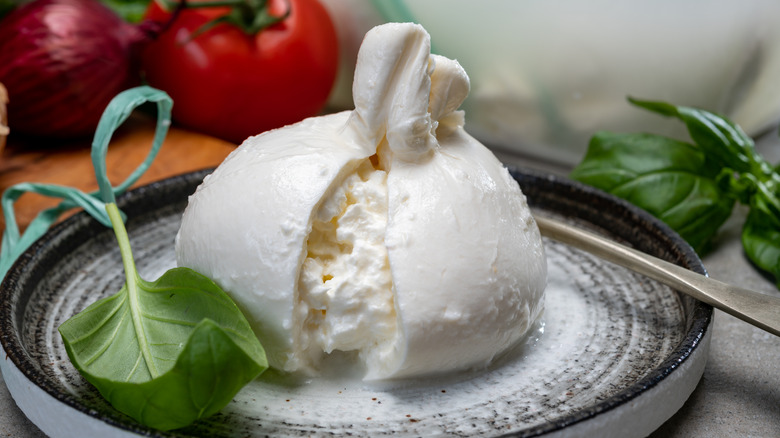
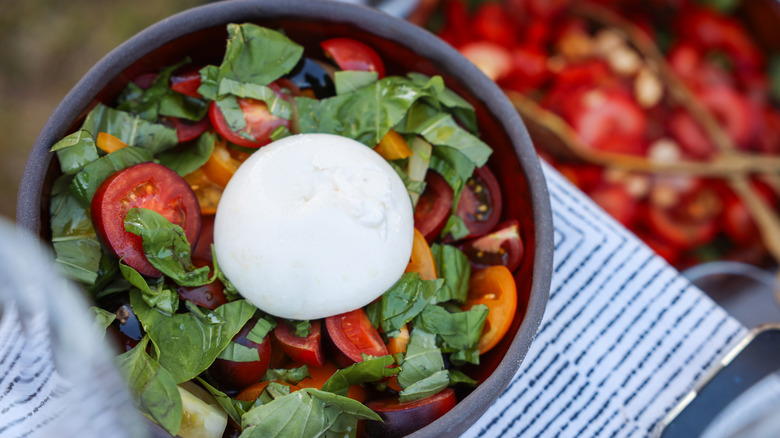
Naturally, we couldn't mention stracciatella without bringing up burrata, which has taken the world by storm in recent years. Essentially, burrata is a pocket of stracciatella inside an elastic mozzarella shell. First produced in the 1920s as a way to make leftover curd go further, burrata is now regarded as the "queen of Italian cheeses." It's lusciously soft and shines when served at room temperature.
"It's more about richness and contrast than structure," notes Salvatore Olivella, talking about burrata's flavor. Indeed, it's hard to resist the cheese's sensuality when its creamy interior spills out over a salad or plate of roasted vegetables. Burrata is also excellent when served with fresh tomatoes and cured meats, explains Olivella, so you should add it to your grocery list in the summer when heirloom tomatoes come into season. But remember: Just because burrata is having a moment doesn't mean that every brand is doing it right. Check out our ranking of store-bought burrata brands to see which ones are worth your money.
Smoked mozzarella
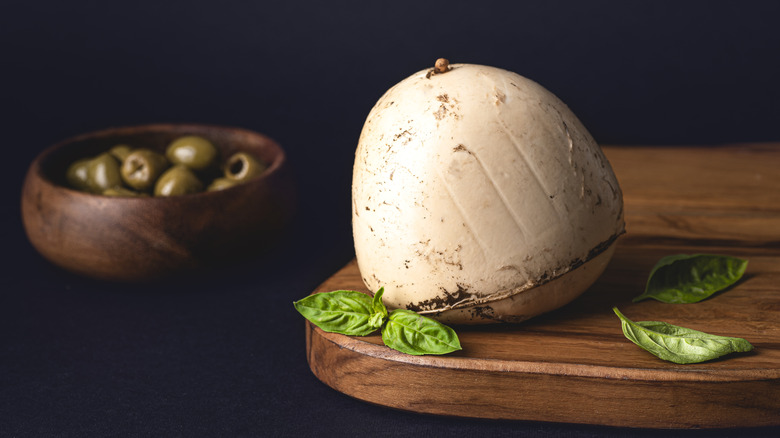
There's nothing like the first cookout of the season to make us wonder why we don't keep the grill and smoker out year-round. Whether you prepare smoked mozzarella at home or buy it from the store, you'll find that this cheese opens up a world of possibilities. Otherwise known as mozzarella affumicata, it has a firm texture and complex flavor, according to Salvatore Olivella. Flavor variations can be achieved by using different types of wood or even by using hay. Olivella recommends adding smoked mozzarella to pizzas, sandwiches, and baked pastas.
Meanwhile, Diana Sadri points us toward smoked scamorza, a close relative of mozzarella. "Traditionally, it's hung and lightly dried before being smoked, which gives it a firmer texture and a deeper savory flavor," she says, also noting that it's still conducive to melting. That makes it perfectly suited to sandwiches and baked dishes where you're yearning for a more savory, concentrated flavor than fresh mozzarella could otherwise provide.
Smaller mozzarella balls
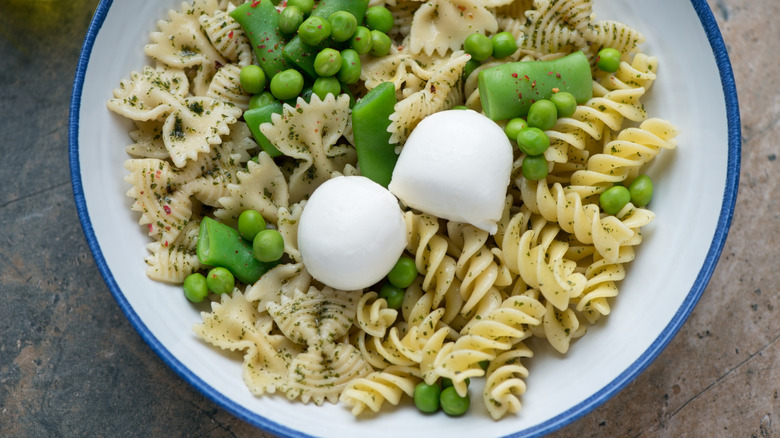
If a palm-sized ball of mozzarella seems like too much of a commitment, consider sourcing bocconcini instead. According to Salvatore Olivella, the bite-sized nature of bocconcini makes them well-suited for salads, skewers, and appetizers. Bocconcini retains the same soft, moist texture you know and love in standard mozzarella. In fact, each tiny ball might feel even juicier due to its unique proportions, says Diana Sadri. She recommends serving bocconcini atop salads and platters. Meanwhile, Olivella brings up ciliegine as an alternative to bocconcini. Each ball is roughly the size of a cherry, meaning ciliegine can be used in all the same ways.
With a bit of forward thinking, you can take advantage of the high surface-area-to-volume ratio of these tiny mozzarella balls by soaking them in an olive oil-based marinade. Because mozzarella is such a blank slate, seasonings like garlic, parsley, mint, and oregano can take it to another level. We've also used miniature mozzarella balls in recipes like our Caprese Caesar Highballs and air-fried mozzarella-stuffed bread to great effect.
Knotted and braided mozzarella
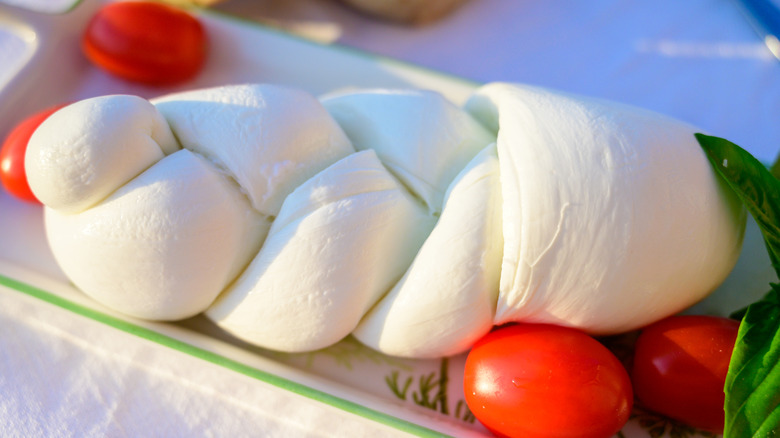
If you spent hours as a kid braiding hair or stringing together friendship bracelets, then you'll love nodini and treccia, two mozzarella varieties that are as artistic as they are delicious. While nodini are hand-tied knots, treccia is a braided form of mozzarella that can weigh up to several kilograms in some cases (though a few hundred grams are enough to feed the average family). As you might expect, both nodini and treccia are popular party cheeses. The former is favored for cheese boards and platters, and the latter frequently serves as a stunning centerpiece to elaborate spreads, explains Salvatore Olivella.
"The shaping gives them a slightly denser bite, but the flavor remains light and fresh," Olivella adds. They are excellent vehicles for olive oil, and their flavors are boosted by ingredients like tomatoes and bread. Meanwhile, treccia is commonly served alongside prosciutto, tomatoes, olive oil, basil, and bread. Sparkling and fizzy wines aren't a bad idea for this mozzarella variety, either.
Low-moisture mozzarella
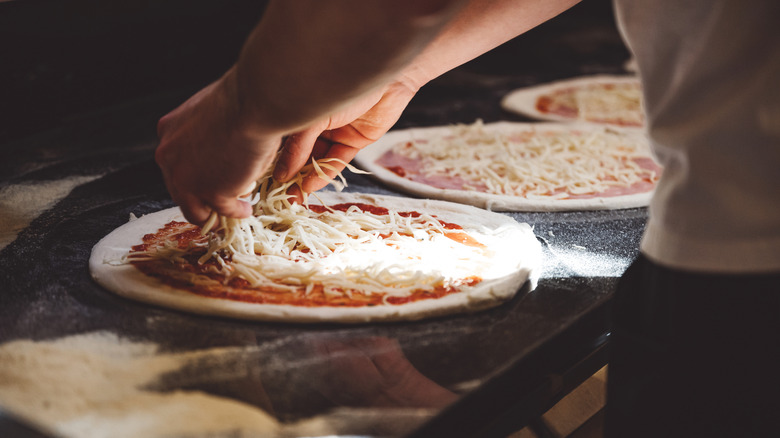
Several of the mozzarella varieties described above are prized for their high moisture content. Low-moisture mozzarella, on the other hand, serves a distinct purpose. According to Salvatore Olivella, it's the go-to type of mozzarella for American-style pizza. A lower ratio of water and a bit of aging give this cheese a firm texture and a "more controlled melt," he explains. Chefs favor its ability to brown and stretch, and it holds significant visual appeal in addition to flavor.
Low-moisture mozzarella isn't aged as long as provolone, another stretched-curd cheese that is frequently used for sandwiches and pizzas. Rather, a few weeks is sufficient to give low-moisture mozzarella its signature pliability and meltability. As such, it never develops the sharper flavors that aged provolone is known for. While certainly a bit tangier than ultra-fresh mozzarella, low-moisture mozzarella remains on the mild side, making it amenable to a wide range of pizza toppings.