

13 Tips To Make Pasta Sauce Burst With Flavor, According To Reddit
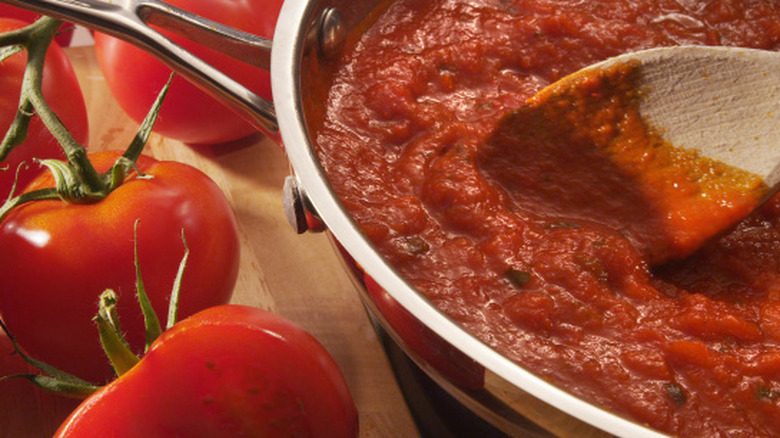
A bowl of pasta might be a simple dish in a lot of cases, but it's also one that delivers guaranteed comfort and satisfaction. While it's important to cook your pasta well — and ensure you're not making any major pasta mistakes — the sauce is arguably an even more important component of these dishes. That's because it's responsible for delivering both flavor and a lot of the texture of the meal, so getting it right is essential. And if you've ever made a boring, bland pasta sauce, then you know just how much it can affect the finished product.
That's why we're taking a closer look at some of the best ways to infuse your pasta sauce with as much flavor as possible, according to Redditors. We've scoured multiple threads about pasta sauce to get the 411 on how the Reddit community ensures the tastiest possible bowl of pasta every time. Try out some of these tips yourself, and with the infinite wisdom of Reddit, you might just discover some new ways to make an incredible pasta sauce. And if you're looking for a great base pasta sauce to start with, we have the perfect recipe for you.
Add pasta water to your sauce about halfway through the cook time
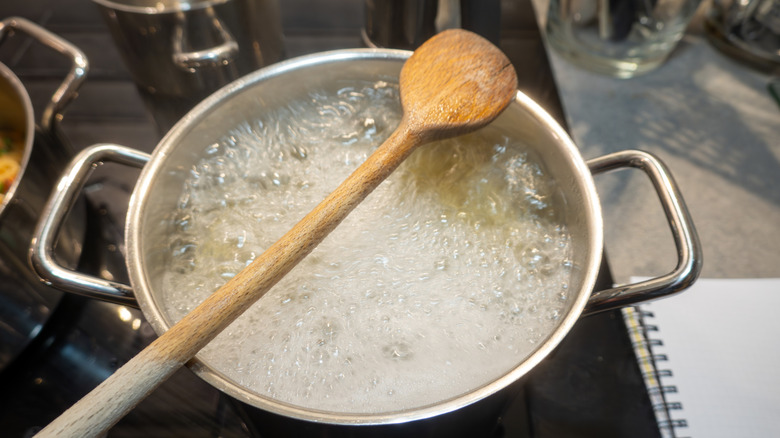
If you cook pasta as a lot of others do, you might just dump the pasta water down the drain when the noodles are finished cooking. After all, it's not like that starchy water is good for anything, right? According to one commenter on Reddit, though, that pasta water might just be what you need to transform your sauce from bland to bursting with flavor. According to them, you should add some of the pasta water to your sauce about halfway through the cook time before reducing the sauce to make it more concentrated.
That's because pasta water contains a lot of starch, which can act like a sort of binder in the dish, ensuring that the sauce sticks to the pasta better. It can also help thicken the sauce, so it's nice and rich. If you've ever had pasta sauce that turned out too watery and thin, it might be because you just used plain water (or the juice in a can of tomatoes) instead of starchy pasta water. And if you're making a creamier sauce, the water can also act as an emulsifier, creating the creamy texture you're going for. Next time you make pasta, don't toss the water — add just a little to the sauce for a completely transformed dish.
Cook your sauce in the oven on a low temperature
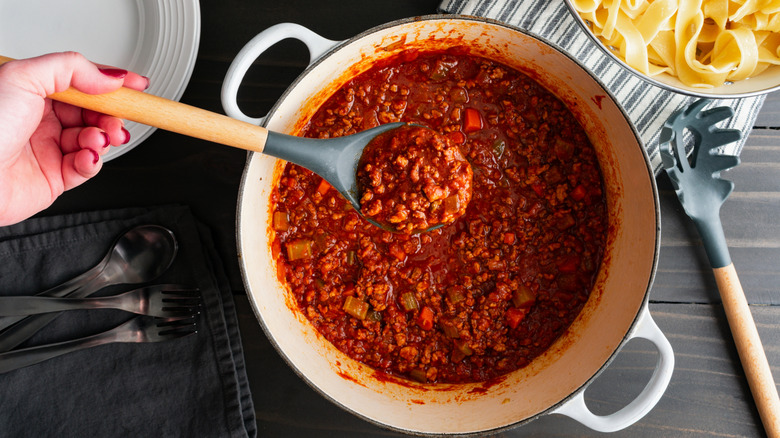
Do you hate standing over the stove for hours at a time, babying your pasta sauce until it's finally ready to serve? We hear you. While some pasta sauces come together quickly, others — especially more complex sauces that rely on a wide array of ingredients — have to be cooked for quite some time to build layers of flavor. Most pasta sauce recipes will instruct you to cook the sauce on the stove, but a Redditor discovered that wasn't necessary at all and prefers to use the oven instead. This poster says that they have a physical disability that makes it difficult for them to stand over a pot on the stove for an extended period of time, which is why they prefer cooking this way, but they've found that it results in an excellent flavor because of just how long the sauce cooks.
Not only are you going to end up with a sauce that tastes excellent if you employ this cooking method, but you'll also minimize the chance of burning any of your ingredients. Plus, it's just a simpler way to make a dish — after allowing the sauce to cook for an extended period of time, just boil your pasta and put it all together. Who knew pasta night could be so simple?
Make sure your pasta sauce tastes a little too bold on its own
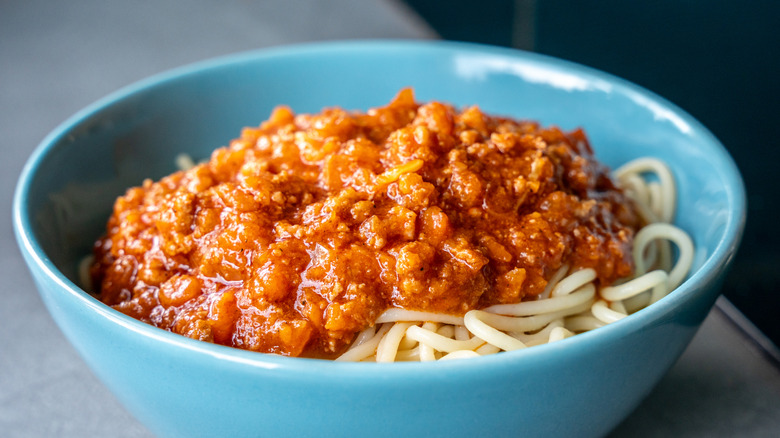
Generally, when you're cooking a dish, you'll want to taste it as you go, ensuring that it's well-balanced with every new ingredient you add to the mix. But doing this with pasta sauce might not help you determine whether you're actually making a solid dish. That's because you'll be tasting the sauce without the actual pasta, which can affect how it lands on your palate. According to one Redditor, you actually want to make sure that your pasta sauce tastes a bit too bold or intense on its own.
Although that might seem counterintuitive, it actually makes some sense when you think about it. Pasta is quite bland, so it's going to cut the intensity of whatever sauce you pair it with. Therefore, if you want to make sure your pasta is as flavorful as possible, it's a good idea to maximize flavor in the sauce on its own so it's well-balanced once you combine it with the pasta. Will this make the taste-testing portion of your cooking experience slightly less enjoyable? Sure. But once you taste how amazing your pasta dish will be when it's all over, you'll understand why this is a tip worth following.
Add cheese rinds to your sauce to add an umami touch to the dish
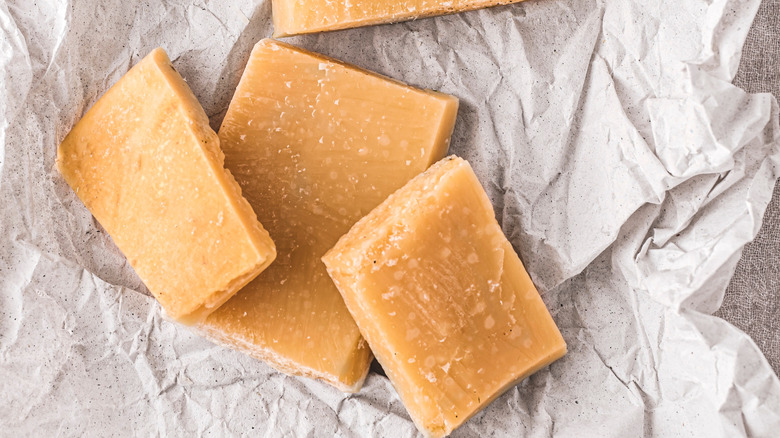
We love to find new ways to reduce food waste in the kitchen, and that includes using food scraps in a creative fashion. Since you can build flavor in a good pasta sauce with a lot of different ingredients, it's the perfect place to experiment with some of these food scrap enhancements. One particularly good idea that a Redditor has is adding cheese rinds to your pasta sauce. The purpose of this is to give the sauce a more intense, salty, and umami flavor, which instantly elevates it from a standard sauce into something really special. You can include the rind in addition to any other cheese you decide to use in the dish. This is most often done with Parmesan, which is a favorite for many pasta dishes anyway and boasts a unique, funky flavor that you're not going to get from every type of cheese. However, you can experiment with different types of cheese rinds if you don't have any Parmesan rinds on hand.
This is undoubtedly one of the best ways to use leftover cheese rinds, and you'll be amazed at just how much it can upgrade even a basic pasta sauce. You just need to make sure that you remove any wax from the cheese — you're obviously not going to want that in your sauce.
Add some fish sauce to give your pasta sauce an umami touch

If there's one ingredient that will take your pasta sauce to the next level, it has to be fish sauce. It's one of the most flavorful ingredients, period, thanks to its bold, salty, and umami flavor profile that instantly enhances any dishes it touches. And because there are so many creative ways to use fish sauce, it's an ingredient we always recommend keeping on hand.
We're not the only ones who think that fish sauce is perfect for adding to pasta sauce — some Redditors agree with us. One says that they use it in place of Worcestershire sauce, which has a similar umami flavor profile. Although some expressed skepticism about using an ingredient that's not generally associated with Italian dishes, another commenter added that they'd used fish sauce in their pasta sauce before with excellent results. They said that it didn't make their sauce taste fishy at all, but rather added complexity and depth of flavor, which is what takes a pasta sauce from good to great. For those who already have fish sauce on hand in the kitchen, this is a must-try pasta sauce hack for a bolder, more interesting flavor.
Cook the sauce longer for natural sweetness
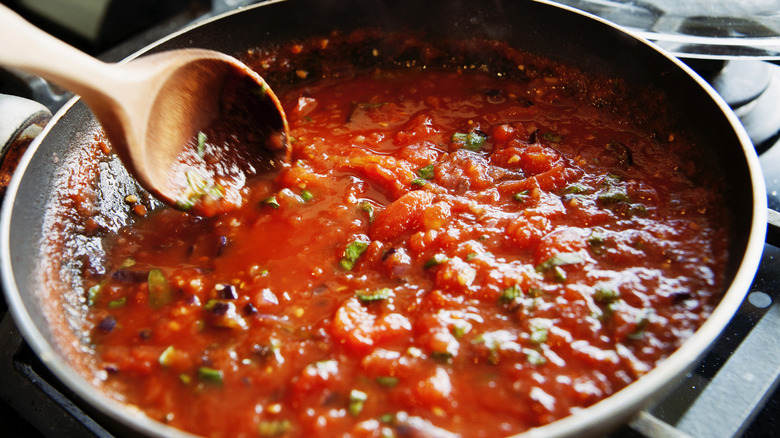
One of the main tasks of making a good pasta sauce is creating a balanced flavor profile. You get acidity from the tomatoes, complexity from ingredients like anchovies or fish sauce, and a nice vegetal touch from your favorite herbs. But what about sweetness? For some, the answer is clear: adding some sugar to the sauce. However, others prefer to nix the sugar completely — whether for health reasons or simply for flavor preferences — and like to find other ways to create that sweetness to balance out all the acidity in the dish.
A Redditor on a thread about making excellent spaghetti suggests skipping the sugar entirely and instead cooking the sauce for longer. This, they say, creates more natural sweetness in the dish and downplays those strong acidic notes. Not only does it make for a more intense sweetness, but it can also draw out the complexity of all the ingredients you use. Sure, it might take a bit of extra time to make your dish this way, but if you don't want to add actual sugar to the recipe and still want to get that nice, balanced touch of sweetness you're craving, it's a solid method to employ.
Use wine to deglaze the pan
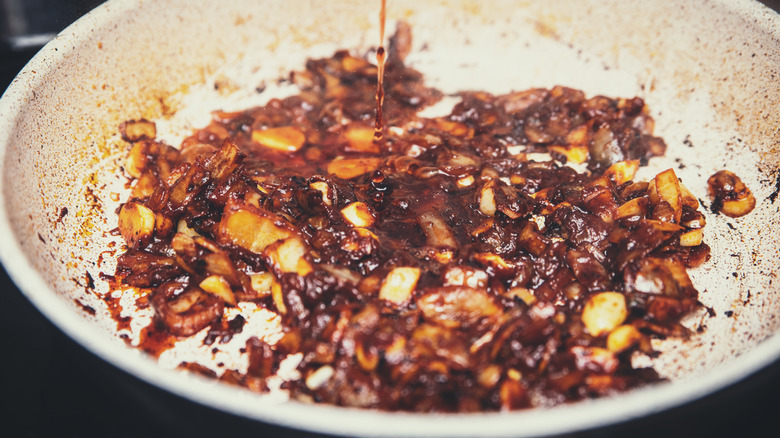
One easy way to add a ton of flavor to any dish cooked in a pan, including pasta sauce, is making sure to deglaze. You know when you cook a bunch of onions and garlic in oil, and little pieces of them stick to the bottom of the pan? That's called fond, and it's ultra flavorful. When you deglaze your pan, you pour some liquid into it while it's still hot, which helps the fond release from the pan and incorporates it into the rest of the sauce. Those little burnt and crispy pieces then infuse the sauce (or whatever else you're making) with an incredible amount of flavor.
You can deglaze a pan with many different liquids, but when it comes to pasta sauce, deglazing with wine is the way to go. Not only will it add some interesting, subtle fruitiness and complexity to the equation, but it also introduces an extra burst of acidity. If you're cooking a red sauce, a Redditor suggests using a dry red like chianti or merlot. For a lighter, fresher sauce, they recommend pinot grigio. If you need more ideas for different types of wine you can use for deglazing or for cooking in general, check out our favorite white wines and red wines for cooking.
Use fresh herbs, not dried
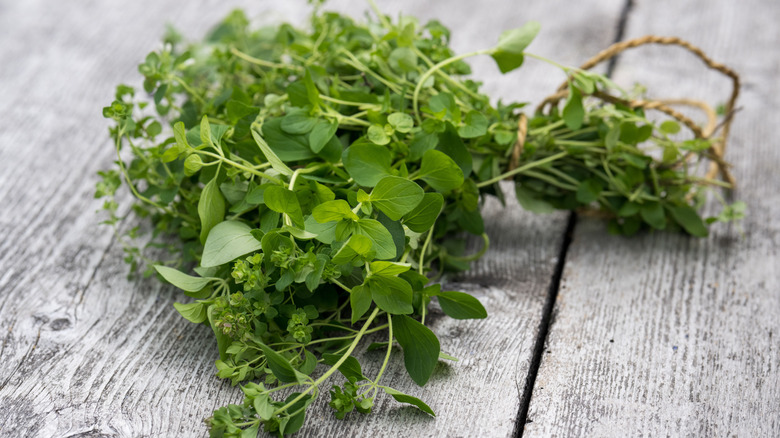
Most pasta sauce recipes you're going to come across out there will call for a few herbs, or sometimes a wide variety of them. But a lot of the time, they'll specify that you should use dried herbs. This might be because they're easier to store and prepare, and you don't need to make a separate trip to your grocery store's produce section before you start making your sauce. However, one Redditor said that their only hack for making their pasta sauce taste as good as possible is using fresh herbs over dried. They specifically mentioned fresh oregano and basil.
The flavors of fresh herbs are much brighter and more vibrant, with that green, vegetal note that will make your sauce taste fresher. That being said, you generally shouldn't add fresh herbs at the same time you'd add dry. While dry herbs can simmer in your sauce for a longer period of time, in most cases, you should add the fresh stuff near the end of the cook time so they don't lose their fresher, more delicate notes. And if you really want a strong herbal flavor in your sauce? Consider doubling up on both dried and fresh herbs for an extra bold pasta dish.
Add a splash of red wine vinegar before serving the dish
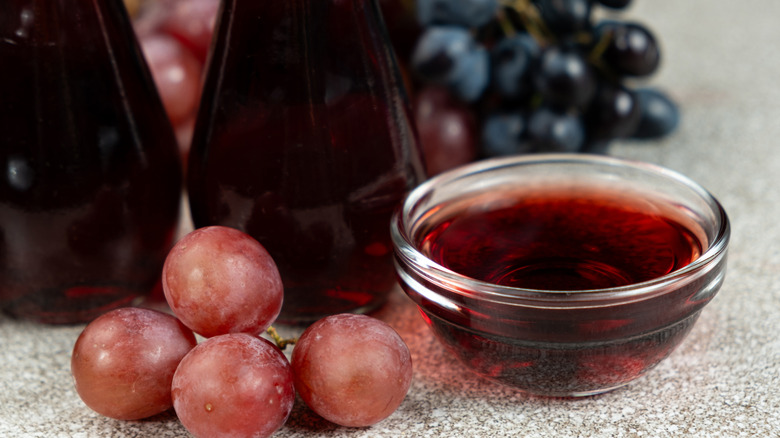
Even though a good pasta sauce can sometimes taste rich and intense, you probably don't want it to taste downright heavy or flat on the palate. Unfortunately, that can sometimes happen for a variety of reasons. Maybe you used too much olive oil in the dish, or perhaps you were a bit heavy-handed with the sugar. Either way, adding some acidity to your sauce can freshen things up and take its flavor to a whole new level. You don't have to get fancy here, either — just a splash of red wine vinegar will do, per some Redditors.
But don't think you need to add that vinegar right when you start cooking the sauce. Rather, wait until near the end of the cook time to give it one extra burst of acidity. Remember not to go too heavy-handed here, since you don't want that red wine vinegar to be all you taste. Wondering which brand of red wine vinegar you should choose? Check out our ranking of the red wine vinegars you're likely to find at the grocery store. Choosing a variety that has a more concentrated and complex flavor will result in an even more delicious plate of pasta.
Melt some anchovies into the pasta sauce
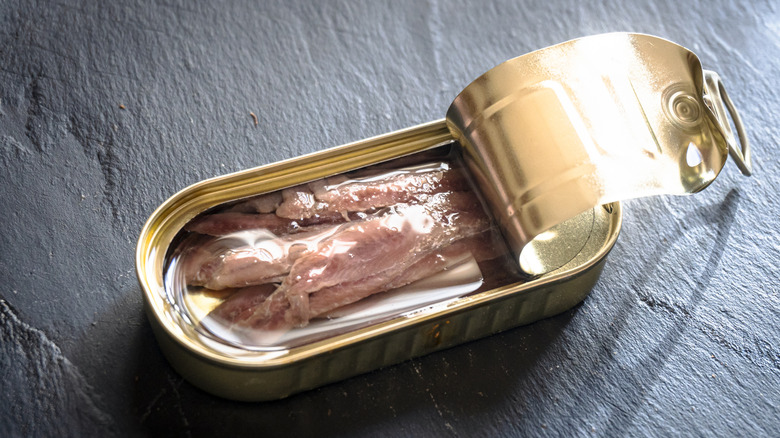
We've already discussed how much fish sauce can improve your pasta sauce, giving it a saltier, more umami flavor profile that instantly provides the dish with both intensity and complexity. So, it only makes sense that anchovies would be another delicious addition to any good pasta dish. This is because, much of the time, fish sauce is usually made from anchovies, so these small fish can impart a ton of flavor into your pasta sauce in a similar way.
Several Redditors suggested adding anchovies to pasta sauce. According to one, you should add the anchovies to the sauce right as you're beginning to cook it. You can let them sort of melt down until they're fully incorporated with the other ingredients — and no, you're not going to get actual chunks of anchovies in your dish. Another suggests using anchovy paste, which is a great option if you only want to use a bit of it at a time. Unless you add a lot of the stuff, you're not going to get a fishy flavor in your dish from doing this. Rather, you'll just have a pasta sauce with a surprising depth of flavor to it.
Use some capers in the sauce
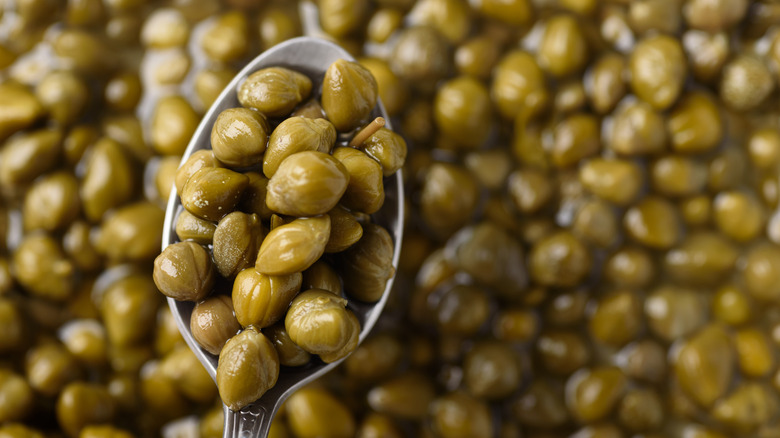
You can add acidity and tang to your pasta sauce in so many different ways. We've already discussed how useful red wine vinegar can be for this task, but lemon juice and actual wine are solid options as well. However, there's one ingredient that we (and some Redditors) turn to time and time again for a much more interesting pasta sauce, and that's capers. Those tiny, salty umami bombs add an incredible amount of flavor to your dish — you really only need a sprinkle of them to transform a basic sauce into one that's super-salty in the best possible way.
If you're like a lot of home cooks, though, you may not regularly keep capers on hand. In that case, you can always use olives in their place, according to one Redditor. They have a similar tanginess to them, but they're larger, richer, and have more body to them, which means that they can also contribute to the texture of the dish as well. And while you're at it with the capers or olives, don't forget to add a splash of brine to the mix to amp up that tanginess even more.
Let the sauce rest in the fridge for a day to develop a more complex flavor
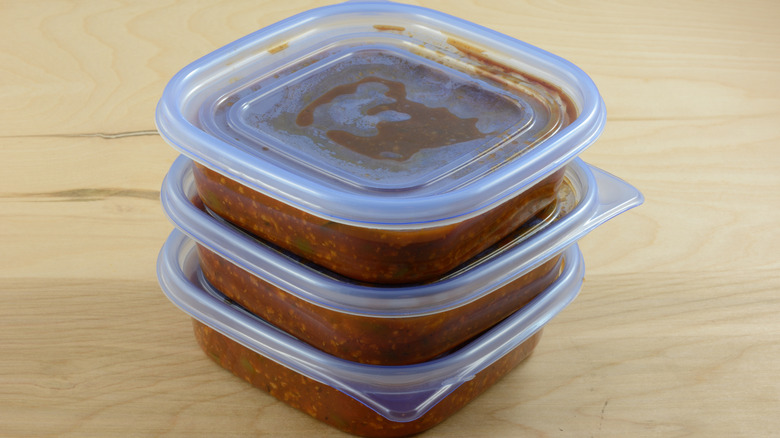
Sure, we love a quick and easy pasta dish just as much as the next person. But when it comes to making a really amazing, rich sauce, you're probably going to spend a decent amount of time over the stove stirring and simmering. After all, there are some excellent sauce recipes out there that require a few hours to prep and cook from start to finish. If you're willing to wait even longer to sit down to your saucy pasta, then it might be a good idea to make your sauce ahead of time and refrigerate it for a day. This, says a Redditor on a thread about making an excellent pasta sauce, helps build a more interesting, developed flavor in the finished dish. They say that this extra rest time makes for a more robust flavor.
Once that delicious sauce is cooking and making your kitchen smell amazing, you'll probably want to eat it right away. But by being patient, you're signing up for something even better than the standard sauce you always make. Plus, it makes putting together a pasta dish super easy when all you have to do is boil some noodles and take the already-cooked sauce out of the fridge.
Add miso paste to your sauce to create a deeper flavor
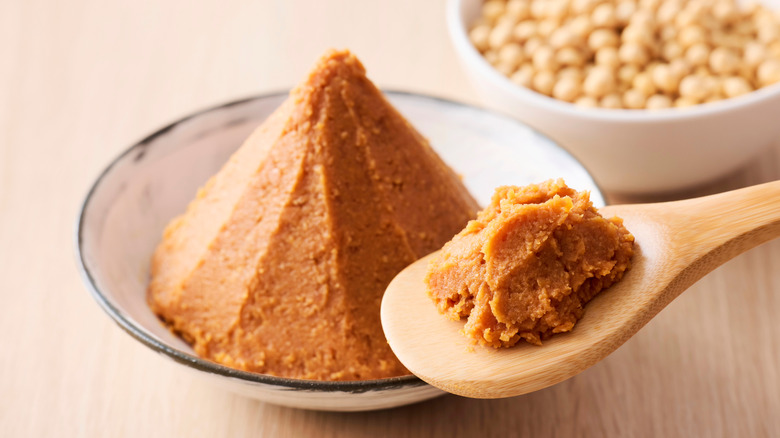
If there's one thing we love in a good pasta dish, it's a burst of umami flavor. We've discussed a lot of ways to add a level of umami to your pasta sauce already, ranging from fish sauce to anchovies. But there's another ingredient — one you may already have in your fridge — that can add an umami twist in an unexpected way (and that doesn't contain any animal products, making it perfect for all of the vegan and vegetarian sauce lovers out there).
On Reddit, there are some users who claim that miso makes for an excellent addition to a good pasta sauce. They say that adding miso, along with other layers of saltiness, to your pasta dish can be a really nice touch that builds a ton of flavor. Another Redditor claims that this addition makes your sauce taste deeper. And these two aren't alone — others on the forum agree with them.
Although this is one of the less-conventional additions on this list, we think that it's one to try if you like a bit of funk to your pasta dishes. And if you're wondering which type of miso to use, you can learn more about three different varieties here.